

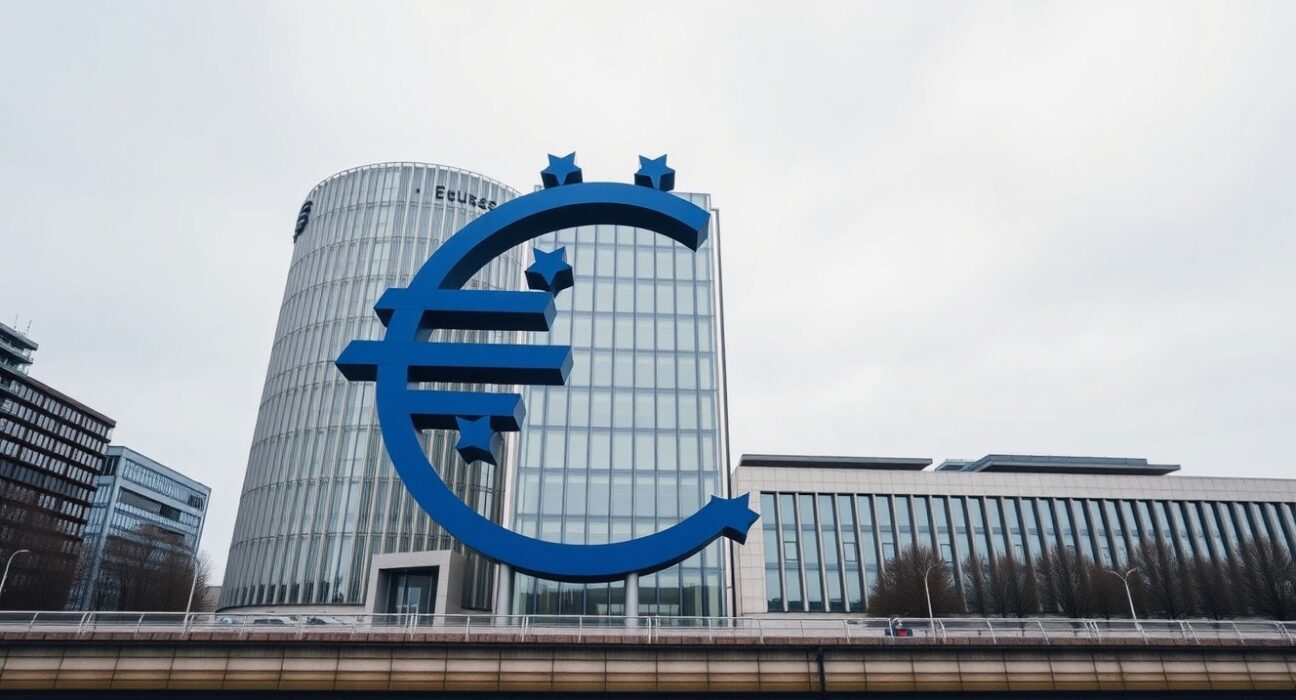
The European Central Bank is moving closer to a pivotal policy shift. In remarks that have caught the attention of financial markets, ECB Executive Board member Isabel Schnabel stated that the central bank can no longer afford to ‘look through’ the current inflation spike, signaling a strong likelihood of a rate hike at the June 2025 monetary policy meeting.
Schnabel’s Shift in Tone
Speaking at an event in Frankfurt on Tuesday, Schnabel acknowledged that inflation persistence in the eurozone has proven more stubborn than earlier forecasts suggested. ‘Looking through the inflation spike is no longer an option,’ she said, according to prepared remarks. The comment marks a notable departure from the ECB’s previous guidance, which had emphasized patience and a data-dependent approach.
Economists and market participants widely interpreted the statement as a clear signal that the Governing Council is preparing to raise its key deposit rate, currently at 3.25%, by at least 25 basis points when it meets on June 12. Some analysts now see a 40% probability of a 50-basis-point move, depending on upcoming inflation and wage data.
Why This Matters for the Eurozone
The ECB has been navigating a delicate balancing act. While headline inflation has fallen from its 2022 peak of over 10%, core inflation—which excludes volatile energy and food prices—has remained above 3% for months. Services inflation, in particular, has been sticky, driven by robust wage growth in sectors like hospitality and healthcare.
Schnabel’s remarks suggest that the ECB now views underlying price pressures as self-reinforcing rather than transitory. ‘The risk that inflation becomes entrenched above our 2% target has increased,’ she added. ‘Waiting too long to act could require more aggressive tightening later.’
Market Reaction and Forward Guidance
European bond yields rose sharply following Schnabel’s speech. The yield on the German 10-year Bund climbed 8 basis points to 2.74%, while the euro strengthened 0.4% against the US dollar, trading near $1.0850. Money markets now price in a cumulative 60 basis points of rate hikes by the end of 2025, up from 45 basis points before the speech.
Analysts at Goldman Sachs noted in a client briefing that Schnabel’s language was ‘the most hawkish we have heard from any ECB official in the current cycle.’ They expect the central bank to raise rates in June and again in July, followed by a pause to assess the economic impact.
Broader Implications for Borrowers and Savers
For households and businesses across the 20-nation eurozone, a June rate hike would mean higher borrowing costs. Mortgage rates, already elevated, could rise further, particularly in countries like Germany, France, and Spain where variable-rate loans are common. On the positive side, savers may see improved returns on deposits, though banks have been slow to pass on rate increases.
The ECB’s decision will also have ripple effects for emerging markets, as a stronger euro and higher European rates could draw capital away from riskier assets.
Conclusion
Isabel Schnabel’s explicit warning that the ECB can no longer look through inflation represents a defining moment for the central bank’s policy trajectory. With the June meeting now in sharp focus, markets are bracing for the first rate hike in what could become a sustained tightening cycle. The coming weeks—particularly the release of May inflation data and Q1 wage negotiations—will be critical in determining the magnitude of the move. For now, the message from Frankfurt is clear: patience has its limits.
FAQs
Q1: What did Isabel Schnabel say about inflation?
She stated that the ECB can no longer ‘look through’ the current inflation spike, indicating that persistent price pressures require a policy response, likely a rate hike at the June meeting.
Q2: When is the next ECB rate decision?
The ECB Governing Council is scheduled to meet on June 12, 2025, to announce its latest monetary policy decision.
Q3: How would a June rate hike affect eurozone consumers?
Higher rates would increase borrowing costs for mortgages and business loans, but could also lead to better savings account returns. The impact varies by country and loan type.
Disclaimer: The information provided is not trading advice, Bitcoinworld.co.in holds no liability for any investments made based on the information provided on this page. We strongly recommend independent research and/or consultation with a qualified professional before making any investment decisions.
