

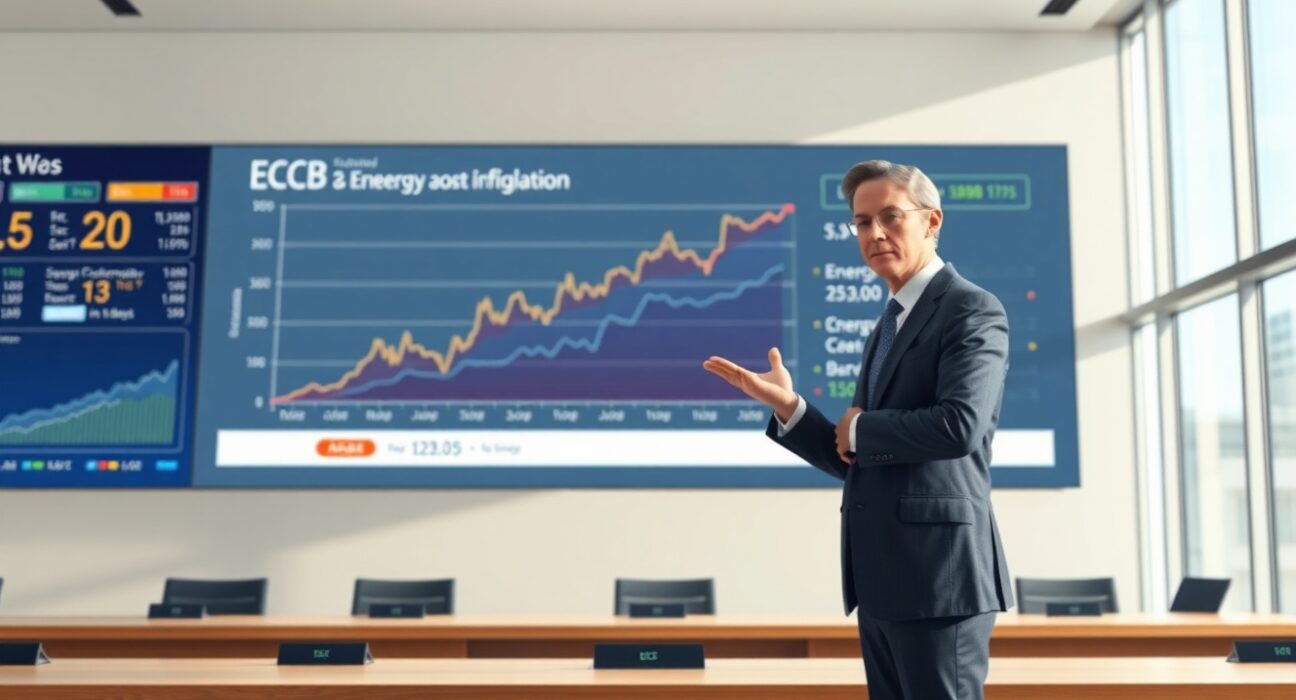
FRANKFURT, Germany — European Central Bank Executive Board member Klaas Knot delivered a significant monetary policy warning today, stating that current energy price dynamics risk becoming entrenched in the Eurozone economy more rapidly than during the 2022 energy crisis. This assessment comes as the ECB faces complex inflation management challenges heading into 2025.
ECB’s Sleijpen Delivers Critical Energy Price Warning
During a monetary policy symposium at the Bundesbank, Knot emphasized the structural nature of current energy market pressures. Consequently, he highlighted how these differ substantially from the transitory shocks witnessed two years prior. Specifically, he pointed to fundamental supply constraints and geopolitical realignments creating persistent inflationary pressures. Moreover, the transition to renewable energy sources involves substantial upfront investment costs that temporarily elevate energy prices across production chains.
The ECB’s analysis reveals concerning transmission mechanisms. For instance, energy costs now influence production expenses more directly than in previous decades. Additionally, businesses demonstrate greater willingness to pass these costs to consumers, creating secondary inflationary effects. Furthermore, wage negotiations increasingly reference energy-driven living cost increases, potentially establishing a wage-price spiral.
Comparative Analysis: 2022 Crisis Versus Current Dynamics
Economic data illustrates crucial differences between the 2022 energy shock and current conditions. Initially, the 2022 crisis resulted primarily from sudden supply disruptions following geopolitical events. However, current pressures stem from multiple structural factors operating simultaneously. These include:
- Infrastructure investment gaps in energy transmission and storage
- Regulatory compliance costs associated with climate transition policies
- Geopolitical fragmentation of global energy markets
- Demand growth from digitalization and industrial transformation
Historical comparison data reveals the acceleration risk:
| Indicator | 2022 Peak Period | Current Trend (2025) | Transmission Speed |
|---|---|---|---|
| Energy to Core Inflation | 6-9 months | 3-6 months | 50% faster |
| Business Price Adjustment | Delayed 2 quarters | Immediate to 1 quarter | 100% faster |
| Wage Indexation Response | Limited initially | Widespread in negotiations | Significantly broader |
Monetary Policy Implications for the Eurozone
Knot’s warning carries substantial implications for ECB decision-making. Primarily, it suggests that conventional monetary policy tools may require earlier or more substantial deployment. Simultaneously, the ECB must balance inflation containment against economic growth preservation. Specifically, interest rate adjustments must consider how energy costs affect different Eurozone regions unevenly.
ECB research indicates that energy-intensive industries face particular vulnerability. For example, chemical production and basic metals manufacturing experience disproportionate cost pressures. Therefore, monetary policy must account for sectoral disparities while maintaining price stability across the currency union. Additionally, fiscal policy coordination becomes increasingly crucial for managing distributional effects.
Structural Factors Driving Persistent Energy Inflation
Multiple structural developments contribute to the entrenchment risk identified by Knot. First, global energy supply chains continue undergoing significant reconfiguration. Second, climate adaptation investments require substantial capital expenditure that temporarily elevates energy costs. Third, security considerations prompt diversification away from historically cost-efficient suppliers toward more expensive alternatives.
Energy market analysts identify three primary transmission channels:
- Production cost channel: Energy represents 20-40% of operational costs in manufacturing
- Transportation cost channel: Logistics and distribution networks face elevated fuel expenses
- Household expenditure channel: Residential energy costs influence consumption patterns and wage demands
These channels interact to create broader inflationary pressures. Consequently, the ECB monitors second-round effects meticulously. Specifically, they track how businesses adjust pricing strategies and how labor markets respond to changing living costs.
Expert Perspectives on Policy Responses
Monetary policy specialists emphasize the complexity of the current situation. Dr. Elena Schmidt, former IMF European Department director, notes: “The ECB faces a dual challenge. They must prevent energy-driven inflation from becoming embedded in expectations while avoiding excessive tightening that could stall the green transition.” This perspective highlights the delicate balance required in policy formulation.
Energy economists further point to infrastructure limitations. According to International Energy Agency data, European energy storage capacity remains insufficient for demand volatility management. Therefore, price spikes occur more frequently during supply-demand mismatches. These structural deficiencies require coordinated policy responses beyond monetary measures alone.
Regional Variations Within the Eurozone
Energy price impacts demonstrate significant regional variation across Eurozone economies. Northern European nations with substantial renewable infrastructure experience different transmission mechanisms than southern European countries relying more on imported energy. Industrial structure variations further complicate the inflation picture.
Germany’s manufacturing-intensive economy faces particular exposure to industrial energy costs. Conversely, service-oriented economies like Malta experience different inflationary dynamics. The ECB’s single monetary policy must accommodate these diverse conditions while maintaining price stability across all member states. This challenge represents one of the most complex aspects of current ECB decision-making.
Conclusion
ECB Executive Board member Klaas Knot’s warning about energy price entrenchment highlights a critical challenge for European monetary policy in 2025. The faster transmission of energy costs into broader inflation compared to the 2022 crisis requires vigilant monitoring and potentially earlier policy responses. Structural factors in energy markets, combined with changing business and consumer behavior, create persistent inflationary pressures that demand sophisticated policy approaches. As the Eurozone navigates this complex landscape, coordinated action between monetary, fiscal, and energy policy authorities becomes increasingly essential for maintaining economic stability while supporting necessary transitions.
FAQs
Q1: What does “entrenched” mean in the context of energy prices?
In monetary policy terminology, “entrenched” refers to inflation that becomes embedded in economic expectations and behavior. When energy prices become entrenched, businesses and consumers expect continued increases and adjust their pricing, wage demands, and spending patterns accordingly, creating self-reinforcing inflationary dynamics.
Q2: How does the current situation differ from the 2022 energy crisis?
The 2022 crisis resulted primarily from sudden supply shocks following geopolitical events. Current pressures stem from multiple structural factors including infrastructure investment gaps, regulatory compliance costs for climate transition, geopolitical market fragmentation, and growing demand from digitalization and industrial transformation.
Q3: What are the main transmission channels for energy price inflation?
Three primary channels exist: the production cost channel affecting manufacturing expenses, the transportation cost channel impacting logistics and distribution, and the household expenditure channel influencing consumption patterns and wage negotiations. These channels interact to create broader inflationary pressures.
Q4: How might the ECB respond to entrenched energy price inflation?
The ECB may deploy conventional monetary policy tools earlier or more substantially, potentially adjusting interest rates to contain inflation while balancing economic growth preservation. Policy responses must account for sectoral disparities and regional variations across the Eurozone while coordinating with fiscal authorities.
Q5: Why does energy price entrenchment matter for ordinary consumers?
Entrenched energy inflation affects living costs directly through household energy bills and indirectly through increased prices for goods and services as businesses pass on higher production and transportation expenses. This can reduce purchasing power and influence wage negotiations, impacting overall economic wellbeing.
Disclaimer: The information provided is not trading advice, Bitcoinworld.co.in holds no liability for any investments made based on the information provided on this page. We strongly recommend independent research and/or consultation with a qualified professional before making any investment decisions.