

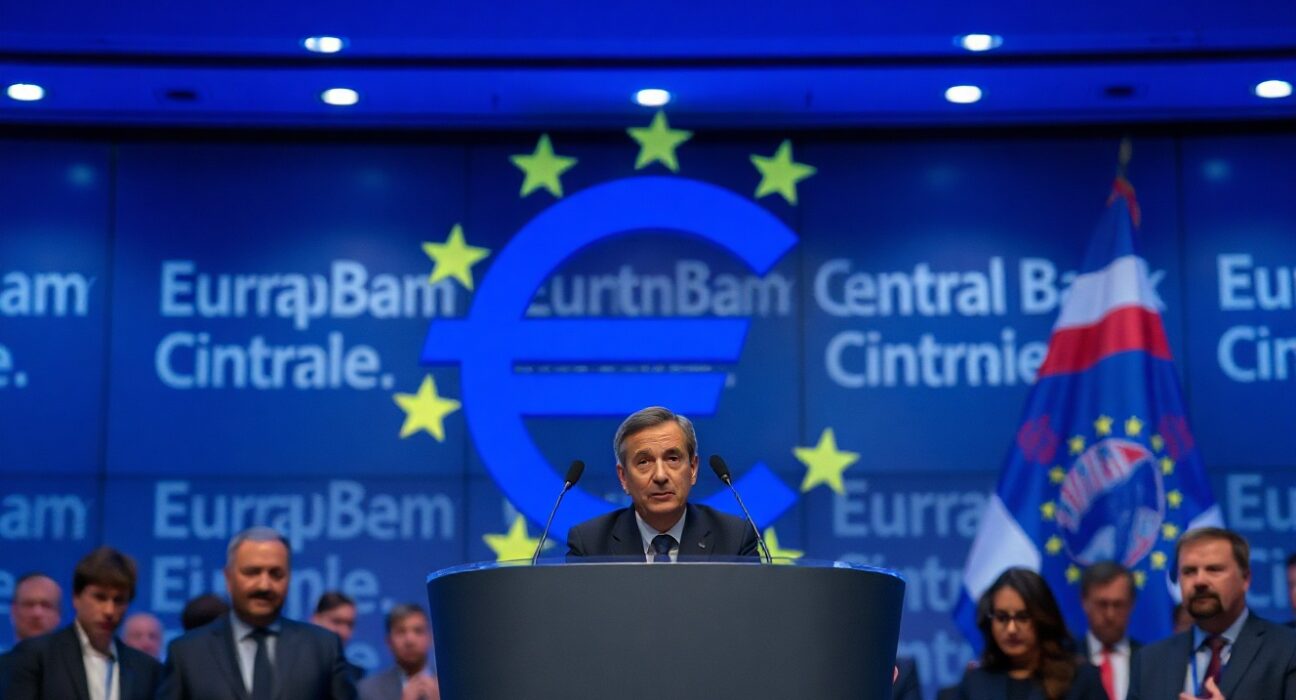
The euro is holding its ground this week as a series of European Central Bank (ECB) speakers offer nuanced guidance on the monetary policy outlook, according to a note from ING. The Dutch bank’s analysts suggest that the coordinated messaging is helping to stabilize the single currency, even as broader market uncertainty persists.
ECB Communication in Focus
Over the past several days, multiple ECB policymakers have taken the stage, delivering remarks that appear carefully calibrated to manage market expectations. ING notes that while no single speech has shifted the dial dramatically, the collective tone reinforces a patient and data-dependent approach to interest rate decisions. This is particularly relevant as the eurozone economy navigates uneven growth and sticky inflation in certain service sectors.
Key speakers have included Chief Economist Philip Lane and Executive Board member Isabel Schnabel, both of whom emphasized the need to see more conclusive evidence that inflation is sustainably returning to the 2% target before committing to further policy moves. Their comments have largely aligned with the ECB’s recent decision to hold rates steady after a series of cuts earlier in the year.
Market Implications for the Euro
For currency markets, the message is clear: the ECB is in no rush to ease further, which provides a floor under the euro. ING points out that this guidance helps differentiate the ECB from the Federal Reserve, which has signaled more aggressive easing ahead. This policy divergence is a key driver for the EUR/USD pair, which has been trading in a relatively tight range near 1.08.
The analysts also caution that the euro’s resilience may be tested if upcoming economic data, particularly the eurozone composite PMI and German industrial production figures, disappoints. However, for now, the ECB’s communication strategy appears to be successfully anchoring expectations, reducing the risk of a sharp sell-off.
Why This Matters for Investors
For forex traders and investors with euro-denominated exposure, understanding the ECB’s forward guidance is crucial. The central bank’s messaging directly influences short-term interest rate expectations, which in turn affect bond yields and currency valuations. ING’s analysis provides a useful framework: as long as ECB speakers maintain a cautious tone, the euro is likely to remain supported against currencies where central banks are more dovish.
This also has broader implications for European equities and fixed income markets. A stable euro reduces currency risk for international investors and supports the attractiveness of eurozone assets.
Conclusion
The ECB’s recent wave of public appearances is not merely routine communication. It represents a deliberate effort to manage market expectations without committing to a specific rate path. ING’s assessment suggests this strategy is working, providing a steadying influence on the euro. The next major test will come with the release of key economic data, but for now, the currency remains in a wait-and-see mode, guided by the central bank’s careful words.
FAQs
Q1: Why are ECB speakers important for the euro?
ECB speakers provide forward guidance on monetary policy. Their comments shape market expectations for interest rates, which directly impact currency valuations. Consistent messaging can stabilize the euro, while conflicting signals can cause volatility.
Q2: What did ING specifically say about the recent ECB comments?
ING noted that the collective tone from ECB speakers is patient and data-dependent, reinforcing the central bank’s cautious stance. This helps differentiate the ECB from more dovish central banks like the Fed, supporting the euro.
Q3: What could change the current outlook for the euro?
Weaker-than-expected eurozone economic data, such as a drop in the composite PMI or German industrial production, could challenge the ECB’s narrative and put downward pressure on the euro. Conversely, stronger data could reinforce the current stability.
Disclaimer: The information provided is not trading advice, Bitcoinworld.co.in holds no liability for any investments made based on the information provided on this page. We strongly recommend independent research and/or consultation with a qualified professional before making any investment decisions.
