

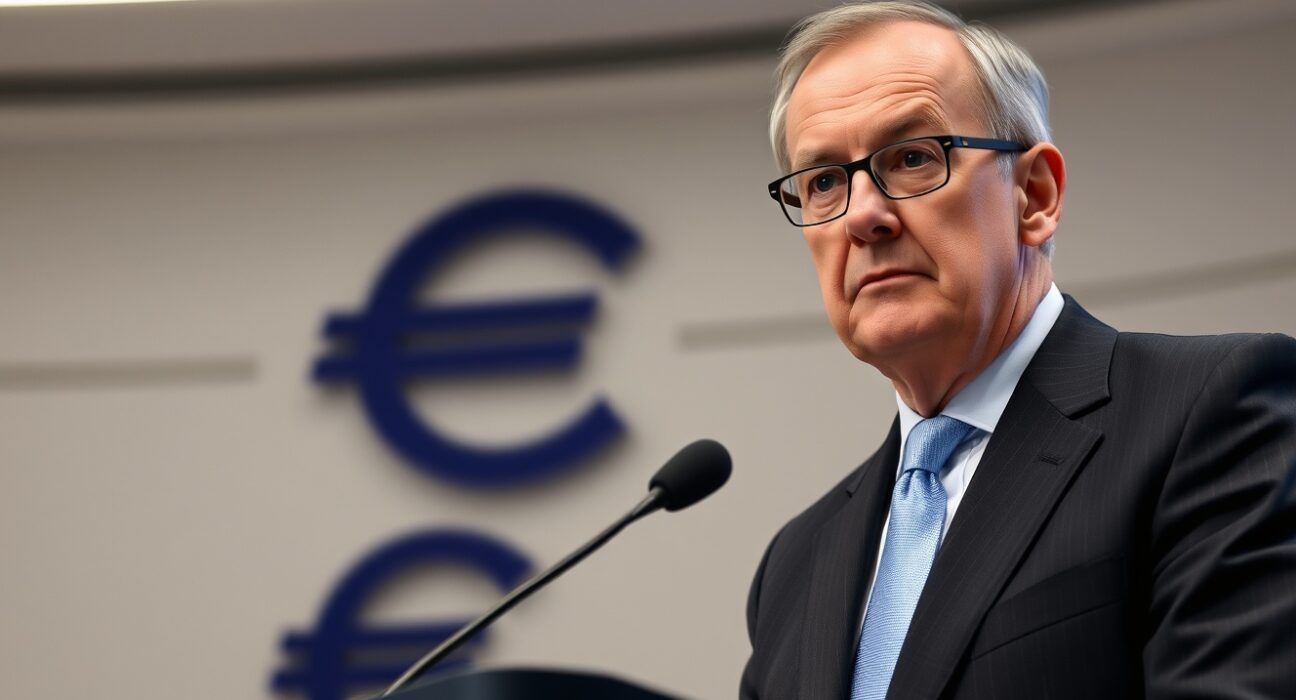
FRANKFURT, Germany – The European Central Bank’s monetary policy path gained crucial clarity today as Governing Council member François Villeroy de Galhau explicitly tempered expectations for immediate action. Speaking at a financial conference in Paris, the Bank of France governor delivered a clear message that markets should not anticipate an interest rate increase at next week’s pivotal ECB meeting. This guidance comes amid swirling speculation about the timing of the central bank’s next policy move.
ECB Rate Decision Framework Under Scrutiny
Villeroy’s comments provide essential context for understanding the ECB’s current decision-making process. The central bank faces a complex balancing act between persistent inflationary pressures and signs of economic softening across the Eurozone. Market participants had increasingly priced in the possibility of a rate hike following recent hawkish comments from some Governing Council members. However, Villeroy’s intervention suggests a more cautious consensus may be forming.
Historical data reveals the ECB typically moves deliberately when adjusting its benchmark rates. The current deposit facility rate stands at 4.00%, following a series of ten consecutive increases that concluded in September 2023. Since then, the bank has maintained a “higher for longer” stance while assessing incoming economic data. Villeroy emphasized this data-dependent approach remains paramount.
Economic Context Behind the Policy Stance
Several key economic indicators likely inform the ECB’s current hesitation. Eurozone inflation, while declining from peak levels, remains above the bank’s 2% target. The latest Harmonised Index of Consumer Prices (HICP) showed headline inflation at 2.4% in April 2025, with core inflation excluding volatile components at 2.8%. Meanwhile, economic growth has stagnated, with preliminary GDP figures showing minimal expansion in the first quarter.
The labor market presents mixed signals. Unemployment remains near historic lows at 6.5%, supporting consumer spending. However, wage growth has moderated slightly from earlier peaks, reducing some inflationary pressure. Manufacturing activity continues to contract according to PMI surveys, while services show modest expansion. This economic backdrop creates genuine uncertainty about the appropriate policy path.
Comparative Central Bank Approaches
Global central bank divergence adds another layer of complexity to the ECB’s decision. The Federal Reserve has paused its rate hike cycle, while the Bank of England maintains a cautious stance. This international context influences capital flows and exchange rates, which the ECB must consider. The euro’s recent strength against the dollar provides some imported disinflation, potentially reducing pressure for immediate tightening.
Financial stability concerns also factor into the equation. Higher interest rates increase debt servicing costs for governments, corporations, and households. With Eurozone government debt averaging 90% of GDP and corporate debt levels elevated, the ECB must weigh inflation control against financial stability risks. Villeroy’s comments suggest this balancing act favors patience.
Market Implications and Forward Guidance
Financial markets responded immediately to Villeroy’s guidance. European government bond yields declined, particularly at the short end of the curve. The euro weakened slightly against major currencies as traders adjusted rate expectations. Equity markets showed modest gains, particularly in rate-sensitive sectors like real estate and utilities.
The forward guidance framework remains crucial for market functioning. The ECB communicates its policy intentions through various channels:
- Official statements following Governing Council meetings
- Economic projections published quarterly
- Speeches by Executive Board members and national governors
- Press conferences with President Christine Lagarde
Villeroy’s comments fit within this communication strategy, helping to manage market expectations and reduce volatility. His status as a centrist within the Governing Council gives his remarks particular weight, often reflecting the consensus view.
The Data-Dependent Path Forward
Looking beyond next week’s meeting, the policy trajectory depends on several evolving factors. The ECB will closely monitor:
| Indicator | Current Status | ECB Threshold for Action |
|---|---|---|
| Core Inflation | 2.8% | Sustained move toward 2% |
| Wage Growth | 4.5% annual | Clear deceleration trend |
| Economic Growth | 0.3% quarterly | Significant deterioration |
| Credit Conditions | Tightening | Excessive restriction |
Most analysts now expect the ECB to maintain current rates through the summer, with potential moves in the fourth quarter. The exact timing will depend on how these indicators evolve. Some hawkish members may continue advocating for earlier action, but Villeroy’s comments suggest the consensus favors patience.
Historical Precedents and Policy Cycles
Current deliberations echo previous ECB policy cycles. During the 2011 rate hike cycle, the bank increased rates twice before reversing course as the Eurozone debt crisis intensified. More recently, the 2022-2023 hiking cycle proceeded cautiously despite high inflation, with pauses between moves to assess effects. This historical pattern suggests the ECB prefers to err on the side of caution when uncertainty is high.
The bank’s dual mandate of price stability and supporting general economic policies requires careful calibration. With inflation declining but still above target, and growth fragile, the case for immediate tightening appears weak. Villeroy’s comments acknowledge this reality while maintaining optionality for future moves if conditions warrant.
Conclusion
François Villeroy de Galhau’s clear guidance provides valuable insight into the ECB’s thinking ahead of next week’s crucial meeting. The central bank appears poised to maintain current interest rates while continuing to assess economic developments. This cautious approach balances inflation risks against growth concerns, reflecting the complex environment facing Eurozone policymakers. Markets now have clearer expectations, reducing potential volatility around the upcoming ECB rate decision. The path forward remains data-dependent, with future moves contingent on inflation dynamics and economic performance.
FAQs
Q1: What exactly did François Villeroy say about the ECB’s upcoming meeting?
Villeroy explicitly stated that markets should not expect an interest rate hike at next week’s ECB Governing Council meeting, emphasizing a data-dependent approach to monetary policy.
Q2: Why is the ECB hesitating to raise interest rates further?
The ECB faces conflicting signals: inflation remains above target but is declining, while economic growth has stagnated and financial stability concerns have increased with higher debt servicing costs.
Q3: How have financial markets reacted to Villeroy’s comments?
European bond yields declined, particularly at shorter maturities, the euro weakened slightly, and rate-sensitive equity sectors gained as traders reduced expectations for immediate tightening.
Q4: What economic indicators will the ECB watch most closely?
Core inflation trends, wage growth developments, economic growth data, and credit conditions will be crucial factors determining future policy moves.
Q5: When might the ECB next change interest rates?
Most analysts expect the ECB to maintain current rates through summer 2025, with potential moves in the fourth quarter depending on how key economic indicators evolve.
Disclaimer: The information provided is not trading advice, Bitcoinworld.co.in holds no liability for any investments made based on the information provided on this page. We strongly recommend independent research and/or consultation with a qualified professional before making any investment decisions.
