
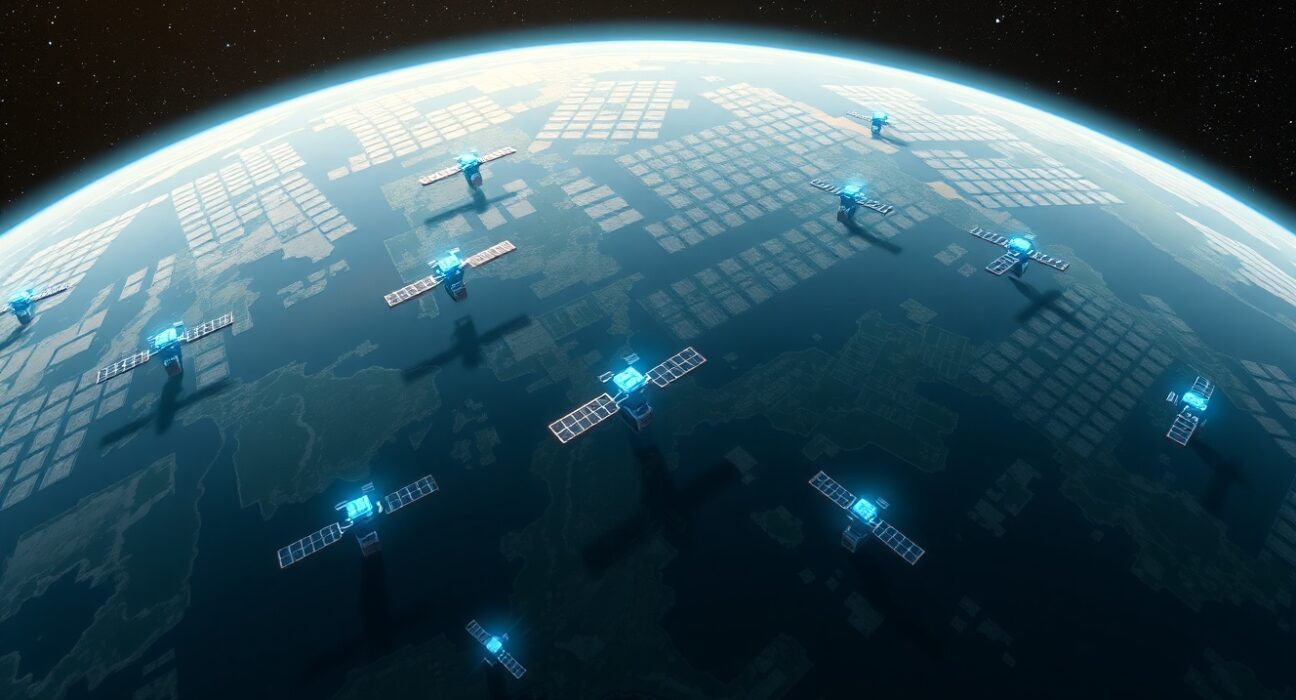
On February 4, 2026, Elon Musk made a bold declaration during a podcast appearance that could redefine the future of artificial intelligence infrastructure. The SpaceX and Tesla CEO predicted that within three years, the most economically compelling location for AI computing would shift from Earth to orbit. This statement followed a significant regulatory filing with the Federal Communications Commission (FCC) for a million-satellite data center network, signaling a serious commitment to orbital computing infrastructure.
SpaceX’s Formal Push for Orbital Data Centers
SpaceX submitted detailed plans to the FCC on January 28, 2026, outlining a massive constellation of computing satellites. Initially, observers speculated about the proposal’s seriousness. However, subsequent developments confirmed the company’s genuine intentions. The FCC accepted the filing on February 2, 2026, and established a public comment period. FCC Chairman Brendan Carr notably shared the document on social media platform X, indicating regulatory interest in the proposal.
This regulatory step represents standard procedure for satellite network approvals. Nevertheless, Chairman Carr’s public endorsement suggests potential favorable consideration. Throughout his tenure, Carr has demonstrated alignment with Trump administration priorities. Musk’s relationship with former President Trump could influence the approval process. The proposal requires thorough technical and regulatory review before implementation.
The Strategic Merger: SpaceX and xAI Integration
On January 31, 2026, SpaceX and xAI completed their formal merger, creating a unified entity combining space launch capabilities with artificial intelligence development. This corporate restructuring provides crucial context for the orbital data center initiative. The merger enables shared infrastructure development and resource allocation between the two Musk-led companies.
The combined entity plans an initial public offering within months, according to corporate filings. This timing suggests accelerated development of orbital computing infrastructure. Financial analysts project significant capital investment requirements for space-based data centers. The IPO could provide necessary funding for initial deployment phases.
Economic Rationale for Space-Based Computing
During his February 4 podcast appearance, Musk articulated the core economic argument for orbital data centers. Solar panels generate approximately five times more power in space than on Earth’s surface. This efficiency advantage addresses one of data centers’ primary operational expenses: energy consumption. Ground-based data centers currently consume about 200 terawatt-hours annually globally, representing roughly 1% of worldwide electricity demand.
Space-based solar power eliminates atmospheric interference and nighttime limitations. However, critics note several unaddressed challenges in Musk’s presentation. Power represents only one component of total operational costs. Other significant expenses include:
- Launch and deployment costs
- Hardware maintenance and replacement
- Thermal management in vacuum conditions
- Data transmission latency
- Radiation hardening requirements
Technical Challenges and Industry Response
Technology analysts have identified multiple technical hurdles for orbital data centers. During the podcast discussion, interviewer Dwarkesh Patel raised concerns about hardware maintenance. Graphics processing units (GPUs) and other computing components experience regular failures in terrestrial data centers. Space-based systems would require either radiation-hardened components or innovative maintenance approaches.
Industry experts suggest several potential solutions currently under development:
| Challenge | Potential Solution | Development Stage |
|---|---|---|
| Hardware Maintenance | Robotic servicing satellites | Prototype testing |
| Thermal Management | Advanced radiative cooling | Laboratory validation |
| Radiation Protection | Nanomaterial shielding | Early research |
| Power Transmission | Laser power beaming | Concept demonstration |
Major cloud computing providers have remained cautious about orbital infrastructure commitments. Amazon Web Services, Microsoft Azure, and Google Cloud continue expanding terrestrial data center investments. However, all three companies maintain active research divisions investigating space-based computing applications.
Market Impact and Competitive Landscape
The global data center market reached $263 billion in 2025, according to industry research firm Gartner. Projections indicate continued growth exceeding 10% annually through 2030. Space-based infrastructure could capture a significant portion of this expanding market. Musk’s prediction suggests orbital data centers might handle more AI computing annually than Earth’s cumulative total by 2031.
Several companies have announced competing space infrastructure projects:
- Amazon’s Project Kuiper: Initially focused on broadband internet, but patent filings suggest computing capabilities
- Microsoft’s Azure Space: Partnership with SpaceX for cloud connectivity, potentially expandable to computing
- Startup Ventures:
Several companies have announced competing space infrastructure projects:
- Amazon’s Project Kuiper: Initially focused on broadband internet, but patent filings suggest computing capabilities
- Microsoft’s Azure Space: Partnership with SpaceX for cloud connectivity, potentially expandable to computing
- Startup Ventures: At least three venture-backed startups exploring orbital computing concepts
The competitive landscape remains fluid with significant technological and regulatory uncertainties. First-mover advantages could prove substantial in this emerging sector.
Regulatory and Environmental Considerations
Orbital data centers face complex regulatory requirements beyond FCC approval. The National Environmental Policy Act (NEPA) requires environmental impact assessments for major space projects. Additionally, the Outer Space Treaty of 1967 establishes international guidelines for space activities. Space debris mitigation represents another critical concern for large satellite constellations.
Environmental advocates have raised questions about the sustainability claims of orbital computing. While space-based solar power offers efficiency advantages, rocket launches generate significant carbon emissions. SpaceX’s Starship vehicle, intended for mass satellite deployment, uses methane fuel with lower emissions than traditional rocket fuels. However, the cumulative environmental impact of frequent launches requires further study.
Implementation Timeline and Technical Roadmap
Musk’s prediction identifies 2028 as a tipping point for orbital data center economics. This timeline aligns with several technological developments:
- Starship Operational Status: SpaceX’s fully reusable launch vehicle expected to achieve regular flight cadence
- GPU Advancements: Next-generation processors with improved radiation tolerance
- Power Beaming Technology: Experimental validation of space-to-space energy transfer
- Automated Assembly: Robotic construction capabilities in orbit
The technical roadmap suggests initial deployments focusing on specific AI workloads rather than general-purpose computing. Training large language models represents a potential early application. These computations require massive parallel processing but tolerate higher latency than real-time applications.
Conclusion
Elon Musk’s orbital data center initiative represents a significant evolution in computing infrastructure strategy. The merger of SpaceX and xAI creates a unique entity capable of addressing both launch and computing challenges. While substantial technical and economic hurdles remain, the potential advantages of space-based computing warrant serious consideration. The FCC’s engagement with SpaceX’s proposal indicates regulatory openness to innovative infrastructure approaches. As AI computing demands continue growing exponentially, orbital data centers might provide necessary expansion beyond terrestrial limitations. The coming years will determine whether Musk’s 2028 prediction proves accurate or optimistic.
FAQs
Q1: What are the primary advantages of orbital data centers compared to ground-based facilities?
A1: Orbital data centers offer several potential advantages including higher solar power efficiency (approximately 5x greater generation), reduced land use requirements, natural cooling in vacuum conditions, and global connectivity coverage. However, these benefits must balance against higher deployment costs and maintenance challenges.Q2: How does the SpaceX-xAI merger affect orbital data center development?
A2: The merger creates a vertically integrated company combining space launch capabilities with artificial intelligence expertise. This structure enables coordinated development of specialized hardware, shared engineering resources, and aligned strategic planning between launch services and computing requirements.Q3: What are the main technical challenges for space-based computing infrastructure?
A3: Key technical challenges include radiation hardening of computing components, thermal management without atmospheric cooling, hardware maintenance and replacement in orbit, power distribution between satellites, and data transmission latency for Earth-based users.Q4: How does the regulatory approval process work for orbital data centers?
A4: SpaceX must obtain FCC approval for satellite communications, NASA coordination for orbital safety, and potentially environmental review under NEPA. International coordination through the International Telecommunication Union may also be required for spectrum allocation.Q5: What types of computing workloads are most suitable for initial orbital deployment?
A5: Batch processing applications like AI model training, scientific simulations, and cryptographic operations represent promising initial workloads. These applications tolerate higher latency than real-time services and benefit from massive parallel processing capabilities.Disclaimer: The information provided is not trading advice, Bitcoinworld.co.in holds no liability for any investments made based on the information provided on this page. We strongly recommend independent research and/or consultation with a qualified professional before making any investment decisions.