


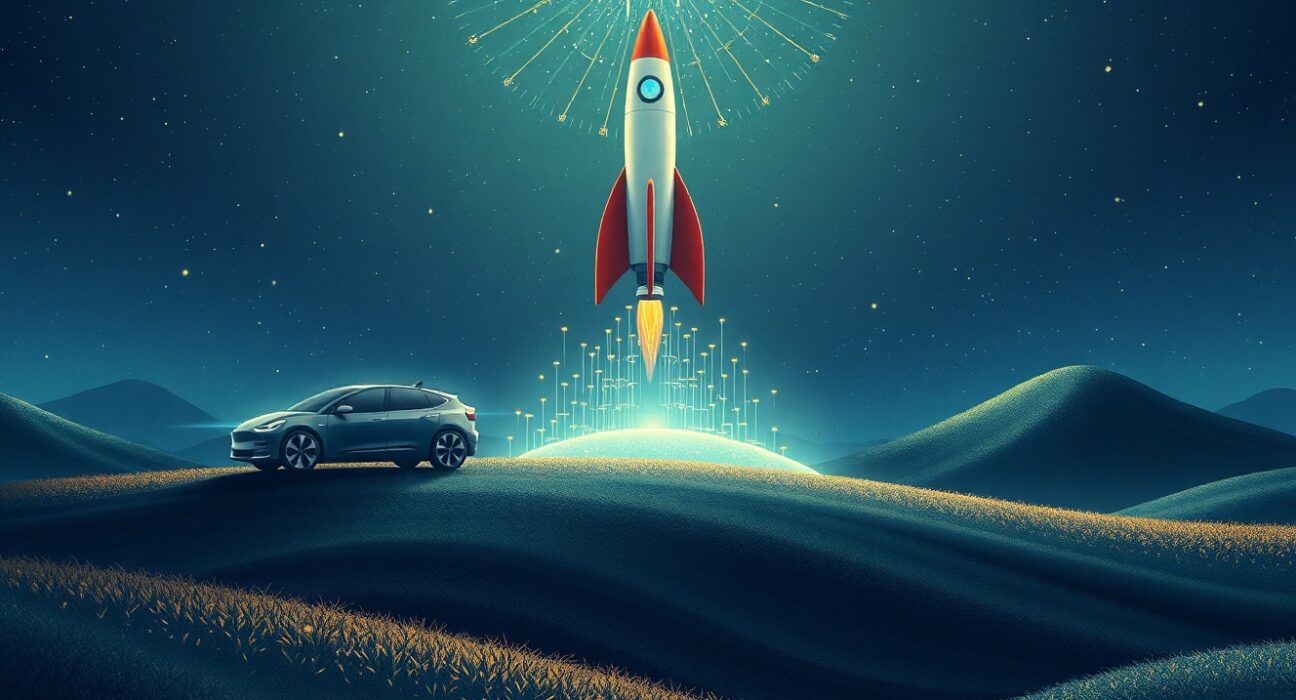
San Francisco, CA – May 2025: In a potential corporate realignment that could reshape entire industries, three pillars of Elon Musk’s empire—SpaceX, Tesla, and xAI—are reportedly engaged in preliminary merger discussions. This strategic bombshell, first reported by Bloomberg and Reuters, signals a dramatic move toward consolidation among the billionaire’s most valuable and disruptive ventures. The talks explore scenarios that could unite space exploration, electric vehicles, and artificial intelligence under a single corporate umbrella, fundamentally altering the technological landscape.
Elon Musk Merger Scenarios: Two Paths to Consolidation
Sources familiar with the matter outline two primary frameworks under consideration. Firstly, a potential merger between aerospace leader SpaceX and electric vehicle pioneer Tesla could occur. This scenario, as reported by Bloomberg, would combine Tesla’s advanced battery and energy storage systems with SpaceX’s launch and satellite infrastructure. Secondly, Reuters indicates a separate path where SpaceX would merge with artificial intelligence firm xAI. This move would strategically position the combined entity ahead of a planned SpaceX initial public offering (IPO) later this year.
Notably, xAI already owns the social media platform X, following a deal last year that valued the AI startup at $80 billion. A SpaceX-xAI merger would therefore integrate products like the Grok chatbot, the X platform, the Starlink satellite internet constellation, and SpaceX’s rocket systems. Both potential mergers align with Musk’s recent actions to consolidate resources and foster deeper collaboration between his companies.
Corporate Evidence and Strategic Motivations
While official representatives from SpaceX and xAI have remained silent, recent corporate filings provide tangible clues. On January 21, two new entities named K2 Merger Sub Inc. and K2 Merger Sub 2 LLC were established in Nevada. Legal experts interpret these filings as a clear signal that Musk’s corporate structure is preparing for significant transactional activity, keeping all strategic options formally open.

The strategic upsides for each merger path are substantial and distinct. A SpaceX-xAI combination could accelerate Musk’s vision of deploying AI data centers in space, leveraging SpaceX’s unique orbital access. Conversely, a SpaceX-Tesla tie-up would powerfully align Tesla’s terrestrial energy storage and battery technology with the power demands of next-generation space-based infrastructure. Both options ultimately serve Musk’s overarching goal of creating synergistic technological ecosystems rather than operating isolated companies.
Financial Interconnections and Valuation Context
The financial web between these companies has grown increasingly dense, providing a clear prelude to consolidation. According to The Wall Street Journal, SpaceX agreed to invest $2 billion in xAI last year. Furthermore, Tesla disclosed earlier this week that it also committed $2 billion to the AI startup. These cross-investments demonstrate a deliberate strategy of resource and capital sharing.
The staggering valuations of each entity underscore the merger’s monumental scale. A recent secondary share sale reportedly valued SpaceX at approximately $800 billion, cementing its status as the most valuable private company in the United States. Tesla maintains a massive public market capitalization, while xAI’s valuation was set at $80 billion during its acquisition of X. Combining any of these behemoths would create a corporate entity of unprecedented market influence and technological breadth.
The IPO Timeline and Musk’s Execution History
A critical factor influencing the merger talks is the anticipated SpaceX IPO. A recent Financial Times report indicated Musk’s desire to take SpaceX public as soon as June 2025. Merging with another high-growth entity like xAI or Tesla before such a listing could create a more compelling narrative for public market investors, combining multiple growth trajectories into one offering.
However, analysts caution that Musk’s ambitious timelines often face delays. Historical precedents, such as the repeated postponements of fully autonomous vehicle capabilities and the Starship orbital flight schedule, suggest that the reported June IPO target may be aspirational. The complexity of merging multibillion-dollar corporations with distinct cultures, regulatory environments, and shareholder bases presents a formidable execution challenge that could extend the timeline.
Market and Competitive Implications
A successful merger would have profound ripple effects across multiple sectors. In the aerospace and defense industry, a combined SpaceX-Tesla or SpaceX-xAI would possess unparalleled vertical integration, from energy systems and AI to launch vehicles and satellites. For the automotive sector, a Tesla merger with SpaceX could accelerate the infusion of aerospace-grade materials and systems engineering into consumer vehicles.
Within the fiercely competitive AI landscape, combining xAI’s research with SpaceX’s real-world data collection capabilities—via Starlink’s global network and other platforms—could create a formidable challenger to current leaders like OpenAI and Google DeepMind. The potential to train AI models on unique datasets from space-based sensors or integrated vehicle fleets represents a significant competitive moat.
Regulatory Hurdles and Antitrust Considerations
Any merger of this magnitude will inevitably attract intense scrutiny from regulatory bodies worldwide, including the U.S. Federal Trade Commission (FTC), the Department of Justice (DOJ), and international counterparts. Regulators will examine whether consolidation reduces competition in critical markets like satellite internet, electric vehicles, or AI development. While the companies operate in seemingly distinct sectors, regulators may view the merger as an attempt to create an overarching “Musk ecosystem” with excessive market power across converging technologies.
Furthermore, Tesla’s status as a publicly traded company adds layers of shareholder approval and securities regulation complexity not present in a purely private merger between SpaceX and xAI. The path of least regulatory resistance may influence the final structure of any deal.
Conclusion
The reported Elon Musk merger talks between SpaceX, Tesla, and xAI represent a pivotal moment in modern corporate strategy. Driven by a vision of deep technological synergy and pre-IPO positioning, these discussions could forge a new kind of conglomerate for the 21st century—one that seamlessly blends terrestrial transport, artificial intelligence, and space-based infrastructure. While significant hurdles involving execution, regulation, and timing remain, the mere fact of these negotiations underscores Musk’s relentless drive to consolidate his ambitions. The outcome will not only redefine his corporate legacy but also set a new precedent for how visionary companies bridge the gap between Earth and the final frontier.
FAQs
Q1: What are the two main merger scenarios being reported?
A1: Reports outline two primary scenarios: a merger between SpaceX and Tesla, combining aerospace and automotive/energy tech, or a merger between SpaceX and xAI (which owns X), integrating space infrastructure with artificial intelligence and social media ahead of a SpaceX IPO.
Q2: What evidence suggests these merger talks are real?
A2: Beyond reports from Bloomberg and Reuters, corporate filings in Nevada from January 21 show the creation of two entities named “K2 Merger Sub Inc.” and “K2 Merger Sub 2 LLC,” which are typical naming conventions for corporate merger vehicles.
Q3: How does a potential SpaceX IPO relate to the merger talks?
A3: A merger, particularly with xAI, could occur before a planned SpaceX IPO to create a more diversified and high-growth public company, making the offering more attractive to investors by combining multiple technological growth stories.
Q4: What are the biggest challenges facing such a merger?
A4: Major challenges include significant regulatory and antitrust scrutiny from global authorities, the complexity of integrating vastly different corporate cultures and operations, securing necessary shareholder approvals (especially for public company Tesla), and executing on an ambitious timeline.
Q5: How have Musk’s companies been financially connected recently?
A5: Recent financial ties include a $2 billion investment by SpaceX into xAI last year and a separate $2 billion investment by Tesla into xAI disclosed just this week, showing a clear pattern of strategic capital alignment.
Q6: What is the potential strategic benefit of merging these companies?
A6: Key strategic benefits include creating powerful synergies—like using Tesla’s energy storage for SpaceX’s operations or placing xAI’s data centers in space via SpaceX—and consolidating resources to accelerate Musk’s long-term visions for interplanetary civilization and advanced AI.
Disclaimer: The information provided is not trading advice, Bitcoinworld.co.in holds no liability for any investments made based on the information provided on this page. We strongly recommend independent research and/or consultation with a qualified professional before making any investment decisions.