

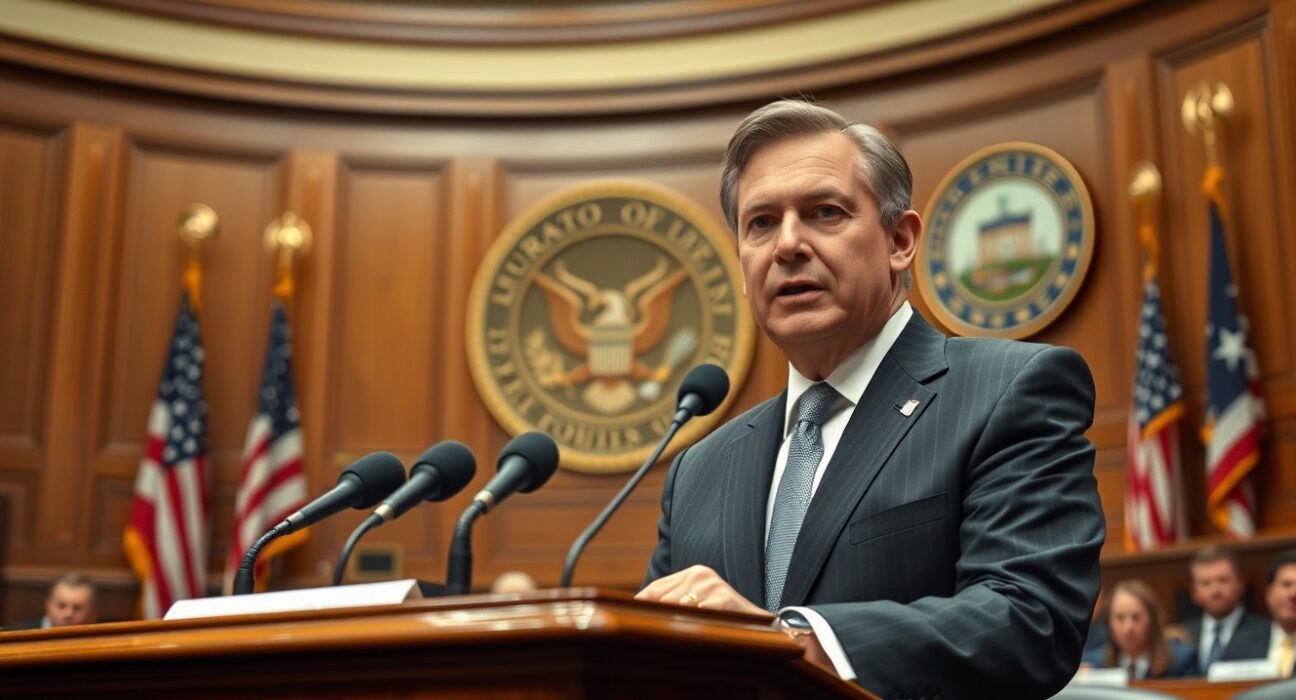
House Majority Whip Tom Emmer has publicly defended his proposed Blockchain Regulatory Certainty Act (BRCA), pushing back against law enforcement criticism and arguing that the bill is essential for the future of decentralized finance in the United States. In an interview with CoinDesk, Emmer dismissed concerns that exempting DeFi developers from money transmitter regulations would hinder law enforcement, calling such arguments a distraction from the real issue of regulatory overreach.
What the Blockchain Regulatory Certainty Act Proposes
The BRCA would explicitly exempt non-custodial software developers in the decentralized finance (DeFi) space from being classified as money transmitters. Under current law, state-level money transmitter regulations vary widely, creating a patchwork of compliance burdens that many developers argue stifle innovation. Emmer emphasized that developers who do not hold or control user funds should not be subject to the same rules as custodial platforms like exchanges or wallet providers.
The bill is part of a broader push in Congress to create a clearer legal framework for digital assets. The Clarity Act, which has already passed the Senate Banking Committee with bipartisan support, aims to provide regulatory certainty for the broader crypto market. Emmer predicted that both pieces of legislation would pass Congress and receive President Donald Trump’s signature, describing the goal as a ‘light-touch’ regulatory approach that limits the authority of agencies like the SEC and FinCEN.
Law Enforcement Concerns and Emmer’s Response
Critics, including some law enforcement officials, have warned that exempting DeFi developers could create loopholes for illicit finance, such as money laundering or sanctions evasion. They argue that non-custodial protocols can still facilitate illegal transactions even if developers do not hold funds. Emmer countered that these concerns are overstated and that focusing on developers distracts from more effective enforcement measures. He pointed to existing anti-money laundering laws that already apply to financial intermediaries, arguing that DeFi developers should not be held to standards designed for banks.
Why This Matters for the Crypto Industry
The outcome of the BRCA debate has significant implications for the U.S. digital asset market. If passed, the bill would provide legal clarity for developers, potentially encouraging more innovation and investment in the United States rather than overseas. It would also reduce the risk of developers facing state-by-state enforcement actions, which have created uncertainty in the industry. However, the bill faces opposition from those who argue that a light-touch approach could undermine financial oversight.
Conclusion
Tom Emmer’s defense of the Blockchain Regulatory Certainty Act highlights the ongoing tension between fostering innovation and ensuring regulatory compliance in the crypto space. With the Clarity Act already advancing in the Senate, the BRCA represents a key piece of legislation that could shape the future of DeFi regulation in the United States. The debate is likely to intensify as Congress moves closer to a vote, with both industry advocates and law enforcement stakeholders closely watching the outcome.
FAQs
Q1: What is the Blockchain Regulatory Certainty Act?
The Blockchain Regulatory Certainty Act is a proposed U.S. federal bill that would exempt non-custodial DeFi software developers from being regulated as money transmitters, clarifying that they are not subject to state-level money transmission laws if they do not hold user funds.
Q2: Why does Tom Emmer support this bill?
Emmer argues that current state-by-state regulations are inconsistent and stifle innovation. He believes that developers who do not control user assets should not face the same regulatory burden as custodial platforms, and that a light-touch approach will enhance U.S. competitiveness in the digital asset market.
Q3: What are the main criticisms of the bill?
Law enforcement officials and some regulators have expressed concern that exempting DeFi developers could create gaps in anti-money laundering and sanctions enforcement, potentially allowing illicit finance to flow through non-custodial protocols without adequate oversight.
Disclaimer: The information provided is not trading advice, Bitcoinworld.co.in holds no liability for any investments made based on the information provided on this page. We strongly recommend independent research and/or consultation with a qualified professional before making any investment decisions.
