
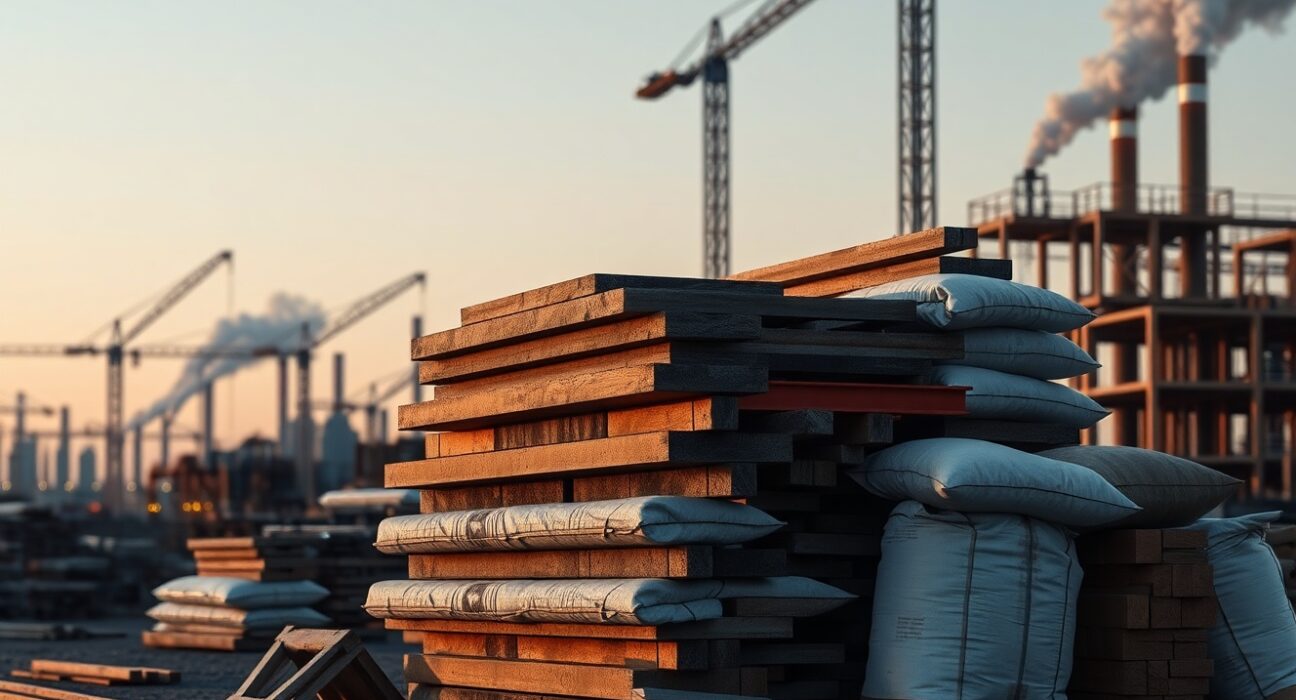
A significant energy price shock is currently driving building material costs higher across global markets, according to recent analysis from ING Economics. This development, observed throughout early 2025, presents substantial challenges for construction sectors worldwide. The interconnected nature of energy markets and material production creates complex economic pressures that affect everything from residential housing to major infrastructure projects. Consequently, industry stakeholders must navigate this volatile landscape with careful strategic planning.
Energy Price Shock Fundamentals and Building Material Impacts
The relationship between energy prices and building material costs represents a fundamental economic connection. Manufacturing processes for essential construction materials require substantial energy inputs. For instance, cement production involves high-temperature kilns, while steel manufacturing depends on intensive heating processes. Aluminum smelting, similarly, consumes enormous amounts of electricity. Therefore, when energy prices experience volatility, these production costs transfer directly to material pricing.
ING’s analysis identifies several key transmission mechanisms. First, direct production costs increase immediately with higher energy prices. Second, transportation expenses rise for raw materials and finished products. Third, mining and extraction operations face elevated operational costs. Fourth, secondary processing facilities experience compressed profit margins. These combined factors create upward pressure throughout the supply chain.
Recent data reveals concerning trends across multiple material categories:
- Cement and Concrete: Energy represents 30-40% of production costs
- Steel Products: Electricity and natural gas account for 20-25% of manufacturing expenses
- Aluminum Components: Power consumption constitutes 40-50% of production costs
- Glass Manufacturing: Melting processes require continuous high-temperature operations
- Plastic Construction Materials: Petrochemical feedstocks link directly to energy markets
These percentages demonstrate why energy price movements create immediate material cost reactions. Moreover, the cumulative effect across multiple material categories compounds overall construction inflation.
Historical Context and Current Market Conditions
Understanding the current energy price shock requires examining historical patterns. Previous energy volatility episodes, including the 1970s oil crises and 2008 price spikes, produced similar construction material inflation. However, today’s market conditions feature unique characteristics. Renewable energy transitions, geopolitical tensions, and post-pandemic recovery patterns create a distinctive economic environment. Consequently, traditional response mechanisms may prove less effective.
Current energy market dynamics show particular stress points. Natural gas prices remain elevated in European markets. Electricity costs continue fluctuating in Asian manufacturing centers. Petroleum derivatives maintain historically high levels in transportation sectors. These conditions persist despite various government interventions and strategic reserve releases. Therefore, building material producers face sustained cost pressures without immediate relief prospects.
The timeline of recent developments reveals accelerating challenges:
| Period | Energy Price Movement | Material Cost Impact |
|---|---|---|
| Q4 2024 | Initial volatility begins | 5-8% material increases |
| Q1 2025 | Sustained price elevation | 12-15% cumulative increases |
| Current Phase | Secondary transmission effects | Projected 18-22% annual inflation |
This progression demonstrates how energy markets transmit shocks through material supply chains. Additionally, secondary effects including transportation and logistics expenses amplify initial impacts.
Expert Analysis from ING Economics
ING’s research team provides detailed insights into these economic relationships. Their analysis combines commodity market data with manufacturing cost structures. The resulting models show clear correlation patterns between energy indices and material price movements. Specifically, natural gas prices demonstrate particularly strong connections to cement and steel production costs. Electricity market volatility, meanwhile, correlates strongly with aluminum and glass manufacturing expenses.
The banking group’s economists emphasize several critical observations. First, energy-intensive materials show immediate price reactions. Second, less energy-dependent materials experience delayed but significant impacts. Third, regional energy market differences create material cost variations across geographical markets. Fourth, inventory management strategies temporarily moderate but cannot eliminate transmission effects. These insights help construction firms develop more effective response strategies.
ING’s methodology involves comprehensive data collection from multiple sources. They analyze producer price indices across material categories. They track energy commodity futures markets. They monitor transportation cost indicators. They survey manufacturing facilities about operational adjustments. This multi-faceted approach provides robust analytical foundations for their conclusions.
Sector-Specific Impacts and Construction Industry Responses
Different construction sectors experience varying impacts from energy-driven material inflation. Residential housing projects face particular challenges due to fixed-price contracts and consumer sensitivity. Commercial construction, meanwhile, encounters financing difficulties as cost projections become uncertain. Infrastructure development, although often publicly funded, still confronts budget overruns and timeline extensions. Each sector must develop tailored response mechanisms.
The construction industry employs several strategies to manage these cost pressures. Material substitution represents one common approach, though options remain limited for structural components. Design optimization reduces material requirements through engineering efficiencies. Project phasing spreads costs across longer timelines. Supplier diversification seeks alternative sourcing options. Contract restructuring shares risk more equitably between parties. These approaches provide partial mitigation but cannot eliminate fundamental cost increases.
Regional variations significantly influence impact severity. Markets with domestic energy production experience moderated effects. Regions dependent on energy imports face amplified challenges. Climate conditions affect both energy demand and construction activity patterns. Regulatory environments either accelerate or delay cost transmission. These geographical differences create complex global market conditions.
Future Outlook and Market Projections
Market analysts project continued volatility through 2025 and into 2026. Energy transition investments may gradually reduce long-term price sensitivity. However, immediate to medium-term outlooks suggest persistent challenges. Building material inventories provide limited buffering capacity. Production capacity constraints prevent rapid supply responses. Transportation networks face their own energy-related cost pressures. Therefore, construction sectors must prepare for extended adjustment periods.
Technological innovations offer potential long-term solutions. Energy-efficient manufacturing processes reduce cost sensitivity. Alternative materials with lower energy requirements emerge gradually. Digital optimization improves supply chain management. Renewable energy integration at production facilities creates cost stability. These developments, however, require substantial investment and implementation timelines.
Policy interventions represent another potential influence factor. Energy market regulations could moderate extreme volatility. Strategic reserves might buffer critical supply disruptions. International cooperation may address geopolitical tensions affecting energy flows. Tax incentives could encourage energy-efficient construction practices. The effectiveness of these measures depends on coordinated implementation across multiple jurisdictions.
Conclusion
The energy price shock driving building material costs presents significant challenges for global construction markets. ING’s analysis reveals fundamental economic connections between energy markets and material production. Historical context shows similar patterns during previous volatility episodes. Current conditions feature unique characteristics requiring tailored responses. Sector impacts vary across residential, commercial, and infrastructure projects. Future outlooks suggest continued adjustments as markets seek new equilibriums. Ultimately, understanding these energy price transmission mechanisms enables more effective strategic planning throughout construction value chains.
FAQs
Q1: How quickly do energy price changes affect building material costs?
Energy price changes typically affect building material costs within one to three months. Direct production costs respond most quickly, while transportation and secondary effects manifest over slightly longer periods. The exact timing depends on material-specific production cycles and inventory management practices.
Q2: Which building materials are most sensitive to energy price fluctuations?
Cement, aluminum, and glass demonstrate the highest sensitivity to energy price fluctuations due to their energy-intensive manufacturing processes. Steel shows moderate sensitivity, while wood products exhibit lower direct sensitivity but still experience transportation-related cost impacts.
Q3: Can construction projects use alternative materials to avoid these cost increases?
Material substitution options remain limited for structural components where specific performance characteristics are required. However, non-structural elements and finish materials offer more flexibility. Design optimization and efficiency improvements often provide more practical cost management approaches.
Q4: How do regional energy market differences affect material cost impacts?
Regions with domestic energy production typically experience moderated cost impacts compared to import-dependent markets. Energy mix variations (renewable versus fossil sources) also influence cost transmission patterns. Transportation distances between energy sources and manufacturing facilities create additional regional variations.
Q5: What long-term solutions might reduce energy price sensitivity in construction?
Long-term solutions include energy-efficient manufacturing technologies, alternative low-energy materials, renewable energy integration at production facilities, and improved supply chain digitalization. These developments require substantial investment but offer potential for reduced cost volatility over extended timeframes.
Disclaimer: The information provided is not trading advice, Bitcoinworld.co.in holds no liability for any investments made based on the information provided on this page. We strongly recommend independent research and/or consultation with a qualified professional before making any investment decisions.