

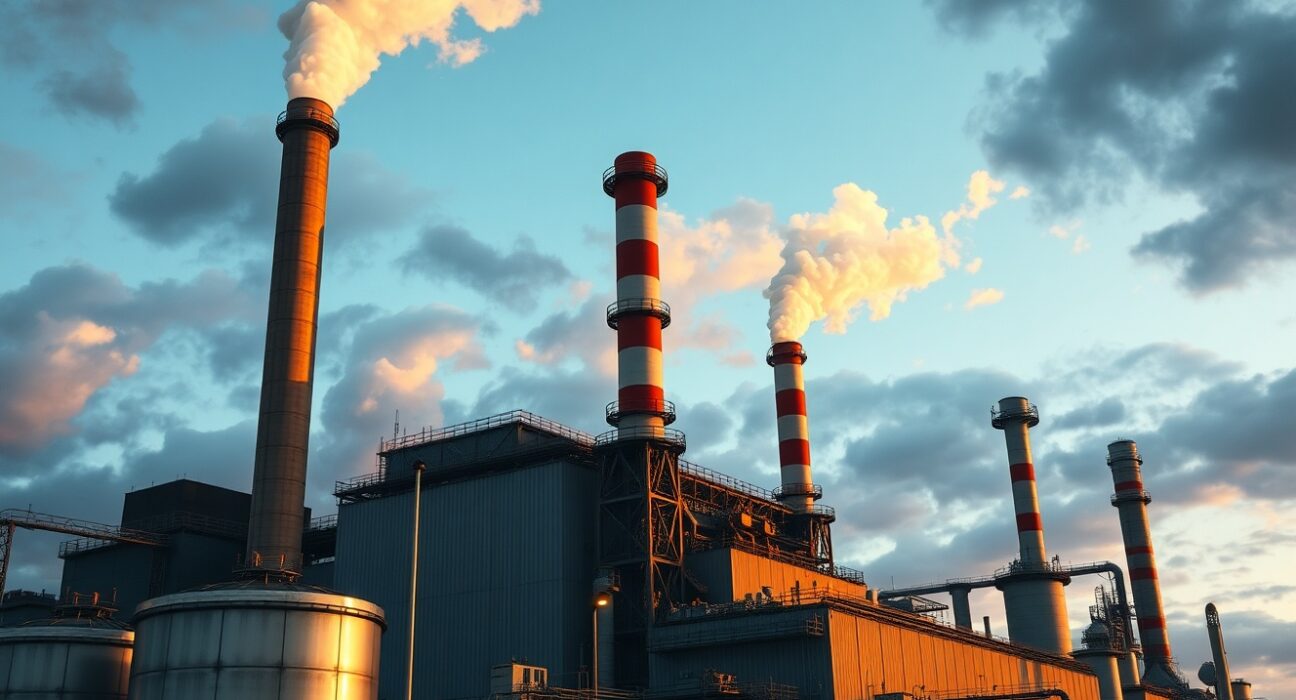
Commerzbank has issued a cautionary note on the European Union’s planned reforms to its Emissions Trading System (ETS), warning that the changes could significantly raise production costs for the aluminium industry. The analysis highlights a growing tension between the bloc’s climate ambitions and the competitiveness of energy-intensive manufacturing sectors.
Understanding the EU ETS Reform
The EU ETS, the world’s largest carbon market, is undergoing a major overhaul as part of the bloc’s ‘Fit for 55’ package. Key changes include a faster reduction of emission allowances, the phase-out of free allocations for industrial sectors, and the introduction of the Carbon Border Adjustment Mechanism (CBAM). For aluminium producers, which rely heavily on electricity for smelting, these adjustments mean higher direct and indirect carbon costs.
Commerzbank’s analysts point out that aluminium smelting is one of the most electricity-intensive industrial processes. Under the reformed system, producers will face rising costs for both purchased electricity (passed through from power generators) and any direct emissions from their operations. The bank estimates that the cost impact could reach several hundred euros per tonne of aluminium, narrowing margins for European producers already competing with imports from regions with less stringent climate policies.
Implications for the European Aluminium Industry
The warning comes at a delicate time for the sector. European aluminium production has already declined in recent years due to high energy prices and global oversupply. The EU ETS reform, if implemented without adequate transitional support, could accelerate plant closures and increase reliance on imports from countries like China, Russia, and the Middle East, which are not subject to equivalent carbon pricing.
Commerzbank’s note also underscores the risk of carbon leakage, where production shifts outside the EU to avoid carbon costs, undermining the environmental purpose of the ETS. While CBAM is designed to address this by applying a carbon price to imports, its phased implementation and complex administrative requirements may not fully protect domestic producers in the short term.
What This Means for Investors and Policymakers
For investors, the analysis signals that aluminium stocks and related exchange-traded funds could face headwinds as carbon costs rise. Policymakers, meanwhile, face a balancing act: maintaining the integrity of the EU’s climate framework while preserving the industrial base necessary for the green transition. Aluminium is critical for lightweight vehicles, solar panels, and energy-efficient buildings, making its domestic production strategically important.
The Commerzbank report adds to a growing body of research suggesting that without targeted compensation or innovation support, the EU ETS reform could inadvertently weaken the very industries needed to achieve net-zero targets.
Conclusion
Commerzbank’s analysis serves as a timely reminder that climate policy must be carefully calibrated to avoid unintended economic damage. The aluminium sector’s exposure to rising carbon costs under the EU ETS reform warrants close monitoring by market participants and policymakers alike. The outcome will likely influence investment decisions, trade flows, and the pace of Europe’s industrial decarbonisation for years to come.
FAQs
Q1: What is the EU ETS reform and why does it affect aluminium?
The EU ETS reform accelerates the reduction of carbon emission allowances and phases out free allocations for industry. Aluminium smelting is highly electricity-intensive, so rising carbon costs directly increase production expenses.
Q2: How does Commerzbank estimate the cost impact on aluminium producers?
Commerzbank models the combined effect of higher electricity costs (due to carbon pass-through from power generators) and direct emission costs, estimating a rise of several hundred euros per tonne of aluminium.
Q3: What is carbon leakage and how does CBAM address it?
Carbon leakage occurs when production moves to regions with weaker climate policies to avoid carbon costs. The Carbon Border Adjustment Mechanism (CBAM) aims to level the playing field by applying a carbon price to imports, but its phased rollout may leave domestic producers exposed in the interim.
Disclaimer: The information provided is not trading advice, Bitcoinworld.co.in holds no liability for any investments made based on the information provided on this page. We strongly recommend independent research and/or consultation with a qualified professional before making any investment decisions.
