

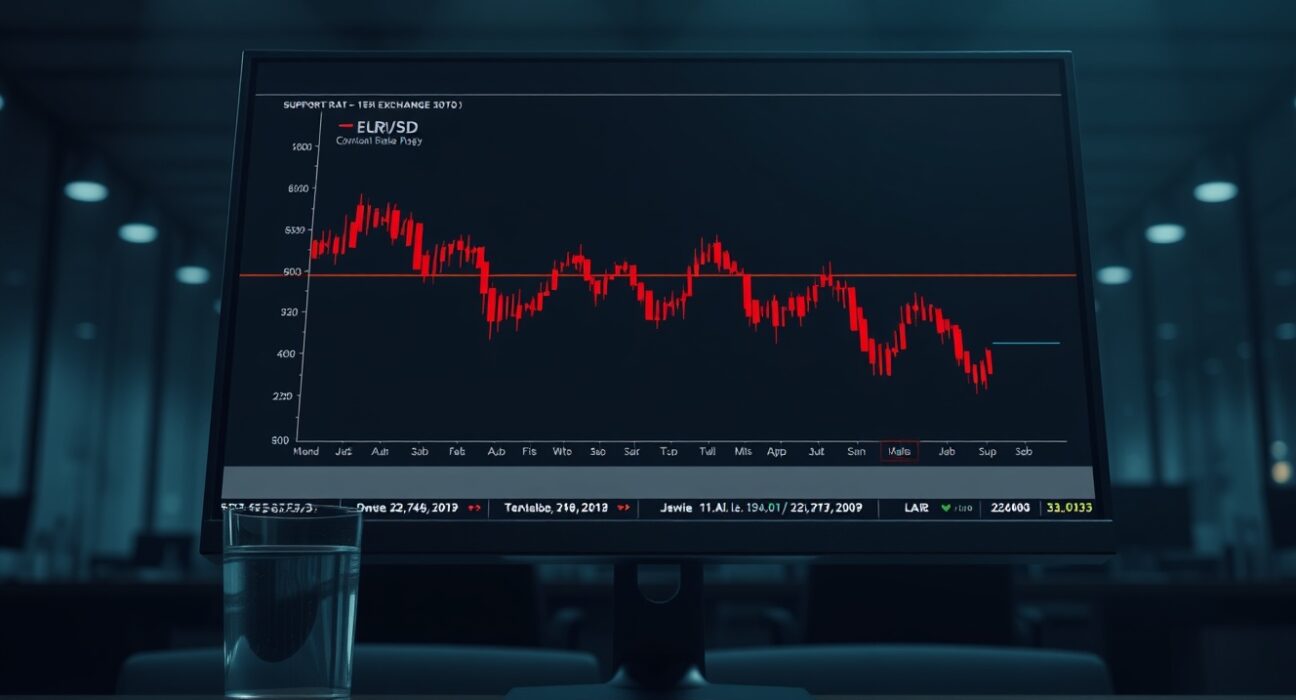
The EUR/USD currency pair faces continued downside risk within a clearly defined trading range, according to the latest analysis from United Overseas Bank (UOB). This assessment, released on [Current Date], provides a crucial framework for traders navigating the complex foreign exchange landscape. UOB’s analysis highlights that while the euro shows weakness against the US dollar, the movement remains contained within specific boundaries, offering both opportunities and warnings for market participants.
EUR/USD Downside Risk: UOB’s Core Analysis
UOB’s research team identifies the key support level for the EUR/USD at 1.0800. This level has held firm during recent sessions, preventing a sharper decline. The bank also notes a resistance level near 1.0950, which caps any upward momentum. This defined range creates a clear scenario for traders: the pair is likely to test the lower boundary again. The downside risk remains elevated due to several macroeconomic factors. These include the European Central Bank’s (ECB) cautious monetary policy stance and the relative strength of the US economy. UOB’s analysis does not predict a breakout soon. Instead, it expects the pair to oscillate within this band. This view aligns with the broader market consensus that the euro lacks a strong catalyst for a sustained rally.
Key Levels and Market Context
The defined range between 1.0800 and 1.0950 is critical for short-term trading strategies. A break below 1.0800 would signal a significant bearish shift. Conversely, a move above 1.0950 could indicate renewed buying interest. However, UOB’s base case favors the downside. The bank points to the diverging economic performance between the Eurozone and the United States. The US economy shows resilience, with strong employment data and persistent inflation. This supports the Federal Reserve’s higher-for-longer interest rate narrative. In contrast, the Eurozone struggles with sluggish growth and a more dovish ECB. This fundamental gap fuels the EUR/USD downside risk.
Macroeconomic Drivers Behind the Downside Risk
Several macroeconomic factors drive the current EUR/USD downside risk. First, the interest rate differential between the US and the Eurozone remains wide. The Federal Reserve maintains rates above 5%, while the ECB’s key rate sits at 4%. This gap makes the US dollar more attractive to yield-seeking investors. Second, geopolitical uncertainties, including the ongoing conflict in Ukraine, weigh on the euro. These uncertainties dampen business confidence and investment in the Eurozone. Third, China’s economic slowdown impacts European exports. The Eurozone’s manufacturing sector, heavily reliant on Chinese demand, shows signs of contraction. These factors collectively reinforce the bearish outlook for the euro.
Impact on Global Forex Markets
The EUR/USD pair is the most traded currency pair globally. Its movements have a ripple effect across all forex markets. A sustained decline in the pair strengthens the US dollar against other major currencies. This includes the Japanese yen, British pound, and Swiss franc. Traders often use the EUR/USD as a barometer for global risk sentiment. A falling euro typically signals risk aversion. This leads to capital flows into safe-haven assets like the US dollar and gold. The current downside risk therefore influences trading strategies worldwide. It also impacts corporate hedging decisions for multinational companies. Exporters in the Eurozone may benefit from a weaker euro, as their goods become cheaper abroad. However, importers face higher costs for dollar-denominated commodities.
Technical Analysis and Trading Implications
From a technical perspective, the EUR/USD chart shows a clear range-bound pattern. The pair has tested the 1.0800 support multiple times in the past month. Each test has resulted in a bounce, but the bounces lack strength. The Relative Strength Index (RSI) hovers near 45, indicating bearish momentum without being oversold. The Moving Average Convergence Divergence (MACD) shows a bearish crossover, reinforcing the downside risk. Traders should watch for a decisive close below 1.0800. Such a move could trigger stop-loss orders and accelerate selling. Conversely, a close above 1.0900 would challenge the bearish view. UOB advises a cautious approach, recommending traders avoid chasing the market. Instead, they should wait for clear breakouts or breakdowns before taking directional positions.
Expert Perspectives and Market Sentiment
Market analysts largely echo UOB’s cautious stance. Jane Foley, Senior FX Strategist at Rabobank, notes that “the euro remains vulnerable to further losses given the ECB’s reluctance to signal rate hikes.” Similarly, ING’s FX strategist Francesco Pesole states that “the dollar’s strength is a dominant theme, and the EUR/USD is a key victim.” The market sentiment, as measured by the Commitment of Traders (COT) report, shows speculative net short positions on the euro increasing. This indicates that large traders are betting on further declines. However, some contrarian views exist. A sudden improvement in Eurozone data, such as a rebound in the German IFO business climate index, could trigger a short-covering rally. But for now, the consensus favors the downside risk.
Timeline and Potential Catalysts
Looking ahead, several events could break the current range. The next ECB monetary policy meeting, scheduled for [Next Month], is a key catalyst. If the ECB signals a pause or a cut, the euro could weaken further. Conversely, any hawkish surprise would support the euro. The US Non-Farm Payrolls (NFP) report, due on [First Friday of Next Month], will also be critical. Strong NFP data would reinforce the dollar’s strength. Additionally, the release of the Eurozone GDP data for the second quarter will provide clues on economic health. A contraction would confirm the recession fears and amplify the EUR/USD downside risk. UOB’s analysis suggests that the pair may remain range-bound until these events provide clarity. Traders should stay alert and adjust their positions accordingly.
Conclusion
In summary, UOB’s analysis confirms that the EUR/USD downside risk persists within a defined trading range. The pair faces headwinds from interest rate differentials, geopolitical tensions, and economic divergence. While the 1.0800 support holds, the bias remains bearish. Traders should monitor key levels and upcoming economic events for potential breakouts. The euro’s weakness is a reflection of broader global economic trends. Understanding these dynamics is essential for successful forex trading. The defined range offers both risks and rewards. Careful risk management and patience are crucial. As the market awaits new catalysts, the EUR/USD remains a key focus for forex traders worldwide.
FAQs
Q1: What is the main reason for the EUR/USD downside risk according to UOB?
UOB cites the interest rate differential between the US and Eurozone, geopolitical uncertainties, and weaker Eurozone economic data as primary drivers of the downside risk.
Q2: What are the key support and resistance levels for EUR/USD?
The key support level is 1.0800, and the resistance level is 1.0950. A break below or above these levels could signal a new trend.
Q3: How does the EUR/USD downside risk affect other currency pairs?
A falling EUR/USD typically strengthens the US dollar against other major currencies like the yen and pound. It also influences global risk sentiment and capital flows.
Q4: What upcoming events could change the EUR/USD outlook?
The next ECB meeting, US Non-Farm Payrolls data, and Eurozone GDP figures are key events that could break the current range and alter the outlook.
Q5: Should traders buy or sell EUR/USD based on this analysis?
UOB’s analysis suggests a cautious approach. Traders should avoid chasing the market and wait for clear breakouts or breakdowns before taking directional positions. The bias is bearish, but the range remains intact.
Disclaimer: The information provided is not trading advice, Bitcoinworld.co.in holds no liability for any investments made based on the information provided on this page. We strongly recommend independent research and/or consultation with a qualified professional before making any investment decisions.
