

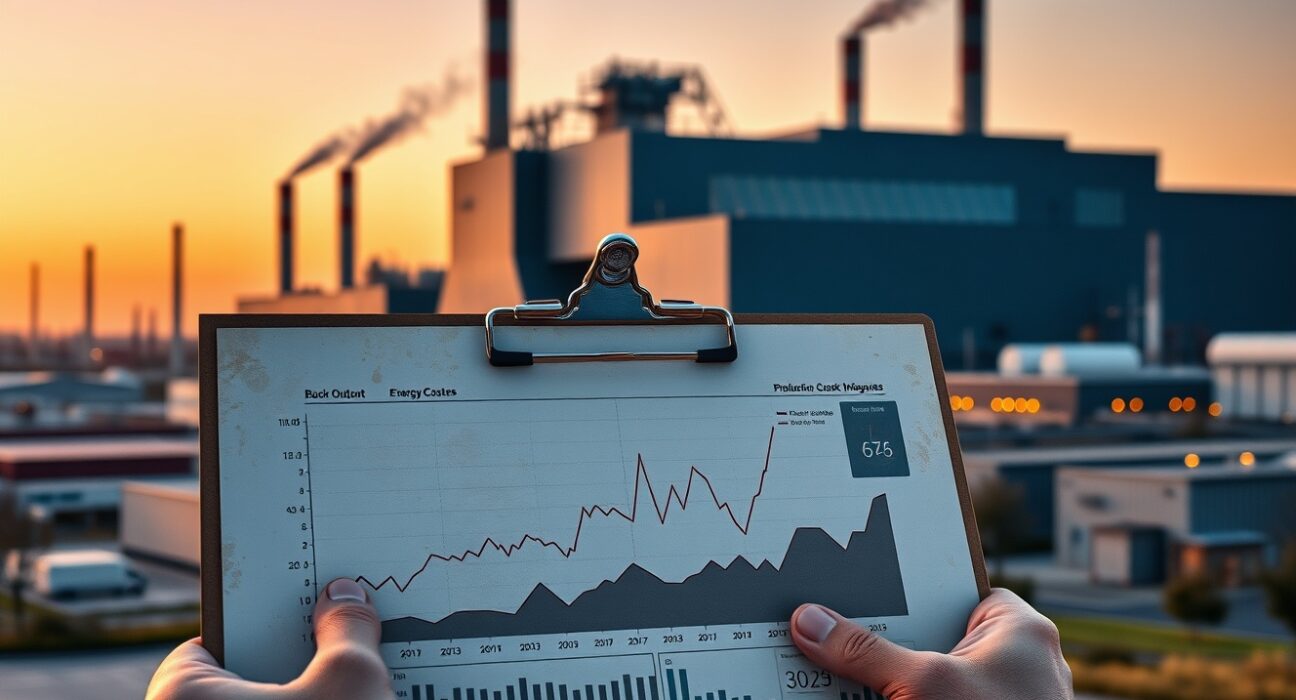
FRANKFURT, March 15, 2025 – The Eurozone industrial sector confronts escalating downside risks according to new analysis from ING, with recent geopolitical shocks amplifying existing structural vulnerabilities across European manufacturing. This comprehensive assessment draws on proprietary data, historical comparisons, and sector-specific indicators to map the challenging landscape facing Europe’s industrial base.
Eurozone Industrial Sector Analysis Reveals Systemic Vulnerabilities
ING’s latest research identifies multiple pressure points converging on Eurozone industry. Energy price volatility continues to disrupt production schedules, while supply chain fragmentation increases operational costs. Furthermore, global demand patterns show concerning shifts away from traditional European exports. The analysis incorporates data from 27 manufacturing sectors across 19 Eurozone countries, revealing uneven but widespread impacts.
Manufacturing Purchasing Managers’ Index (PMI) readings have remained below the expansion threshold for seven consecutive months. Industrial production figures show a 3.2% year-on-year decline in the latest quarterly data. Capacity utilization rates have dropped to 78.4%, marking the lowest level since the pandemic recovery period. These indicators collectively signal deteriorating industrial health across the currency bloc.
Geopolitical Shocks Amplify Existing Structural Weaknesses
The recent conflict escalation in Eastern Europe has accelerated several negative trends already affecting European industry. Energy security concerns have resurfaced with particular intensity, causing renewed uncertainty about long-term planning. Additionally, trade route disruptions have created logistical bottlenecks that affect just-in-time manufacturing systems. The cumulative effect represents a significant shock to industrial stability.
Historical analysis reveals that previous geopolitical events typically produced temporary disruptions followed by rapid recovery. However, current circumstances differ substantially due to concurrent challenges. The energy transition requires massive capital investment at precisely the moment when financing costs have risen dramatically. Global competition intensifies as other regions offer more stable operating environments with lower energy costs.
Expert Analysis from ING’s Economic Research Division
“Our models indicate that the industrial sector faces its most challenging environment since the sovereign debt crisis,” explains Dr. Elena Schmidt, ING’s Chief Eurozone Economist. “The convergence of multiple negative factors creates a perfect storm scenario. We observe particularly acute pressure on energy-intensive industries like chemicals, steel, and automotive manufacturing.”
The research team emphasizes that regional disparities within the Eurozone have widened significantly. Northern European manufacturers generally demonstrate greater resilience due to stronger digital infrastructure and energy diversification. Conversely, Southern and Eastern European producers face more severe challenges related to energy dependence and technological adaptation gaps.
Sector-Specific Impacts and Regional Variations
Different industrial segments experience distinct challenges according to ING’s granular analysis. The automotive sector contends with simultaneous transitions to electric vehicles and supply chain reorganization. Chemical manufacturers face unprecedented energy cost pressures that threaten competitiveness. Meanwhile, machinery producers confront weakening global demand as investment cycles turn downward.
Key regional findings include:
- German industrial output declined 4.1% year-on-year, with automotive and chemical sectors most affected
- French manufacturing showed relative resilience with only 1.8% contraction, supported by aerospace and pharmaceutical strength
- Italian industrial production fell 5.3%, reflecting particular vulnerability in machinery and textile sectors
- Dutch and Belgian ports reported 12% fewer container shipments, indicating broader trade flow reductions
The analysis further identifies concerning patterns in industrial investment. Capital expenditure plans have been scaled back across most sectors, with particular reductions in capacity expansion projects. Research and development spending shows more resilience, suggesting companies prioritize efficiency improvements over growth initiatives.
Policy Responses and Strategic Adaptations
European policymakers have implemented several measures to support industrial competitiveness. The European Commission’s Strategic Technologies for Europe Platform (STEP) aims to channel funding toward critical sectors. National governments have introduced temporary energy price caps and tax incentives for green investments. However, ING analysts question whether these responses match the scale of challenges.
Corporate adaptation strategies show increasing diversification across several dimensions. Leading manufacturers accelerate nearshoring initiatives to reduce supply chain vulnerabilities. Energy efficiency investments receive heightened priority despite financing constraints. Digital transformation projects continue, though often with reduced scope and extended timelines.
Comparative Analysis with Previous Economic Shocks
ING’s historical comparison reveals important distinctions between current conditions and past industrial downturns. The 2008 financial crisis primarily affected demand through credit contraction. The pandemic created supply disruptions but also generated unprecedented fiscal support. Current challenges combine supply constraints, demand weakness, and structural transitions simultaneously.
The research identifies three critical differences from previous shocks:
- Energy transition requirements impose additional capital needs during constrained financing conditions
- Geopolitical fragmentation reduces traditional trade relationships that supported European exports
- Technological competition intensifies as other regions advance manufacturing capabilities
Forward-Looking Scenarios and Risk Assessment
ING’s analysis presents three plausible scenarios for Eurozone industrial development through 2026. The baseline scenario assumes gradual adaptation with moderate output declines. The adverse scenario incorporates further geopolitical deterioration and deeper contraction. The positive scenario requires coordinated policy action and faster energy transition progress.
Risk factors remain heavily weighted toward negative outcomes according to probability assessments. Energy price spikes represent the most immediate threat to industrial viability. Additional supply chain disruptions could trigger production stoppages. Weaker-than-expected global demand would further pressure export-oriented manufacturers.
The research highlights several potential positive developments that could improve outlooks. Accelerated renewable energy deployment might reduce industrial power costs over the medium term. Trade agreement expansions could open new export markets. Technological breakthroughs in green manufacturing processes might restore competitive advantages.
Conclusion
The Eurozone industrial sector faces substantial downside risks according to comprehensive ING analysis. Geopolitical shocks have amplified existing vulnerabilities across European manufacturing. While policy responses and corporate adaptations provide some mitigation, the overall outlook remains challenging. Continued monitoring of industrial indicators will prove essential for understanding evolving Eurozone economic dynamics. The coming months will test the resilience of Europe’s industrial base during this period of unprecedented multiple pressures.
FAQs
Q1: What specific industries face the greatest risks according to ING’s analysis?
The chemical, steel, and automotive sectors show particular vulnerability due to high energy intensity and global competition. These industries combine substantial energy requirements with exposure to international trade flows.
Q2: How does the current situation differ from previous industrial downturns?
Current challenges combine supply constraints, demand weakness, and structural transitions simultaneously. Previous shocks typically featured one dominant factor, whether demand collapse (2008) or supply disruption (pandemic).
Q3: Which Eurozone countries show the greatest industrial resilience?
Northern European manufacturers generally demonstrate stronger adaptation capacity. Germany maintains technological advantages despite current challenges, while France benefits from nuclear energy stability and pharmaceutical sector strength.
Q4: What policy measures could support Eurozone industry?
Accelerated renewable energy deployment, strategic investment in digital infrastructure, and trade agreement expansions represent potential supportive policies. Energy cost stabilization remains the most immediate priority for many manufacturers.
Q5: How might the energy transition affect industrial competitiveness?
The transition creates both challenges and opportunities. Initial capital requirements strain finances, but eventual renewable energy access could reduce operational costs. Early adopters of green technologies may gain competitive advantages in regulated markets.
Disclaimer: The information provided is not trading advice, Bitcoinworld.co.in holds no liability for any investments made based on the information provided on this page. We strongly recommend independent research and/or consultation with a qualified professional before making any investment decisions.
