

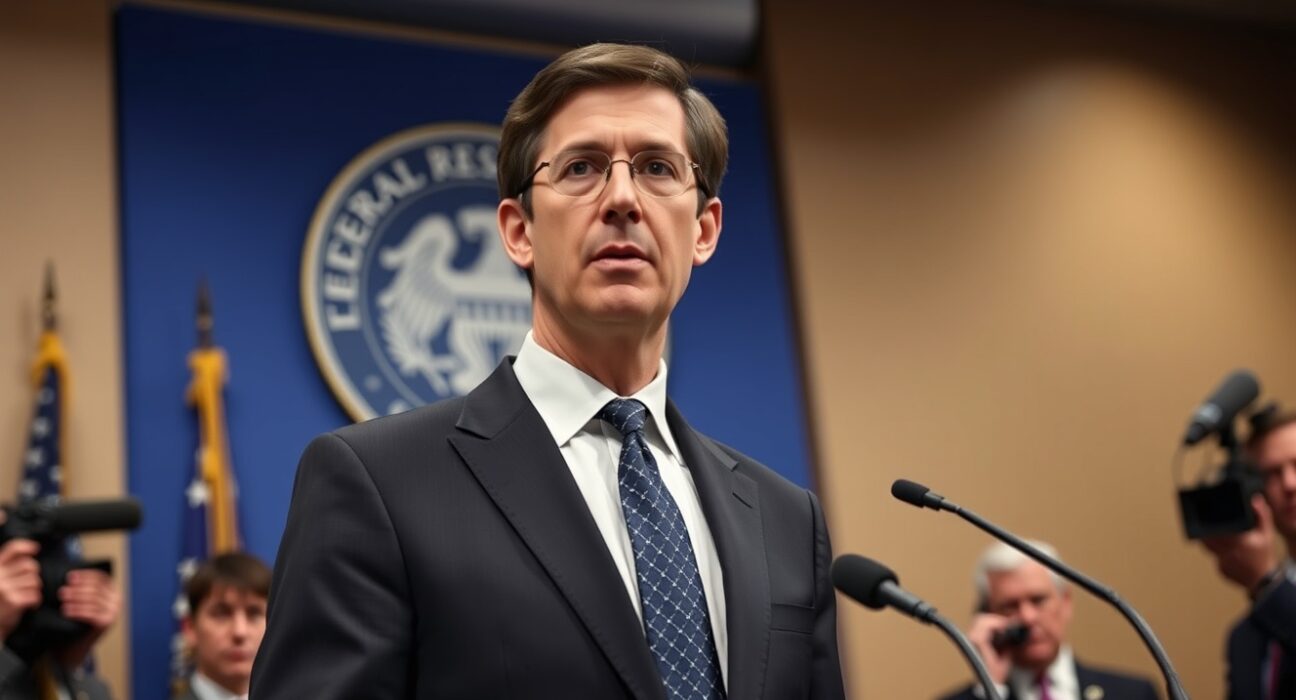
Federal Reserve Chairman Kevin Warsh confirmed on Wednesday that the central bank’s long-standing 2% inflation target remains unchanged, pushing back against speculation that policymakers might adjust the goal in response to recent economic turbulence. Speaking after the Federal Open Market Committee (FOMC) meeting, Warsh acknowledged the difficulty of fully reversing five years of elevated inflation within a short timeframe but emphasized the Fed’s commitment to its sole price stability objective.
FOMC Meeting Focused on Four Key Issues
According to Warsh, the latest FOMC meeting centered on four interconnected topics: the prolonged period of high inflation over the past five years, recent economic shocks that have disrupted market stability, the price increases stemming from those shocks, and the range of monetary policy tools and strategies available to address these challenges. The discussion underscored the complexity of navigating an economy still adjusting to post-pandemic supply chain disruptions, labor market shifts, and geopolitical uncertainties.
Warsh’s remarks signal that the Fed intends to maintain its current policy framework rather than pivot toward a higher or more flexible inflation target, a possibility some market analysts had floated. The 2% target, adopted formally in 2012, remains the cornerstone of the Fed’s communication strategy and its approach to anchoring inflation expectations.
Market and Consumer Implications
The reaffirmation of the 2% target provides a measure of clarity for investors and businesses making long-term decisions. A stable inflation objective helps reduce uncertainty in financial markets, influencing borrowing costs, wage negotiations, and corporate pricing strategies. For consumers, the Fed’s stance implies that interest rates may remain elevated until price pressures show sustained signs of easing, which could continue to affect mortgage rates, credit card APRs, and auto loan costs.
Why This Matters for the Broader Economy
The Fed’s unwavering commitment to its inflation target reflects a broader institutional resolve to avoid the policy mistakes of the 1970s, when inconsistent inflation goals contributed to runaway prices and economic instability. By holding the line at 2%, Warsh and the FOMC are signaling that they prioritize long-term price stability over short-term political or market pressures. This approach, while potentially painful in the near term, aims to lay the groundwork for more sustainable economic growth.
Conclusion
Chairman Kevin Warsh’s post-meeting statement leaves little doubt about the Fed’s direction: the 2% inflation target is non-negotiable, and the central bank is prepared to use its full toolkit to achieve it. While the path forward may be challenging, the message from the FOMC is one of consistency and resolve. For markets and consumers alike, the key takeaway is that the Fed will not abandon its primary mandate, even in the face of persistent economic headwinds.
FAQs
Q1: What is the Federal Reserve’s current inflation target?
The Federal Reserve’s inflation target is 2%, measured by the annual change in the Personal Consumption Expenditures (PCE) price index. Chairman Kevin Warsh confirmed this target remains unchanged.
Q2: Why did the FOMC discuss recent economic shocks?
The committee reviewed economic shocks such as supply chain disruptions, labor market imbalances, and geopolitical events that have contributed to price increases. Understanding these shocks helps the Fed calibrate its monetary policy response.
Q3: How does the 2% inflation target affect consumers?
The target influences the Fed’s interest rate decisions. To combat inflation above 2%, the Fed may keep interest rates higher, which can increase borrowing costs for mortgages, credit cards, and loans, while potentially slowing economic activity.
Disclaimer: The information provided is not trading advice, Bitcoinworld.co.in holds no liability for any investments made based on the information provided on this page. We strongly recommend independent research and/or consultation with a qualified professional before making any investment decisions.
