

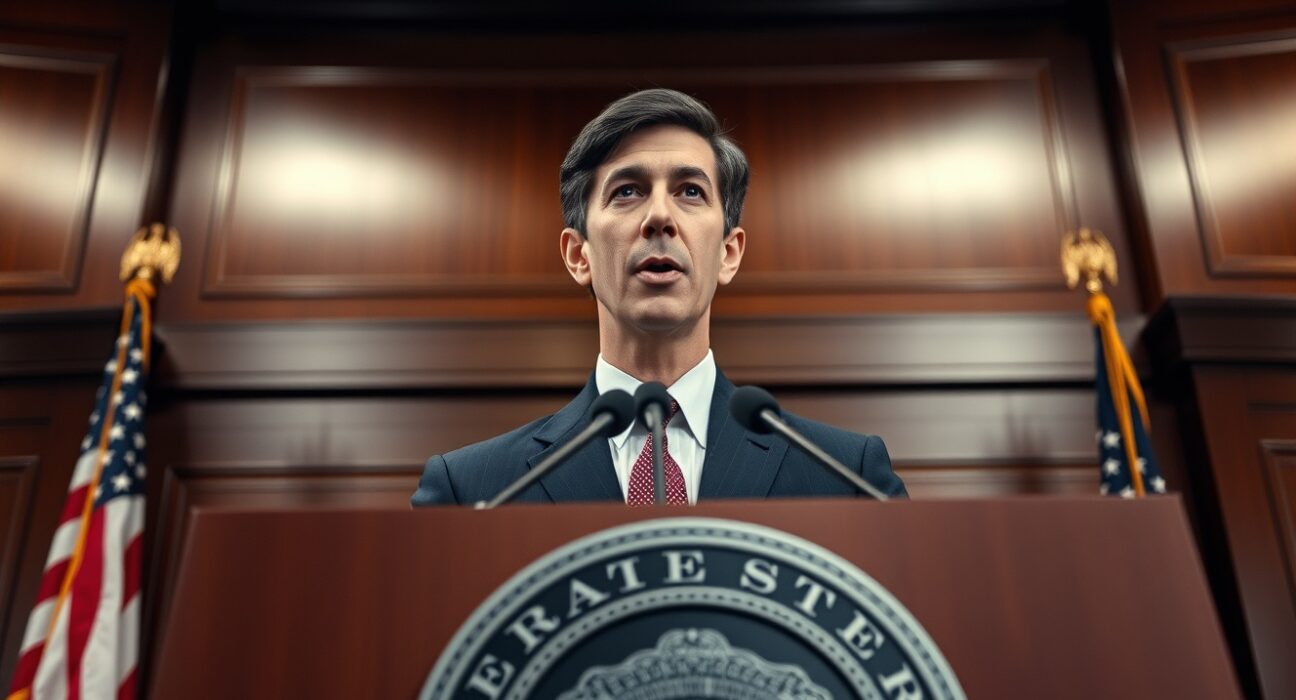
Federal Reserve Chair Kevin Warsh stated on Tuesday that the current inflationary pressures in the U.S. economy are not permanent, offering a measured assessment that could influence market expectations for future monetary policy. Speaking at an economic forum in Washington, D.C., Warsh emphasized that the factors driving recent price increases are largely transitory and tied to supply-chain disruptions rather than a sustained shift in demand dynamics.
Context Behind the Statement
Warsh’s remarks come as the Federal Reserve continues to navigate a complex economic environment marked by elevated consumer prices, labor market tightness, and geopolitical uncertainties. The Chair noted that while inflation readings have remained above the Fed’s 2% target, the underlying data suggests that price pressures are beginning to moderate. He pointed to easing supply bottlenecks and stabilizing energy costs as early indicators that the inflationary cycle may be peaking.
Market participants have been closely watching Fed communications for clues on the timing and pace of potential interest rate adjustments. Warsh’s characterization of inflation as ‘not permanent’ aligns with the central bank’s current stance that policy tightening should be gradual and data-dependent, rather than reactive to short-term fluctuations.
Implications for Monetary Policy
The statement signals that the Federal Reserve is unlikely to accelerate its rate-hiking cycle in response to the latest inflation figures, a scenario that had worried some investors. Instead, Warsh reinforced the Fed’s commitment to a patient approach, balancing the need to control inflation with the risks of stifling economic growth.
Market and Consumer Impact
For consumers, the message offers some reassurance that borrowing costs—from mortgages to credit cards—may not rise as sharply as feared in the near term. For financial markets, the comment helped stabilize bond yields and equity futures in afternoon trading, as traders interpreted the tone as dovish relative to more hawkish possibilities.
However, Warsh also cautioned that the Fed remains vigilant. He noted that if supply-side improvements fail to materialize or if demand proves more resilient than expected, the central bank is prepared to adjust its stance. The key takeaway is that the baseline expectation is for inflation to recede without aggressive intervention, but the Fed retains flexibility.
Conclusion
Chair Warsh’s assertion that inflation is not permanent provides a clearer window into the Federal Reserve’s current thinking. While uncertainties remain, the central bank appears confident that the current price pressures will ease as the economy normalizes. This outlook supports a gradual policy path, which could sustain economic expansion without triggering a sharp tightening of financial conditions.
FAQs
Q1: What did Fed Chair Warsh say about inflation?
He stated that current inflation pressures are not permanent and are largely driven by transitory factors such as supply-chain disruptions.
Q2: How might this affect interest rates?
The statement suggests the Fed is likely to maintain a gradual approach to rate hikes, reducing the chance of aggressive tightening in the near term.
Q3: What does ‘not permanent’ mean for the economy?
It implies that the central bank expects inflation to decline on its own as supply chains recover, without requiring drastic policy measures that could slow growth.
Disclaimer: The information provided is not trading advice, Bitcoinworld.co.in holds no liability for any investments made based on the information provided on this page. We strongly recommend independent research and/or consultation with a qualified professional before making any investment decisions.
