
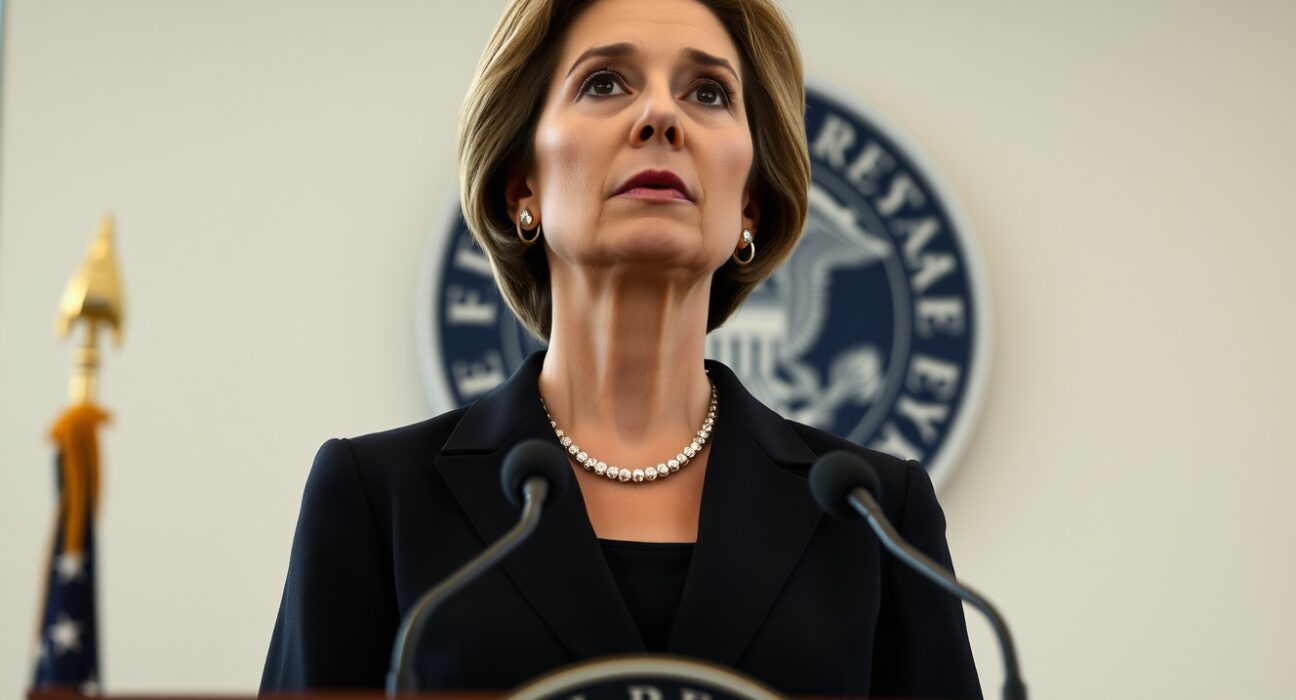
Federal Reserve Bank of San Francisco President Mary Daly delivered a significant monetary policy warning this week, indicating the central bank would maintain current interest rate levels if inflation remains persistently elevated. Her comments come amid ongoing economic uncertainty and shifting market expectations for 2025 monetary policy adjustments.
Federal Reserve’s Inflation Dilemma Intensifies
Mary Daly’s recent statements highlight the Federal Reserve’s complex balancing act. The central bank continues monitoring inflation metrics that have proven more stubborn than anticipated. Consequently, policymakers face difficult decisions about future interest rate adjustments. Daly emphasized the importance of data dependency during her remarks. She specifically noted that sustained inflationary pressures would necessitate maintaining the current policy stance.
Recent economic data presents a mixed picture for Federal Reserve officials. While some inflation indicators show gradual improvement, core measures remain above the Fed’s 2% target. Additionally, labor market strength continues supporting consumer spending. This combination creates challenging conditions for monetary policy decisions. The Federal Open Market Committee must weigh multiple economic factors simultaneously.
Historical Context of Monetary Policy Shifts
The Federal Reserve’s current position follows the most aggressive tightening cycle in decades. Beginning in early 2022, policymakers raised the federal funds rate from near-zero levels to the current 5.25%-5.50% range. This rapid increase aimed to combat surging inflation following pandemic-era stimulus measures. However, the pace of disinflation has slowed considerably in recent quarters.
Mary Daly’s comments reflect growing consensus among Federal Reserve officials. Many policymakers now express caution about premature rate reductions. They worry that cutting rates too soon could reignite inflationary pressures. Conversely, maintaining restrictive policy for too long risks unnecessary economic damage. This delicate balance defines current monetary policy discussions.
Economic Indicators Under Scrutiny
Federal Reserve officials monitor several key metrics when evaluating inflation trends:
- Core PCE Price Index: The Fed’s preferred inflation measure excluding volatile food and energy components
- Consumer Price Index: Broader inflation gauge influencing public perception and expectations
- Wage Growth: Labor costs that can feed into persistent service inflation
- Shelter Costs: Housing-related expenses with significant weight in inflation calculations
- Inflation Expectations: Survey-based measures of future price increase anticipations
Recent data shows concerning trends in several categories. Shelter inflation remains elevated despite cooling in other sectors. Service prices continue rising at rates above historical averages. Furthermore, wage growth exceeds levels consistent with 2% inflation over the medium term. These factors contribute to the Federal Reserve’s cautious approach.
Market Implications of Steady Rate Policy
Financial markets have adjusted expectations significantly in recent months. Initially anticipating multiple rate cuts in 2025, investors now price in fewer reductions. Treasury yields have risen across the curve as expectations shift. Equity markets face increased volatility amid uncertainty about monetary policy paths. Additionally, the dollar has strengthened against major currencies.
The potential for steady interest rates carries important consequences:
| Sector | Potential Impact |
|---|---|
| Housing Market | Continued pressure on affordability and demand |
| Corporate Borrowing | Higher financing costs for businesses | Consumer Credit | Persistent expense for mortgages, auto loans, and credit cards |
| Government Debt | Increased interest payments on national debt |
| International Markets | Capital flows toward higher-yielding dollar assets |
Market participants closely watch Federal Reserve communications for policy signals. Mary Daly’s remarks provide important insights into current thinking. Her position as a voting member on the Federal Open Market Committee in 2025 adds significance to her comments. Investors analyze such statements for clues about future policy directions.
Expert Perspectives on Inflation Dynamics
Economists offer varying interpretations of current inflation trends. Some analysts believe structural changes in the economy support higher inflation. They point to deglobalization trends and demographic shifts. Additionally, climate-related disruptions may create persistent price pressures. Other experts view current inflation as primarily cyclical. They expect normalizing supply chains and moderating demand to reduce price pressures.
Federal Reserve research suggests multiple factors influence inflation persistence. Historical analysis shows that once inflation becomes embedded in expectations, reducing it requires significant effort. The central bank’s credibility plays a crucial role in this process. Maintaining that credibility may require accepting slower economic growth temporarily. This trade-off represents the core challenge for policymakers.
Comparative International Approaches
Other major central banks face similar dilemmas. The European Central Bank recently slowed its rate-cutting pace. The Bank of England maintains a cautious stance amid persistent inflation. Meanwhile, the Bank of Japan continues its gradual policy normalization. These parallel developments suggest global inflationary pressures may have structural elements. International coordination remains limited but policymakers monitor each other’s approaches.
Conclusion
Federal Reserve President Mary Daly’s warning about steady interest rates highlights ongoing inflation concerns. Her comments reflect broader caution within the central bank about premature policy easing. The Federal Reserve’s data-dependent approach will continue guiding decisions. Economic indicators will determine whether rates remain steady or eventually decline. Market participants should prepare for extended period of restrictive monetary policy if inflation proves persistent. The coming months will provide crucial evidence about inflation’s trajectory and appropriate policy responses.
FAQs
Q1: What did Mary Daly say about interest rates and inflation?
Federal Reserve Bank of San Francisco President Mary Daly stated that if inflation remains elevated, the central bank would likely maintain current interest rate levels rather than cutting them.
Q2: Why is the Federal Reserve concerned about cutting rates too soon?
Policymakers worry that reducing interest rates prematurely could reignite inflationary pressures, requiring even more aggressive tightening later and potentially damaging the central bank’s credibility.
Q3: What inflation measures does the Federal Reserve monitor most closely?
The Fed primarily watches the Core Personal Consumption Expenditures Price Index, which excludes volatile food and energy components, but also considers the Consumer Price Index, wage growth, and inflation expectations.
Q4: How have financial markets reacted to the possibility of steady rates?
Markets have reduced expectations for rate cuts in 2025, leading to higher Treasury yields, increased equity volatility, and dollar strength against other major currencies.
Q5: What economic sectors are most affected by sustained higher interest rates?
The housing market faces continued affordability challenges, businesses encounter higher borrowing costs, consumers pay more for credit, and government interest expenses on national debt increase significantly.
Disclaimer: The information provided is not trading advice, Bitcoinworld.co.in holds no liability for any investments made based on the information provided on this page. We strongly recommend independent research and/or consultation with a qualified professional before making any investment decisions.