
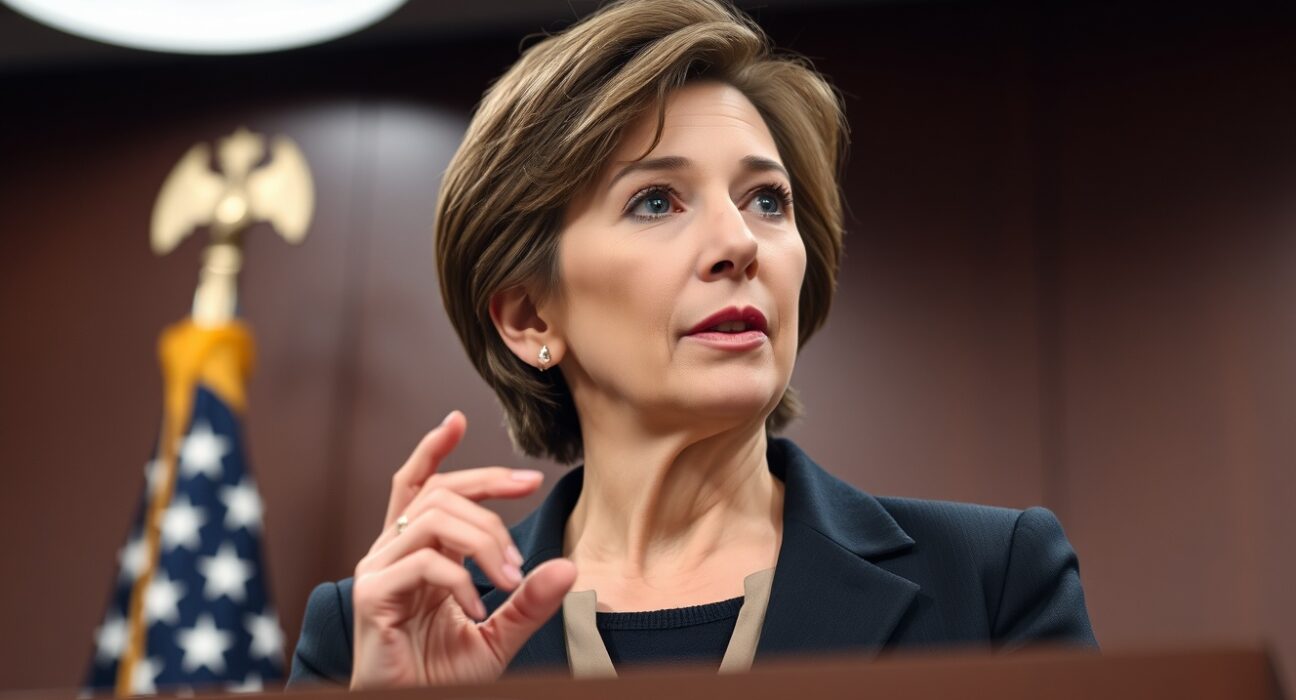
Federal Reserve Bank of San Francisco President Mary Daly delivered a significant message to financial markets on Tuesday, emphasizing that the central bank faces no single most likely path for monetary policy as it navigates persistent economic uncertainties. Her remarks, made during a speech at the Economic Club of New York, underscore the complex balancing act facing policymakers in 2025 as they weigh inflation risks against growth concerns. This analysis comes at a critical juncture for global markets, which have been closely watching for signals about the timing and direction of future interest rate adjustments.
Federal Reserve’s Monetary Policy Faces Multiple Scenarios
President Daly’s comments reflect a broader shift within the Federal Reserve’s approach to forward guidance. Traditionally, the central bank has provided relatively clear pathways for policy adjustments. However, current economic conditions present unprecedented challenges that resist simple forecasting. The Federal Open Market Committee now confronts what economists call a “trilemma” of competing priorities: controlling inflation, maintaining employment growth, and ensuring financial stability.
Recent economic data reveals why the Federal Reserve maintains this flexible stance. Consumer price inflation has moderated from its 2023 peaks but remains above the Fed’s 2% target. Meanwhile, labor market indicators show continued strength with unemployment holding near historic lows. These conflicting signals create what Daly described as “multiple plausible narratives” about the economy’s trajectory. Consequently, monetary policy must remain data-dependent rather than following a predetermined course.
The Data Driving Federal Reserve Uncertainty
Several key economic indicators contribute to this policy uncertainty. First, services inflation has proven more persistent than goods inflation, complicating the disinflation process. Second, productivity growth has accelerated unexpectedly, potentially allowing for stronger economic expansion without inflationary pressure. Third, geopolitical tensions continue to threaten supply chains and commodity prices. Finally, financial conditions have tightened significantly through market mechanisms, potentially reducing the need for additional official rate hikes.
Daly specifically highlighted the importance of the Fed’s dual mandate in her remarks. “We must be equally vigilant about both sides of our mandate,” she stated, referring to the balance between maximum employment and price stability. This balanced approach represents a departure from the singular focus on inflation that characterized much of 2023 and early 2024. The Federal Reserve now recognizes that overtightening could unnecessarily damage the labor market while undertightening risks embedding higher inflation expectations.
Historical Context for Current Monetary Policy Stance
The Federal Reserve’s current position marks a significant evolution from previous policy cycles. During the Volcker era of the early 1980s, the central bank pursued aggressive, predetermined rate hikes to break inflation regardless of economic consequences. Conversely, the post-2008 period featured forward guidance with explicit thresholds and timelines. Today’s approach represents a middle ground—acknowledging uncertainty while maintaining policy optionality.
This shift responds directly to lessons learned from recent forecasting errors. In 2021, most Federal Reserve officials and private economists underestimated inflation persistence. In 2023, many then overestimated the economic damage from rate hikes. These miscalculations have fostered greater humility about economic modeling and increased emphasis on real-time data analysis. Daly emphasized that “the economy continues to surprise us,” necessitating what she termed “robust policy frameworks” rather than fixed plans.
Comparing Federal Reserve Officials’ Perspectives
| Federal Reserve Official | Policy Emphasis | Key Concern |
|---|---|---|
| Mary Daly (San Francisco) | Data dependence, multiple scenarios | Balancing dual mandate risks |
| Loretta Mester (Cleveland) | Inflation persistence | Services price stickiness |
| Raphael Bostic (Atlanta) | Patient approach | Avoiding unnecessary damage |
| Neel Kashkari (Minneapolis) | Potential need for hikes | Inflation expectations de-anchoring |
The table above illustrates the spectrum of views within the Federal Reserve system. While all officials share the goal of returning inflation to 2%, they emphasize different risks and timelines. This diversity of perspectives naturally leads to what Daly described as “no single most likely path” for monetary policy. The Federal Open Market Committee must synthesize these views into coherent policy decisions at each meeting.
Implications for Financial Markets and the Economy
Daly’s message carries significant implications across multiple sectors. For financial markets, the acknowledgment of policy uncertainty suggests continued volatility as investors react to each new data point. Market participants can no longer rely on clear Federal Reserve guidance but must instead develop their own scenario analyses. This environment particularly affects:
- Interest rate sensitive sectors: Housing and automotive markets face continued uncertainty about financing costs
- Currency markets: The dollar’s trajectory depends on relative policy paths with other central banks
- Equity valuations: Growth stocks remain sensitive to discount rate assumptions
- Corporate planning: Businesses must prepare for multiple interest rate scenarios
For the broader economy, this policy approach offers both benefits and challenges. The flexibility allows the Federal Reserve to respond appropriately to unexpected developments, potentially extending the economic expansion. However, uncertainty about future rates may temporarily depress investment as businesses await clearer signals. Daly acknowledged this tension but argued that premature commitment to a single path could prove more damaging if economic conditions change unexpectedly.
The Role of Communication in Modern Monetary Policy
Daly’s speech represents an important evolution in Federal Reserve communication strategy. Rather than providing false certainty, officials now emphasize the conditional nature of their outlook. This approach aims to prevent market overreaction to individual data points while maintaining policy flexibility. The challenge lies in communicating complexity without creating confusion—a balance Daly addressed directly in her remarks.
“Transparency doesn’t mean simplicity,” she noted. “It means explaining our reasoning even when that reasoning acknowledges uncertainty.” This philosophy represents a maturation of the Fed’s communication practices developed over the past two decades. Markets now receive more nuanced guidance that better reflects the genuine complexities of economic forecasting and policy implementation.
Looking Ahead: The Federal Reserve’s 2025 Policy Framework
As the Federal Reserve looks toward the remainder of 2025, several key developments will shape its policy decisions. First, inflation data will receive particular scrutiny, especially measures of services inflation and wage growth. Second, labor market indicators will be monitored for signs of either overheating or unexpected weakening. Third, financial conditions will be assessed for their independent tightening effects. Finally, global developments—particularly regarding geopolitics and foreign central bank policies—will factor into the Fed’s calculations.
Daly outlined what she called “scenario-dependent preparedness” as the Fed’s operational approach. This means maintaining readiness to adjust policy in either direction based on incoming information. While the baseline expectation remains that the next move will be a rate cut, Daly emphasized that “we must be prepared to respond if the data tell a different story.” This conditional stance represents the practical implementation of having “no single most likely path” for monetary policy.
Conclusion
Federal Reserve President Mary Daly’s acknowledgment of multiple monetary policy paths reflects the genuine uncertainty facing central bankers in 2025. The economy presents conflicting signals that resist simple policy prescriptions. Consequently, the Federal Reserve maintains maximum flexibility to respond to evolving conditions. This approach prioritizes data dependence over predetermined plans while honestly communicating the challenges of economic forecasting. For markets and the public, understanding this nuanced stance provides crucial context for interpreting future Federal Reserve decisions and economic developments.
FAQs
Q1: What did Mary Daly mean by “no single most likely path” for monetary policy?
She meant that the Federal Reserve faces multiple plausible economic scenarios requiring different policy responses, making it impossible to commit to a single predetermined course of action.
Q2: How does this approach differ from previous Federal Reserve guidance?
Earlier guidance often provided clearer timelines and thresholds. The current approach emphasizes data dependence and acknowledges greater uncertainty about economic developments.
Q3: What factors are creating this policy uncertainty for the Federal Reserve?
Conflicting signals including persistent services inflation, strong labor markets, variable productivity growth, geopolitical risks, and already-tight financial conditions create multiple possible economic narratives.
Q4: How should investors interpret this message for their portfolios?
Investors should prepare for continued volatility and develop scenario analyses rather than relying on clear Federal Reserve guidance. Different asset classes will respond differently to various economic outcomes.
Q5: Does this mean the Federal Reserve might raise rates again in 2025?
While not the baseline expectation, Daly emphasized the Fed must remain prepared to adjust policy in either direction if economic data warrants such moves.
Disclaimer: The information provided is not trading advice, Bitcoinworld.co.in holds no liability for any investments made based on the information provided on this page. We strongly recommend independent research and/or consultation with a qualified professional before making any investment decisions.