

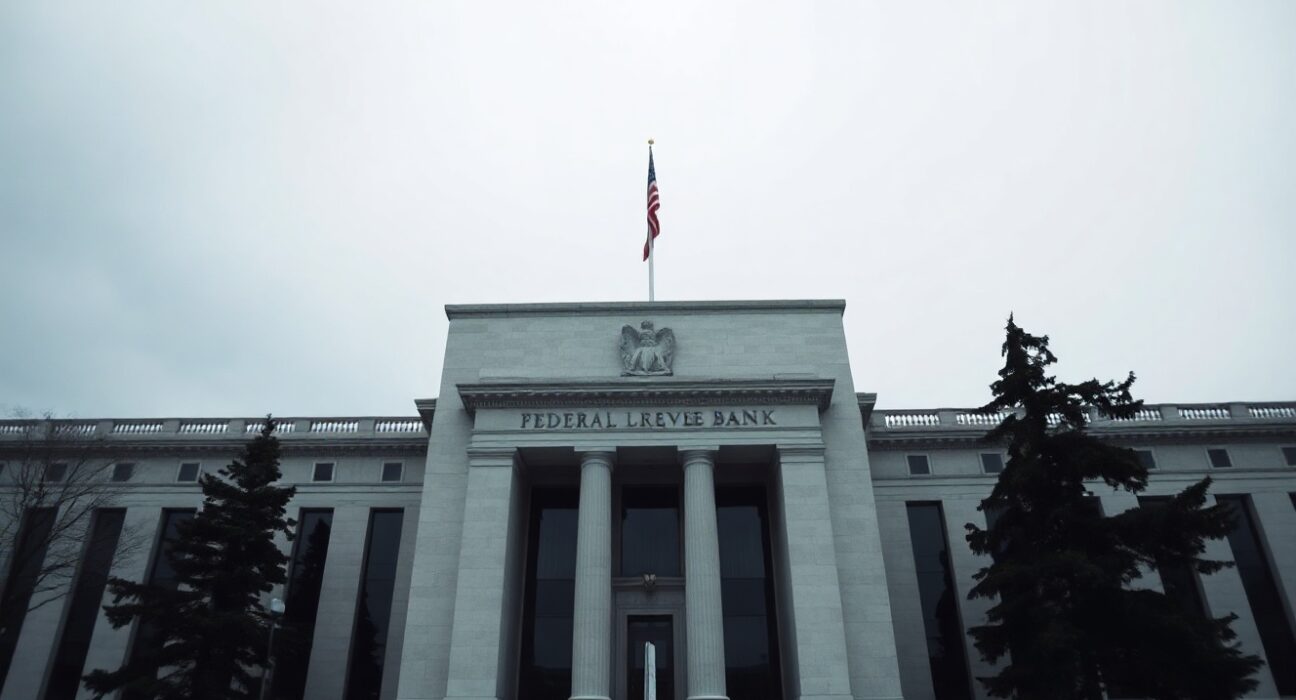
Minneapolis Federal Reserve Bank President Neel Kashkari has delivered a notable shift in his assessment of the U.S. economy, stating that the risk of inflation re-accelerating now outweighs the risk of a significant deterioration in the labour market. The comments, made during a public appearance on Tuesday, signal a potential hardening of the central bank’s stance on interest rates and underscore the delicate balancing act facing policymakers.
A Change in Risk Assessment
Kashkari, who has often been viewed as one of the more dovish members of the Federal Open Market Committee (FOMC), indicated that recent economic data has altered his personal risk calculus. He noted that while the labour market remains resilient, with unemployment still near historic lows, the progress on bringing inflation down to the Fed’s 2% target has stalled in recent months. This assessment aligns with recent data showing that core inflation measures have remained stubbornly elevated, prompting several Fed officials to advocate for a cautious approach to rate cuts.
The shift is significant because it suggests that even traditionally dovish policymakers are now prioritizing inflation control over supporting maximum employment. Kashkari’s remarks imply that the Fed may need to keep interest rates higher for longer, or potentially even raise them further if inflation does not resume its downward trend.
Implications for Monetary Policy
Kashkari’s updated view adds weight to the growing consensus within the Fed that the ‘last mile’ of disinflation is proving to be the most difficult. The central bank has held its benchmark lending rate steady in a range of 5.25% to 5.5% since July 2023. Financial markets, which had earlier priced in multiple rate cuts for 2024, have been forced to recalibrate expectations in recent weeks.
The key question now is whether other FOMC members share Kashkari’s revised risk assessment. If the broader committee concludes that inflation risks are indeed the primary concern, the timeline for any rate cuts could be pushed back significantly, potentially into 2025. This would have direct implications for borrowing costs for consumers and businesses, including mortgage rates, credit card interest, and corporate loans.
Why This Matters to Investors and Consumers
For investors, Kashkari’s comments reinforce the ‘higher-for-longer’ interest rate narrative, which has already been weighing on equity valuations, particularly in rate-sensitive sectors like real estate and technology. Bond yields have moved higher as traders price out the possibility of near-term rate cuts. For consumers, the prospect of sustained high interest rates means continued pressure on household budgets, especially for those with variable-rate debt. However, it also reflects a Fed that is committed to preserving its credibility by ensuring inflation is fully contained, which is ultimately positive for long-term economic stability.
Conclusion
Neel Kashkari’s public acknowledgment that inflation risk now exceeds labour market risk is a clear signal that the Federal Reserve’s focus remains firmly on price stability. While the labour market continues to show strength, the central bank is not yet ready to declare victory over inflation. The coming months will be critical in determining whether this assessment is shared by the majority of FOMC members, and what it means for the path of interest rates. For now, the message is clear: the Fed is prepared to be patient, even if that means keeping rates higher for longer.
FAQs
Q1: What did Fed’s Kashkari say about inflation and the labour market?
He stated that the risk of inflation rising again is now higher than the risk of the labour market weakening significantly. This represents a shift in his personal risk assessment.
Q2: What does this mean for interest rates?
It suggests the Federal Reserve may keep interest rates higher for longer than previously expected. Rate cuts are now less likely in the near term, as the Fed prioritizes controlling inflation.
Q3: How might this affect the average person?
Sustained high interest rates mean borrowing costs for mortgages, car loans, and credit cards will remain elevated. However, it also signals the Fed’s commitment to controlling inflation, which protects purchasing power over the long term.
Disclaimer: The information provided is not trading advice, Bitcoinworld.co.in holds no liability for any investments made based on the information provided on this page. We strongly recommend independent research and/or consultation with a qualified professional before making any investment decisions.
