
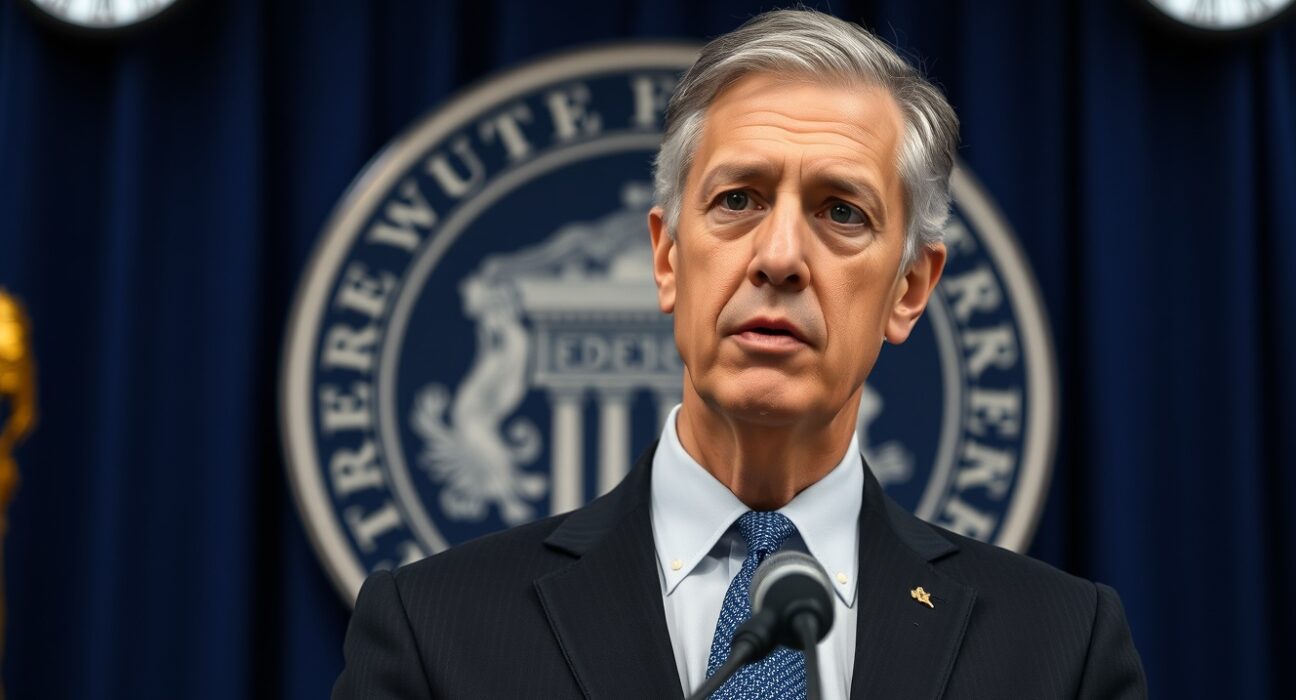
Federal Reserve Chair Jerome Powell addressed the nation on Wednesday, March 19, 2025, following the Federal Open Market Committee’s (FOMC) pivotal decision to hold the benchmark interest rate steady. Consequently, markets and analysts closely parsed his remarks for signals about the future path of monetary policy amid persistent economic crosscurrents.
Federal Reserve Holds Rates Steady Amid Economic Uncertainty
The FOMC unanimously voted to maintain the federal funds rate target range at its current level. This decision marks the fifth consecutive meeting without a change. Therefore, it reflects a deliberate pause as the committee assesses lagging effects from previous hikes. Powell emphasized data dependence, stating the Committee needs “greater confidence” that inflation is moving sustainably toward the 2% target. Subsequently, he outlined a cautious, meeting-by-meeting approach.
Recent economic data presents a mixed picture. For instance, the latest Consumer Price Index (CPI) report showed a modest deceleration in core inflation. However, services inflation and shelter costs remain elevated. Meanwhile, the labor market continues to show resilience with steady job growth, yet wage pressures have moderated. This complex backdrop necessitates a patient stance from policymakers.
Analyzing Powell’s Key Policy Signals
Chair Powell’s post-meeting press conference provided critical context. He reiterated the Fed’s dual mandate of maximum employment and price stability. Moreover, he acknowledged progress on inflation but highlighted the journey is “incomplete.” The central bank’s preferred gauge, the Personal Consumption Expenditures (PCE) price index, remains above the long-run goal.
Expert Perspectives on the Policy Path
Economists from major financial institutions provided immediate analysis. Many noted the Fed’s communication shifted subtly, removing prior language about “additional policy firming.” This change suggests the next move is more likely a cut than a hike, though timing remains uncertain. Historical analysis shows the Fed often holds rates at a peak for several months before pivoting.
The following table summarizes the key economic indicators guiding the Fed’s decision:
| Indicator | Recent Reading | Trend vs. Target |
|---|---|---|
| Core PCE Inflation | 2.8% (YoY) | Above 2% target |
| Unemployment Rate | 3.9% | Near historic lows |
| GDP Growth (Q4 2024) | 2.1% (Annualized) | Moderate expansion |
| Wage Growth (AHE) | 4.0% (YoY) | Moderating from peaks |
Powell specifically addressed the balance sheet, confirming the ongoing process of quantitative tightening (QT) continues at a reduced pace. This process shrinks the Fed’s asset holdings, providing another form of monetary tightening. Furthermore, he dismissed concerns about recent banking sector volatility, stating the system remains “sound and resilient.”
Market Reactions and Economic Implications
Financial markets exhibited volatility during and after Powell’s remarks. Initially, equity markets reacted positively to the absence of hawkish surprises. However, Treasury yields fluctuated as traders adjusted expectations for the timing of the first rate cut. The Fed’s updated “dot plot” projections, released alongside the statement, indicated Committee members foresee fewer cuts in 2025 than previously anticipated.
The implications for consumers and businesses are significant:
- Borrowing Costs: Mortgage rates and business loan rates will likely remain elevated in the near term.
- Savings: Returns on high-yield savings accounts and CDs will stay attractive.
- Business Investment: Capital expenditure decisions may face continued headwinds from financing costs.
Powell also highlighted global economic considerations, including geopolitical tensions and divergent policy paths from other major central banks like the European Central Bank. These external factors add layers of complexity to the domestic policy calculus.
Conclusion
Chair Jerome Powell’s outlook confirms the Federal Reserve’s commitment to a data-driven, patient approach. The decision to hold interest rates steady reflects a balancing act between acknowledging disinflation progress and recognizing persistent price pressures. Ultimately, the path forward remains contingent on incoming economic reports, particularly on inflation and labor market dynamics. The Fed’s next moves will crucially shape the economic landscape for the remainder of 2025 and beyond.
FAQs
Q1: Why did the Federal Reserve decide to hold interest rates steady?
The FOMC held rates steady to gain more confidence that inflation is moving sustainably toward its 2% target, while also assessing the cumulative impact of previous rate hikes on the economy.
Q2: What does Jerome Powell mean by needing “greater confidence” on inflation?
He means the Committee wants to see several more months of favorable inflation data, particularly in core services and shelter costs, before being convinced the trend is durable and not temporary.
Q3: When is the Federal Reserve expected to start cutting interest rates?
The Fed has not provided a specific timeline. Powell stated decisions will be made “meeting by meeting” based on the totality of incoming data. Market projections vary but generally anticipate potential cuts later in 2025.
Q4: How does holding rates steady affect the average consumer?
Consumers will continue to face elevated costs for mortgages, auto loans, and credit card debt. Conversely, yields on savings vehicles will remain higher. The policy aims to cool inflation without triggering a sharp rise in unemployment.
Q5: What economic indicators will the Fed watch most closely now?
The Fed will primarily monitor the core Personal Consumption Expenditures (PCE) price index, employment cost indices, labor market reports (job growth, unemployment), and consumer spending data to guide future policy decisions.
Disclaimer: The information provided is not trading advice, Bitcoinworld.co.in holds no liability for any investments made based on the information provided on this page. We strongly recommend independent research and/or consultation with a qualified professional before making any investment decisions.