

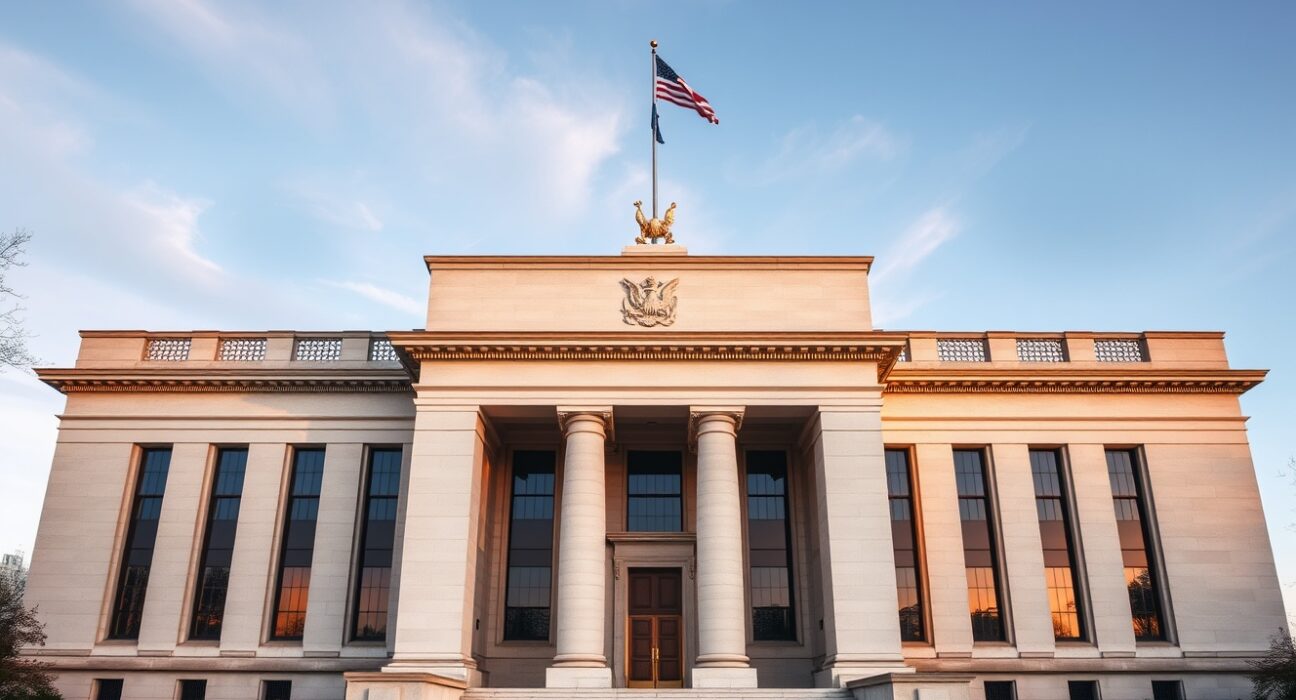
The Federal Reserve may be entering a period of more restrained communication, according to a new analysis from BNY. The note, which references a potential ‘Warsh era’ for the central bank, suggests that future policy guidance could become less prescriptive and more data-dependent, marking a departure from the forward guidance-heavy approach of recent years.
What the ‘Warsh Era’ Means for Fed Communication
BNY’s analysis centers on the idea that the Fed, possibly under the influence of advisor Kevin Warsh, is moving toward a style of communication that is quieter and less detailed. This would contrast with the approach under former Chair Janet Yellen and current Chair Jerome Powell, where the Fed provided extensive forward guidance on the likely path of interest rates. The shift implies that the Fed may rely more on actual economic data releases and less on verbal signals to guide market expectations.
Market Implications of Reduced Forward Guidance
For investors and traders, a move to quieter guidance introduces a higher degree of uncertainty. Markets have grown accustomed to parsing every word of Fed statements and press conferences for clues. If the Fed reduces the granularity of its guidance, market reactions to economic data—such as jobs reports, inflation readings, and GDP figures—could become more volatile. BNY’s note suggests that this could lead to a repricing of risk across asset classes, particularly in interest rate-sensitive sectors like bonds and real estate.
Historical Context and Comparison
The term ‘Warsh era’ references Kevin Warsh, who served as a Fed governor from 2006 to 2011 and was a key architect of the central bank’s early crisis response. His reported influence on current policy thinking signals a return to a more minimalist communication style, reminiscent of the pre-2008 period when the Fed offered less explicit forward guidance. This contrasts sharply with the post-crisis era, when the Fed used detailed guidance to anchor expectations near zero interest rates.
Conclusion
BNY’s assessment points to a potentially significant shift in how the Federal Reserve communicates with markets. If the Fed adopts a quieter, more data-reactive approach, it could reduce the market’s reliance on verbal intervention and increase sensitivity to hard economic data. While the full extent of this shift remains uncertain, the analysis underscores a broader evolution in central bank strategy that investors should monitor closely.
FAQs
Q1: What is the ‘Warsh era’ in the context of the Federal Reserve?
The term refers to a potential shift in Fed communication strategy, associated with advisor Kevin Warsh, toward less detailed and less frequent forward guidance, relying more on economic data.
Q2: How might quieter Fed guidance affect financial markets?
Reduced forward guidance could increase market volatility around economic data releases, as investors lose the stabilizing influence of clear policy signals from the Fed.
Q3: Is this shift in Fed communication confirmed?
No, it is an analysis from BNY based on current trends and signals. The Fed has not formally announced a change in its communication framework.
Disclaimer: The information provided is not trading advice, Bitcoinworld.co.in holds no liability for any investments made based on the information provided on this page. We strongly recommend independent research and/or consultation with a qualified professional before making any investment decisions.
