

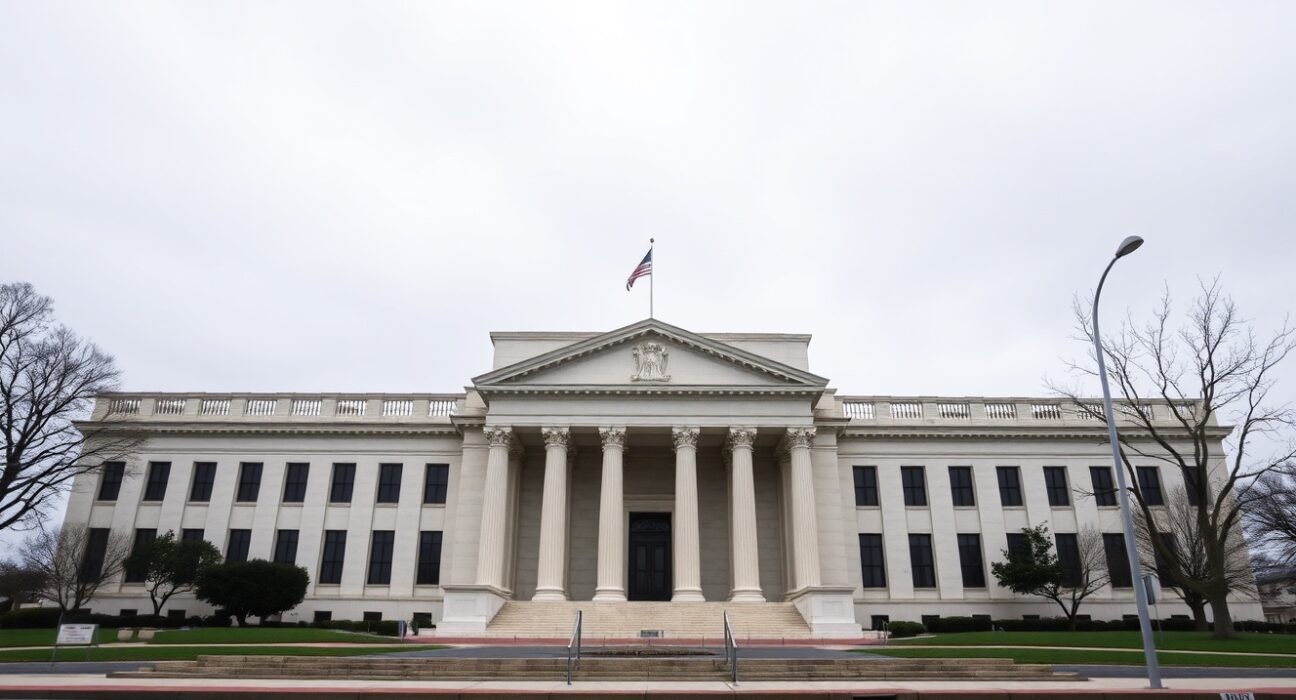
In a recent analysis, Rabobank warns that the scope for Federal Reserve rate cuts, potentially led by Kevin Warsh, remains severely limited. This assessment comes amid growing market speculation about a shift in U.S. monetary policy. The Dutch bank’s economists argue that underlying inflationary pressures and a resilient labor market constrain the central bank’s ability to ease policy aggressively.
Rabobank Analysis: Why Fed Rate Cuts Face Constraints
Rabobank’s latest report, released on October 26, 2025, in New York, provides a detailed breakdown of the factors limiting the Fed’s flexibility. The bank highlights that the current economic environment does not support a rapid pivot to looser policy. Key indicators, such as core inflation and wage growth, remain above the Fed’s 2% target. This situation forces the central bank to maintain a cautious stance.
Furthermore, Rabobank’s economists point to the strong labor market as a primary barrier. With unemployment rates still near historic lows, the Fed cannot justify aggressive rate cuts without risking a reacceleration of inflation. The bank’s analysis suggests that any easing cycle would be shallow and slow.
Kevin Warsh’s Potential Role and Market Expectations
The mention of Kevin Warsh in the report adds a layer of political and strategic context. Warsh, a former Fed governor, is a potential candidate for a leadership role. Markets often interpret his potential appointment as a signal for more business-friendly policies. However, Rabobank cautions against this optimism. The bank states that even with a new chair, the Fed’s independence and data-driven approach will limit dramatic policy shifts.
Market participants currently price in a 50-basis-point cut by mid-2026. Rabobank views this as overly optimistic. They predict a maximum of 25 basis points of cuts within the same timeframe. This discrepancy creates a risk for bond and equity markets.
Impact on Global Markets and Investors
The limited Fed rate cuts have direct implications for global investors. A slower easing cycle strengthens the U.S. dollar, putting pressure on emerging market currencies. It also supports higher U.S. Treasury yields, which can attract capital away from riskier assets. Rabobank advises clients to adjust their portfolios accordingly. They recommend favoring short-duration bonds and defensive equity sectors.
Additionally, the analysis affects cryptocurrency markets. Historically, tighter monetary policy reduces liquidity, which can dampen demand for speculative assets like Bitcoin. However, a clear, predictable Fed path may provide stability for institutional investors entering the space.
Comparing Rabobank’s View with Other Major Banks
Rabobank’s cautious stance contrasts with more dovish forecasts from some Wall Street firms. For example, Goldman Sachs recently projected three rate cuts in 2026. Meanwhile, JPMorgan Chase expects two. Rabobank’s more conservative estimate aligns with the views of the International Monetary Fund, which recently warned against premature easing.
The table below summarizes key differences in rate cut expectations for 2026:
| Institution | Expected Cuts (Basis Points) | Timeline |
|---|---|---|
| Rabobank | 25 | H2 2026 |
| Goldman Sachs | 75 | Throughout 2026 |
| JPMorgan Chase | 50 | Mid-2026 |
| IMF | 25-50 | Late 2026 |
This divergence highlights the uncertainty surrounding the Fed’s next moves. Investors must weigh these competing narratives carefully.
Historical Context: Past Fed Pivots and Current Parallels
To understand Rabobank’s reasoning, it helps to examine past Fed cycles. In 2019, the Fed cut rates three times despite a strong economy, citing global risks. However, today’s inflation is stickier. The post-pandemic recovery created supply-side constraints that persist. Rabobank notes that the current situation more closely resembles the mid-1990s, when the Fed held rates steady for an extended period after a tightening cycle.
During that era, the economy achieved a soft landing without aggressive easing. Rabobank believes the Fed will attempt a similar strategy. This approach prioritizes credibility over market accommodation.
Key Data Points Driving Rabobank’s Forecast
Several data points support Rabobank’s limited-cuts thesis:
- Core PCE Inflation: Remains at 2.8%, above the 2% target.
- Unemployment Rate: Steady at 3.9%, indicating labor tightness.
- Wage Growth: Annualized at 4.5%, fueling services inflation.
- Consumer Spending: Resilient, with retail sales up 0.4% month-over-month.
- Manufacturing PMI: Stable at 52.3, showing expansion.
These metrics suggest an economy that is cooling but not contracting. The Fed needs to see a sustained decline in inflation before committing to cuts. Rabobank argues that this will not happen until late 2025 at the earliest.
Potential Risks to Rabobank’s Forecast
While Rabobank’s analysis is thorough, several risks could alter the outcome. A sudden geopolitical shock, such as a major conflict or oil supply disruption, could force the Fed to act. Similarly, a sharp downturn in the housing market or consumer debt defaults could accelerate the need for cuts. Rabobank acknowledges these scenarios but assigns them low probability.
Another risk is political pressure. With the 2026 midterm elections approaching, the White House may push for easier monetary policy. However, the Fed’s statutory independence provides a buffer. Rabobank expects the central bank to resist such pressure.
Conclusion
Rabobank’s warning about limited Fed rate cuts under a potential Warsh leadership provides a sobering counterpoint to market optimism. The bank’s data-driven analysis underscores the constraints imposed by persistent inflation and a strong labor market. For investors, this means preparing for a longer period of higher rates. The focus should remain on quality assets and careful risk management. Understanding the Fed’s limitations is crucial for navigating the 2025-2026 economic landscape.
FAQs
Q1: Why does Rabobank believe Fed rate cuts will be limited?
A1: Rabobank cites persistent core inflation, a tight labor market, and resilient consumer spending as key factors. These conditions prevent the Fed from cutting rates aggressively without risking a rebound in inflation.
Q2: How does Kevin Warsh’s potential role affect the Fed’s policy?
A2: Rabobank argues that even with a new chair like Warsh, the Fed’s independence and data-driven approach will limit dramatic policy shifts. Market expectations for a dovish pivot may be overblown.
Q3: What is the main risk if the Fed cuts rates too early?
A3: Premature cuts could reignite inflation, forcing the Fed to reverse course later. This would damage credibility and create market volatility. Rabobank warns against this scenario.
Q4: How should investors position their portfolios based on this analysis?
A4: Rabobank recommends favoring short-duration bonds, defensive sectors like healthcare and utilities, and avoiding overexposure to growth stocks that benefit from low rates. Diversification remains key.
Q5: Could geopolitical events change Rabobank’s forecast?
A5: Yes, a major shock like a conflict or oil crisis could force the Fed to act. However, Rabobank assigns low probability to such events and expects the current trajectory to persist.
Q6: Where can I find the full Rabobank report?
A6: The full report is available through Rabobank’s research portal for institutional clients. Summary findings are often shared via financial news outlets and their official website.
Disclaimer: The information provided is not trading advice, Bitcoinworld.co.in holds no liability for any investments made based on the information provided on this page. We strongly recommend independent research and/or consultation with a qualified professional before making any investment decisions.
