

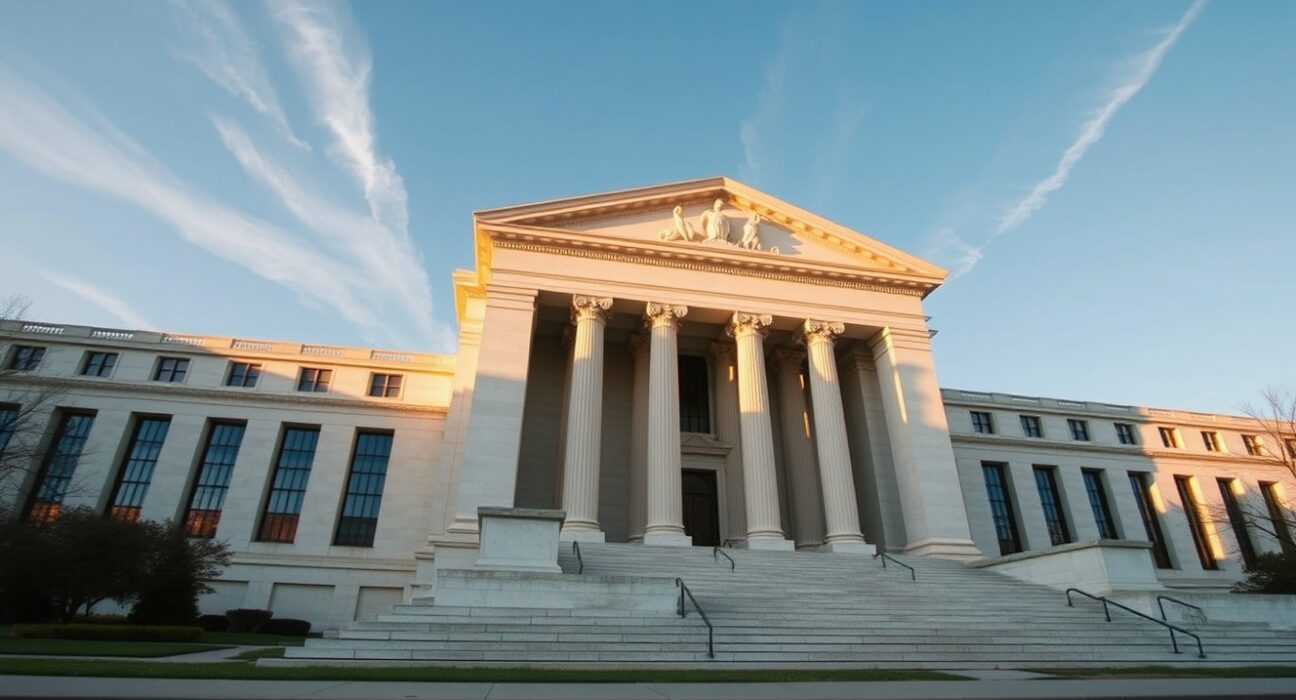
Economists at United Overseas Bank (UOB) now expect the Federal Reserve to maintain its current interest rate stance through an extended pause, with the first rate cut delayed until late 2026. The revised forecast reflects persistent inflationary pressures and a labor market that continues to show resilience, giving the central bank little reason to ease policy sooner.
Extended Pause Reflects Sticky Inflation
UOB’s Global Economics & Markets Research team updated its outlook, pushing back the expected timing of the first Fed rate cut by several quarters. The bank now projects the federal funds rate will remain at its current level — between 5.25% and 5.50% — for the remainder of 2025 and through most of 2026.
The decision to extend the pause is rooted in recent inflation data that has proven stickier than anticipated. Core Personal Consumption Expenditures (PCE) inflation, the Fed’s preferred gauge, has remained above the central bank’s 2% target, driven by elevated services costs and shelter inflation. UOB economists note that while headline inflation has moderated, the underlying trend does not yet support a pivot to looser policy.
Labor Market Strength Reduces Urgency
Another factor underpinning the revised forecast is the continued strength of the U.S. labor market. Nonfarm payrolls have consistently exceeded expectations, and the unemployment rate remains near historic lows. Wage growth, while slowing, is still above levels the Fed considers consistent with its inflation target.
From the Fed’s perspective, a robust labor market provides the flexibility to keep rates higher for longer without risking a sharp downturn. UOB economists argue that until there is clear evidence of a sustained cooling in hiring and wage pressures, the central bank will remain in a wait-and-see mode.
Market Implications of a Delayed Easing Cycle
The prospect of rates staying higher for longer has significant implications for financial markets. Bond yields have already repriced higher as traders adjust their expectations, while equity markets face headwinds from elevated borrowing costs. The U.S. dollar has also found support from the relative attractiveness of higher-yielding dollar-denominated assets.
For businesses and consumers, the extended pause means continued pressure on borrowing costs for mortgages, auto loans, and corporate debt. However, UOB economists caution that the forecast is contingent on the trajectory of inflation and economic growth, both of which remain subject to upside and downside risks.
Conclusion
UOB’s updated forecast adds to a growing consensus among financial institutions that the Federal Reserve will not begin cutting rates until late 2026 at the earliest. The extended pause reflects a central bank determined to see inflation fully under control before shifting to a more accommodative stance. While the outlook provides clarity on the likely direction of policy, it also underscores the uncertainty that remains as the Fed navigates the final leg of its inflation fight.
FAQs
Q1: Why is the Federal Reserve expected to delay rate cuts until late 2026?
Persistent inflation, particularly in services and shelter, along with a resilient labor market, has reduced the urgency for the Fed to ease policy. UOB economists believe the central bank will keep rates steady until it sees clear evidence that inflation is sustainably moving toward its 2% target.
Q2: What does an extended Fed pause mean for borrowers and investors?
Borrowers will continue to face elevated interest rates on mortgages, credit cards, and business loans. For investors, higher-for-longer rates typically support the U.S. dollar and bond yields but can pressure equity valuations, especially in growth-oriented sectors.
Q3: Could the Fed cut rates earlier than UOB’s late 2026 forecast?
Yes. The forecast is based on current economic data and assumptions. If inflation declines more rapidly than expected, or if the labor market weakens significantly, the Fed could move sooner. Conversely, if inflation proves more persistent, the first cut could be delayed even further.
Disclaimer: The information provided is not trading advice, Bitcoinworld.co.in holds no liability for any investments made based on the information provided on this page. We strongly recommend independent research and/or consultation with a qualified professional before making any investment decisions.
