
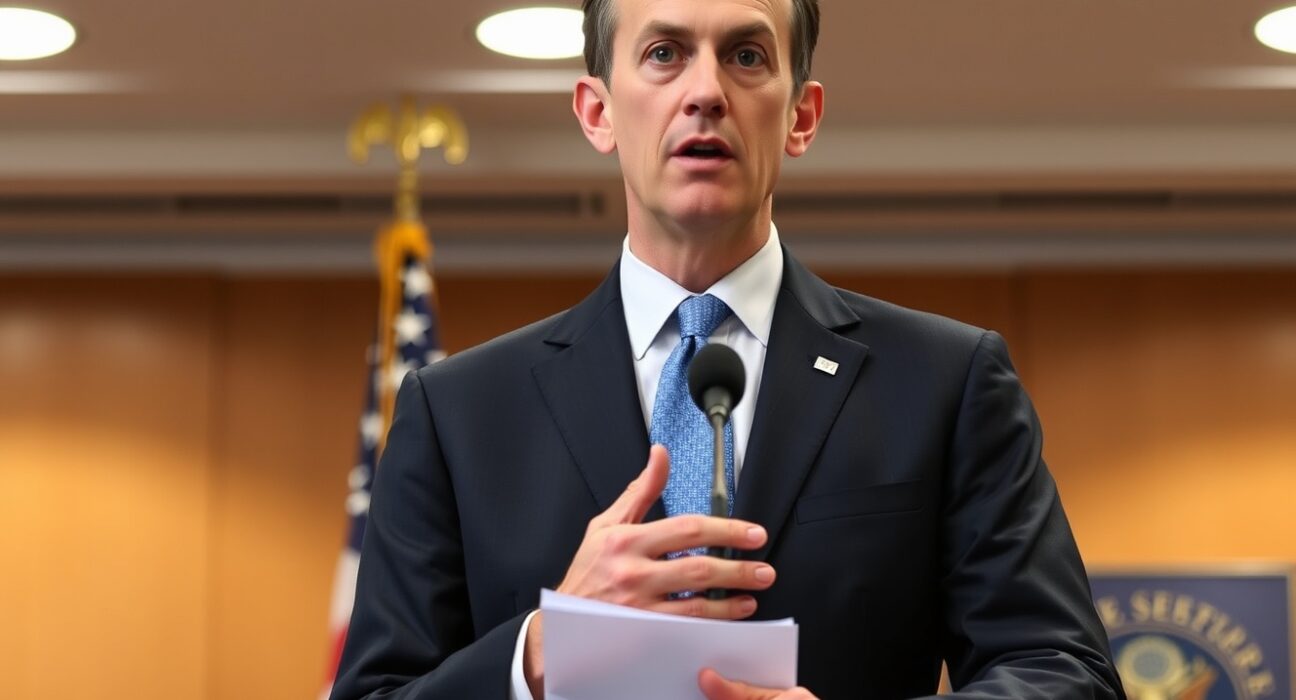
Federal Reserve Bank of Chicago President Austan Goolsbee has projected a cautiously optimistic timeline for potential interest rate reductions, suggesting the central bank could implement cuts by the end of 2026 if current economic trends persist. This forward guidance, delivered during recent policy discussions, provides crucial insight into the Federal Reserve’s evolving approach to monetary normalization following years of aggressive tightening.
Federal Reserve’s Goolsbee Outlines 2026 Rate Cut Framework
During his latest public remarks, Goolsbee emphasized several key conditions necessary for the Federal Reserve to consider lowering interest rates. He specifically highlighted the importance of sustained progress on inflation metrics, particularly the Personal Consumption Expenditures price index. Furthermore, Goolsbee noted that labor market conditions must remain stable while economic growth shows measured moderation.
The Chicago Fed president’s comments align with broader Federal Open Market Committee discussions about policy normalization. Importantly, Goolsbee stressed that any timeline remains data-dependent rather than predetermined. Market analysts immediately parsed his statements for clues about the Federal Reserve’s internal projections beyond the standard dot plot forecasts.
Economic Context and Inflation Trajectory Analysis
The potential 2026 timeline emerges against a complex economic backdrop. Consumer price increases have moderated significantly from their 2022 peaks, yet certain service sector components remain stubbornly elevated. Core inflation measures continue to exceed the Federal Reserve’s 2% target, necessitating ongoing policy vigilance according to Goolsbee’s assessment.
Recent economic data reveals several conflicting signals that Federal Reserve officials must reconcile. Employment figures remain robust while consumer spending shows signs of softening. Manufacturing activity has contracted in certain regions even as service sector expansion continues. This mixed economic picture complicates the timing of any policy shifts.
Historical Policy Cycles and Current Projections
Federal Reserve interest rate cycles typically follow predictable patterns, but the post-pandemic environment presents unique challenges. Previous tightening cycles averaged 18-24 months before pivoting to easing, whereas the current cycle has already extended beyond that timeframe. Goolsbee’s 2026 projection suggests a more gradual normalization process than historical precedents might indicate.
Comparative analysis reveals important distinctions between current conditions and previous economic cycles. The table below illustrates key differences:
| Factor | Current Cycle | Historical Average |
|---|---|---|
| Inflation Peak | 9.1% (June 2022) | 4.8% |
| Policy Response Speed | 425 basis points in 11 months | 200 basis points in 24 months |
| Balance Sheet Reduction | Concurrent with rate hikes | Typically sequential |
Monetary Policy Transmission and Economic Impacts
Federal Reserve interest rate decisions create ripple effects throughout the global economy. Higher borrowing costs influence everything from mortgage rates to corporate investment decisions. Goolsbee specifically addressed how prolonged elevated rates affect different economic sectors unevenly.
The transmission mechanism operates through several channels:
- Credit channels: Tighter lending standards and reduced loan availability
- Exchange rate effects: Dollar strength impacting trade balances
- Wealth effects: Asset price adjustments influencing consumer behavior
- Expectations channel: Forward guidance shaping business planning
Small businesses and interest-sensitive industries like housing and automotive face particular challenges under current policy conditions. Goolsbee acknowledged these distributional effects while emphasizing the Federal Reserve’s primary inflation mandate.
Expert Perspectives on the 2026 Timeline
Economic analysts have offered varied interpretations of Goolsbee’s projected timeline. Some view the 2026 target as appropriately cautious given persistent inflation risks. Others consider it overly conservative if disinflation accelerates more rapidly than current models predict.
Former Federal Reserve officials have weighed in on the debate. Several emphasize the importance of avoiding premature easing that could reignite inflationary pressures. Meanwhile, market participants generally anticipate a more aggressive cutting cycle beginning in late 2025, creating potential divergence between Federal Reserve guidance and investor expectations.
Academic economists point to several precedent scenarios that might inform the current policy path. The mid-1990s soft landing under Alan Greenspan and the post-2015 normalization under Janet Yellen both offer relevant case studies. However, most experts agree that current circumstances contain unique elements that complicate direct comparisons.
Global Central Bank Coordination Considerations
Federal Reserve policy decisions inevitably influence international monetary conditions. Major central banks including the European Central Bank and Bank of England face similar inflation challenges. Coordinated or divergent policy paths could create significant cross-border capital flows and exchange rate volatility.
Goolsbee’s comments acknowledge this interconnected reality. He noted that while domestic conditions drive Federal Reserve decisions, international developments receive careful consideration. Emerging market economies remain particularly sensitive to Federal Reserve policy shifts given dollar-denominated debt exposures.
The potential 2026 timeline allows for gradual adjustment rather than abrupt policy changes. This measured approach theoretically minimizes disruption to global financial markets. However, unexpected economic shocks could accelerate or delay the projected schedule according to standard Federal Reserve contingency planning.
Conclusion
Federal Reserve Bank of Chicago President Austan Goolsbee has provided important forward guidance suggesting potential interest rate reductions by end-2026. This projection reflects cautious optimism about inflation trends while acknowledging persistent economic uncertainties. The Federal Reserve’s data-dependent approach will continue to guide actual policy decisions, with the 2026 timeline representing a plausible rather than predetermined outcome. Market participants should monitor upcoming inflation reports and employment data for signals about the actual pace of monetary policy normalization.
FAQs
Q1: What specific conditions must be met for Federal Reserve rate cuts by 2026?
Austan Goolsbee identified sustained progress on inflation toward the 2% target, stable labor market conditions, and evidence of economic rebalancing as prerequisites for Federal Reserve interest rate reductions.
Q2: How does Goolsbee’s 2026 projection compare to market expectations?
Financial markets currently price in earlier rate cuts beginning in late 2025, creating a potential gap between Federal Reserve guidance and investor expectations that could lead to market volatility.
Q3: What inflation metrics is the Federal Reserve monitoring most closely?
The Federal Reserve prioritizes the Personal Consumption Expenditures price index, particularly core PCE excluding food and energy, alongside wage growth measures and inflation expectations surveys.
Q4: How might Federal Reserve policy divergence affect global markets?
Significant policy divergence between the Federal Reserve and other major central banks could strengthen the US dollar, create capital flow volatility, and increase borrowing costs for dollar-denominated emerging market debt.
Q5: What historical periods offer relevant comparisons to current monetary policy challenges?
The mid-1990s soft landing under Chairman Greenspan and the post-2015 normalization cycle provide useful reference points, though current circumstances contain unique pandemic-related elements.
Disclaimer: The information provided is not trading advice, Bitcoinworld.co.in holds no liability for any investments made based on the information provided on this page. We strongly recommend independent research and/or consultation with a qualified professional before making any investment decisions.