

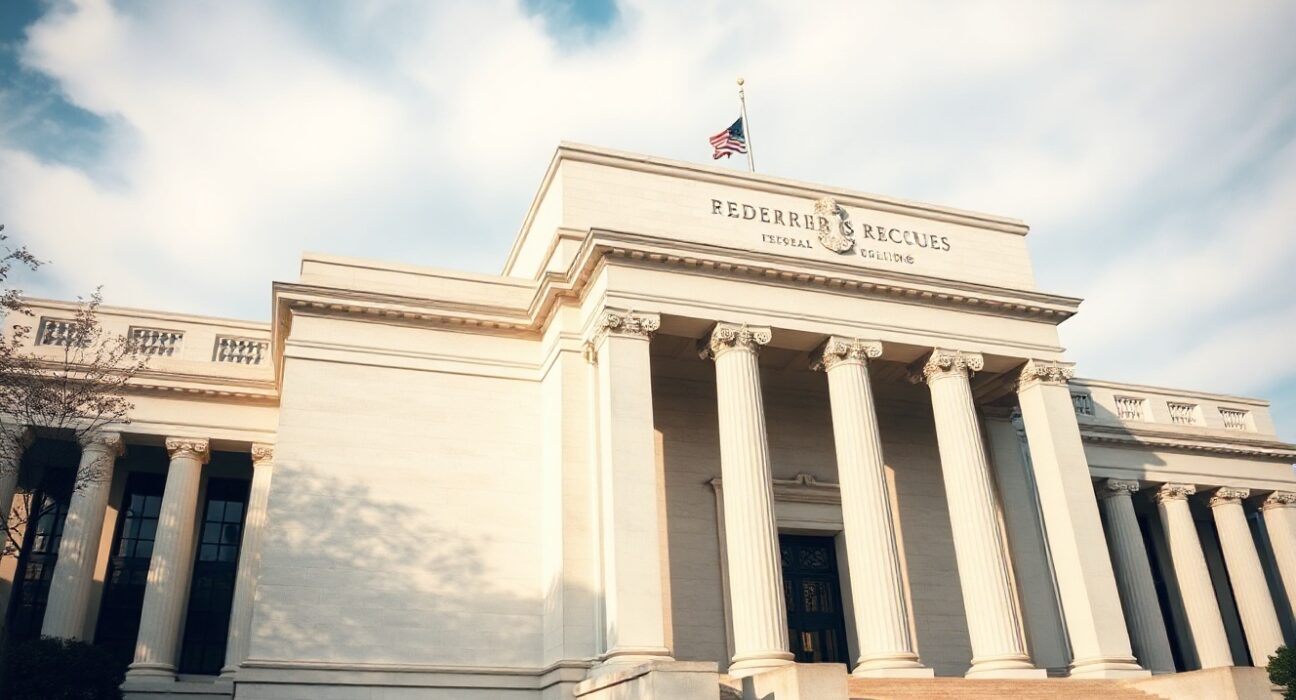
The Federal Reserve is widely expected to keep its benchmark interest rate unchanged at its upcoming meeting, marking the first policy decision under the leadership of new Chair Kevin Warsh. The decision, anticipated by markets and economists alike, signals a cautious approach as the central bank navigates a complex economic landscape.
Policy Continuity Amid Leadership Change
Kevin Warsh, who succeeded Jerome Powell earlier this year, inherits a central bank grappling with inflation that remains above the 2% target, a resilient labor market, and evolving geopolitical risks. The decision to hold rates steady reflects a desire for continuity and data-dependent policymaking during the transition. Market participants will closely scrutinize the accompanying statement and Warsh’s initial press conference for any shifts in the Fed’s forward guidance.
Inflation and Labor Market Context
Recent economic data has presented a mixed picture. While headline inflation has moderated from its 2022 peaks, core inflation measures have proven stickier than anticipated. The labor market, meanwhile, continues to show strength, with unemployment remaining near historic lows. These conditions argue against immediate rate cuts, as the Fed seeks to avoid prematurely loosening policy and reigniting price pressures. The decision to hold steady aligns with the Fed’s patient approach, allowing more time to assess the trajectory of inflation and economic growth.
Market and Consumer Implications
For consumers and businesses, the unchanged rate means borrowing costs for mortgages, auto loans, and credit cards will remain elevated in the near term. However, the stability also provides a predictable environment for financial planning. Investors have largely priced in the hold, with market focus shifting to the Fed’s updated economic projections and the timing of potential rate cuts later in the year. The central bank’s communication strategy under Warsh will be critical in managing expectations and maintaining credibility.
Conclusion
The Federal Reserve’s decision to maintain the status quo on interest rates underscores a deliberate and measured approach under new leadership. As Chair Warsh settles into his role, the central bank’s commitment to data-driven policy remains the guiding principle. The coming months will reveal whether this cautious stance gives way to easing as inflation trends evolve, or if further tightening becomes necessary to achieve the Fed’s dual mandate of price stability and maximum employment.
FAQs
Q1: Why is the Federal Reserve keeping interest rates unchanged?
The Fed is holding rates steady to assess incoming economic data, particularly on inflation and employment, before making any policy shifts. This cautious approach allows the central bank to avoid premature moves that could undermine progress on inflation.
Q2: How does the change in Fed leadership affect policy?
New Chair Kevin Warsh has signaled a commitment to continuity and data dependence. While leadership changes can influence communication style and emphasis, the core policy framework remains focused on the Fed’s dual mandate.
Q3: When might the Fed start cutting interest rates?
Most economists expect rate cuts later in 2026 if inflation continues to moderate toward the 2% target. However, the timing depends on economic data, and the Fed has emphasized it will not be rushed into easing policy prematurely.
Disclaimer: The information provided is not trading advice, Bitcoinworld.co.in holds no liability for any investments made based on the information provided on this page. We strongly recommend independent research and/or consultation with a qualified professional before making any investment decisions.
