

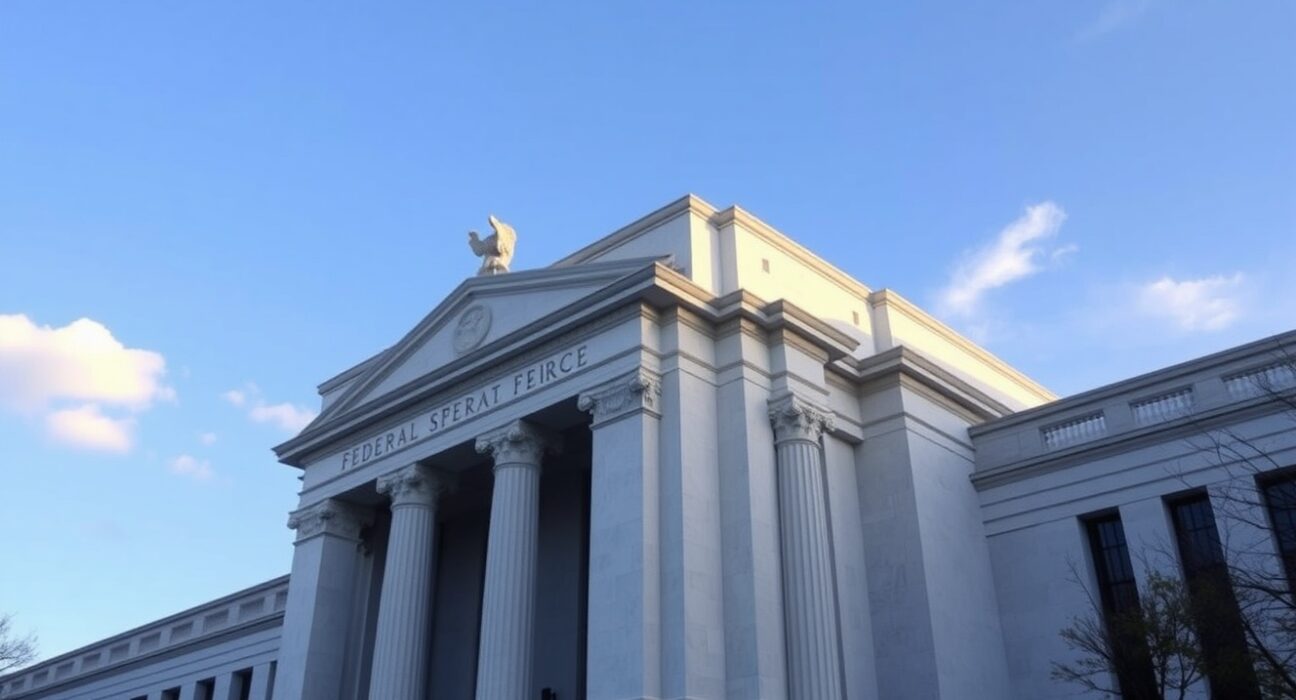
The Federal Reserve has decided to maintain the federal funds rate at 3.75%, a move that was widely anticipated by financial markets and economists. The decision, announced at the conclusion of the Federal Open Market Committee (FOMC) meeting, signals a continued pause in the central bank’s rate adjustment cycle as it assesses the trajectory of inflation and economic growth.
Why the Fed Chose to Hold Rates Steady
The decision to keep the target range for the federal funds rate unchanged at 3.75% reflects the Fed’s ongoing strategy of data-dependent policymaking. According to the FOMC’s official statement, the committee is carefully monitoring incoming economic indicators, including inflation, employment, and consumer spending, before making further adjustments. The pause allows policymakers to evaluate the lagged effects of previous rate hikes on the broader economy without prematurely tightening or loosening financial conditions.
Market Reaction and Economic Context
Financial markets had largely priced in the decision to hold rates steady, leading to a muted initial reaction across major stock indices and bond markets. The S&P 500 and the Dow Jones Industrial Average showed minimal movement in the hours following the announcement, as traders focused on forward guidance rather than the decision itself. The yield on the 10-year U.S. Treasury note remained relatively stable, reflecting the market’s alignment with the Fed’s cautious stance. The hold decision comes amid a complex economic backdrop, with inflation still above the Fed’s 2% target but showing signs of gradual moderation. Recent data on consumer prices and producer prices have indicated that the pace of price increases is slowing, though core inflation remains persistent in certain sectors such as housing and services. The labor market, meanwhile, has remained resilient, with unemployment hovering near historic lows and job creation continuing at a steady pace.
Implications for Borrowers and Savers
For consumers, the decision to hold rates at 3.75% means that borrowing costs on credit cards, auto loans, and variable-rate mortgages will remain at their current elevated levels for the near term. Savers, on the other hand, may continue to benefit from higher yields on savings accounts and certificates of deposit, as banks are likely to maintain competitive rates in the current environment. The Fed’s pause provides a period of stability for households and businesses planning major financial decisions, though uncertainty remains about the timing and direction of future rate changes.
What Comes Next: Future Rate Path
The FOMC’s forward guidance did not provide a definitive timeline for the next rate move, emphasizing that future decisions will depend on the evolution of economic data. Analysts are divided on whether the Fed will cut rates later this year or maintain the current level for an extended period. The central bank’s dot plot, which projects individual members’ expectations for the federal funds rate, suggests a potential path toward lower rates in 2026 if inflation continues to ease. However, the committee has stressed that it remains committed to bringing inflation back to its 2% target and will not hesitate to adjust policy if price pressures re-emerge. The next FOMC meeting is scheduled for several weeks from now, and market participants will be closely watching subsequent inflation reports and employment data for clues about the central bank’s next move.
Conclusion
The Federal Reserve’s decision to hold interest rates at 3.75% was in line with market expectations and reflects a cautious, data-driven approach to monetary policy. While the pause provides temporary stability for financial markets and consumers, the path forward remains uncertain as the central bank balances inflation control with economic growth. The decision underscores the Fed’s commitment to a measured policy stance in a still-evolving economic landscape.
FAQs
Q1: What does the Fed holding rates at 3.75% mean for my mortgage?
If you have a variable-rate mortgage, your interest rate will likely remain unchanged for now. Borrowers with fixed-rate mortgages are not directly affected by the Fed’s decision, as those rates are tied to longer-term bond yields.
Q2: Will the Fed cut rates later this year?
It depends on incoming economic data, particularly inflation and employment figures. Many analysts expect a potential rate cut in the second half of the year if inflation continues to moderate, but no firm timeline has been provided.
Q3: How does the Fed’s decision affect savings account interest rates?
Savings account yields are likely to remain competitive as banks maintain elevated rates to attract deposits. However, if the Fed signals future rate cuts, savings rates may begin to decline in anticipation.
Disclaimer: The information provided is not trading advice, Bitcoinworld.co.in holds no liability for any investments made based on the information provided on this page. We strongly recommend independent research and/or consultation with a qualified professional before making any investment decisions.
