

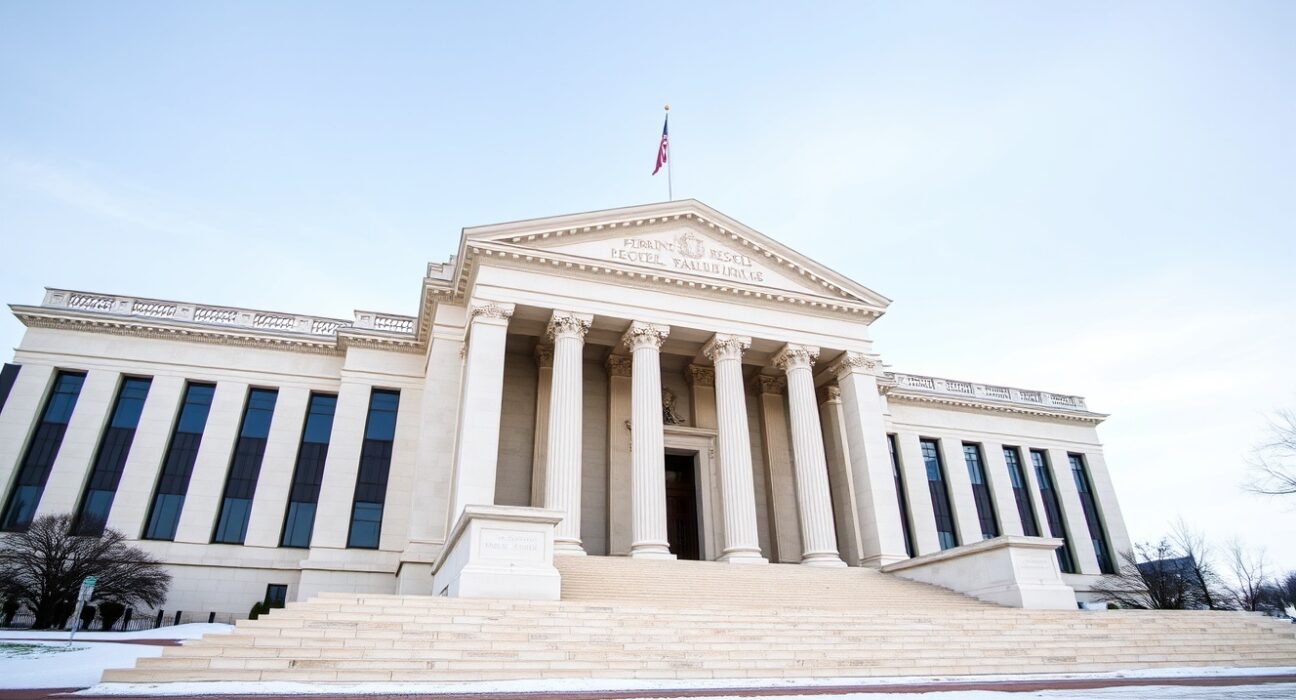
The Federal Reserve has decided to maintain its benchmark interest rate at the current level, signaling a firm commitment to its inflation-fighting mandate despite mounting political pressure to ease monetary policy. This decision, announced at the conclusion of the Federal Open Market Committee (FOMC) meeting on [Date], in Washington, D.C., marks a pivotal moment for the U.S. economy in 2025.
Federal Reserve Interest Rate Decision: A Defiant Stance
The central bank’s decision to hold rates steady comes as a direct rebuke to calls from some lawmakers and industry groups who argue that high borrowing costs are stifling economic growth. The Fed, however, remains focused on its dual mandate: maximum employment and stable prices. Recent data shows that core inflation, while easing from its peak, remains stubbornly above the 2% target. This data-driven approach underpins the Fed’s resolve.
Why the Fed Chose to Hold the Line
Several key factors influenced the FOMC’s decision. First, the labor market remains unexpectedly tight, with wage growth still fueling consumer spending. Second, geopolitical uncertainties continue to inject volatility into global supply chains, posing a risk of renewed price pressures. Third, the Fed is carefully monitoring the lagged effects of its previous rate hikes. By holding steady, the central bank buys time to assess the full impact of its past actions without overcorrecting.
Political Pressure vs. Economic Data
The tension between the White House and the Federal Reserve has intensified in recent months. Political figures have publicly urged the Fed to cut rates to stimulate the housing market and manufacturing sector. However, Fed Chair Jerome Powell has consistently emphasized the importance of data dependency. This clash highlights a fundamental debate: should monetary policy prioritize short-term political goals or long-term economic stability? The Fed’s current path clearly favors the latter.
The Inflation Picture in 2025
Current inflation metrics paint a complex picture. The Consumer Price Index (CPI) has dropped to 3.1% year-over-year, down from its 9.1% peak. However, the Personal Consumption Expenditures (PCE) price index, the Fed’s preferred gauge, remains at 2.7%. Services inflation, particularly in housing and healthcare, has proven especially sticky. This data suggests that the final leg of the inflation fight will be the most difficult, requiring patience from policymakers.
Market Reaction to the Fed’s Hold
Financial markets initially reacted with mild disappointment, as some traders had priced in a small chance of a rate cut. The S&P 500 dipped slightly in afternoon trading, while bond yields rose modestly. The U.S. dollar strengthened against a basket of major currencies. Analysts at major investment banks have revised their forecasts, now predicting the first rate cut may not occur until the fourth quarter of 2025 or early 2026.
- Stock Market: Modest sell-off in rate-sensitive sectors like real estate and utilities.
- Bond Market: The 10-year Treasury yield climbed to 4.25%.
- Housing Market: Mortgage rates remain elevated, near 7%, cooling demand.
Impact on Borrowers and Savers
For consumers, the decision means continued high costs for credit cards, auto loans, and mortgages. Savers, conversely, continue to benefit from attractive yields on high-yield savings accounts and certificates of deposit. The Fed’s stance creates a clear divergence: borrowers face ongoing strain, while savers enjoy the highest real returns in over a decade. This dynamic is reshaping household financial strategies across the country.
Global Implications of the Fed’s Decision
The Fed’s decision reverberates globally. A stronger dollar puts pressure on emerging market economies that have borrowed in dollars. Central banks in Europe and Asia are watching closely, as a hawkish Fed limits their own ability to cut rates without triggering capital outflows. The coordinated nature of global monetary policy means that the Fed’s independence has consequences far beyond U.S. borders.
Expert Analysis: A Necessary Patience
Economists largely support the Fed’s cautious approach. “The risk of cutting rates too early and reigniting inflation is far greater than the risk of holding too long and slowing growth,” explains Dr. Elena Vargas, a former Fed economist now at the Peterson Institute. “The labor market is still strong. There is no emergency that demands immediate action.” This sentiment echoes across the economic community, reinforcing the idea that the Fed is acting responsibly.
Timeline of the 2025 Monetary Policy Cycle
To understand the current decision, it helps to look at the recent timeline:
| Date | Action | Fed Funds Rate |
|---|---|---|
| July 2023 | Final hike of the cycle | 5.50% |
| Jan 2024 | First hold | 5.50% |
| Current (2025) | Continued hold | 5.50% |
Conclusion
The Federal Reserve’s decision to hold rates steady in the face of political pressure underscores its commitment to data-driven monetary policy. By prioritizing long-term price stability over short-term political gains, the Fed aims to build a more sustainable economic foundation. While the path forward remains uncertain, the central bank’s clear signal is one of patience and vigilance. For investors, businesses, and consumers, the message is clear: the era of easy money is not returning anytime soon.
FAQs
Q1: Why did the Federal Reserve decide to hold interest rates steady?
The Fed held rates steady because core inflation remains above its 2% target, the labor market is still tight, and it needs more time to assess the lagged effects of previous rate hikes.
Q2: How does the Fed’s decision affect mortgage rates?
Mortgage rates are likely to remain elevated, near 7%, as the Fed’s hold keeps long-term bond yields high. This continues to cool the housing market.
Q3: Will the Fed cut rates in 2025?
Most economists now predict the first rate cut may not happen until late 2025 or early 2026, depending on inflation data and economic growth.
Q4: What is the difference between the CPI and PCE inflation measures?
The CPI measures out-of-pocket costs for consumers, while the PCE adjusts for changes in consumer behavior. The Fed prefers the PCE because it provides a broader view of inflation.
Q5: How does the Fed’s decision impact the stock market?
Rate-sensitive sectors like real estate and utilities typically underperform when rates are held high. However, banks and financials may benefit from wider net interest margins.
Disclaimer: The information provided is not trading advice, Bitcoinworld.co.in holds no liability for any investments made based on the information provided on this page. We strongly recommend independent research and/or consultation with a qualified professional before making any investment decisions.
