
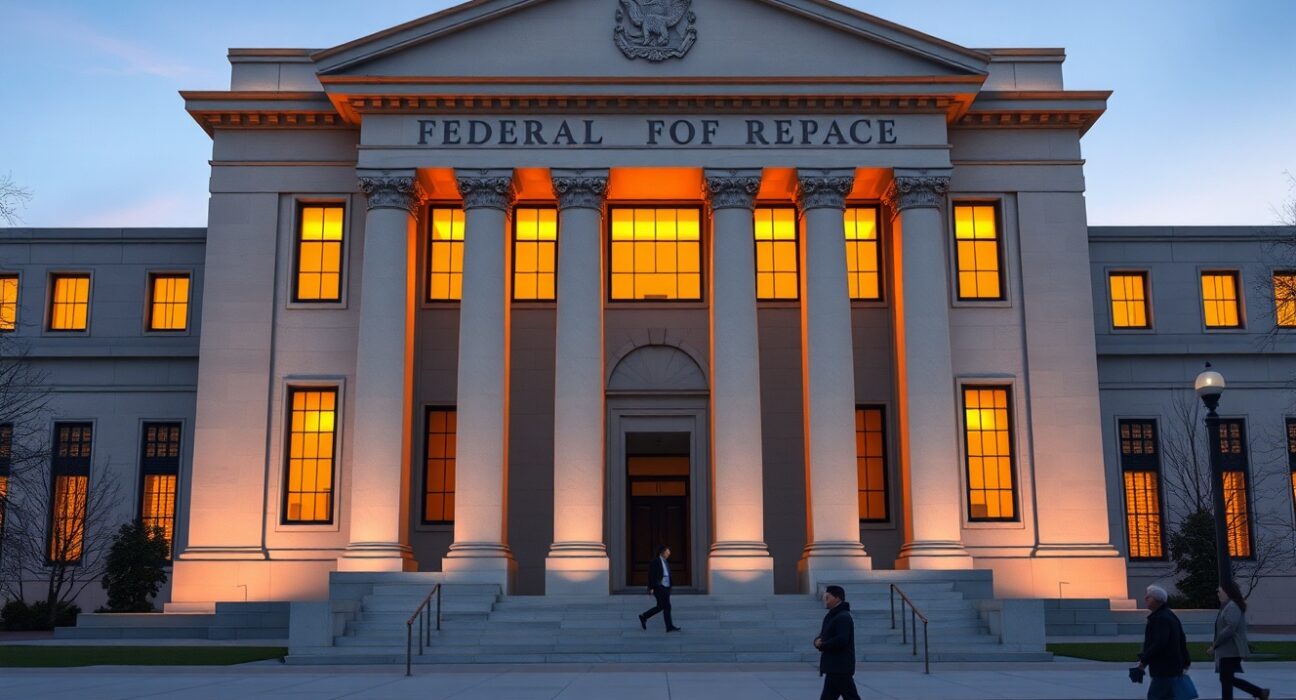
WASHINGTON, D.C. — March 2025 marks a potential turning point for American monetary policy as White House National Economic Council Chairman Kevin Hassett publicly anticipates Federal Reserve Chairman Jerome Powell’s departure from the central bank. Furthermore, Hassett expresses confidence that former Fed Governor Kevin Warsh will assume the chairmanship in May, signaling a significant leadership transition at the world’s most influential financial institution.
Federal Reserve Leadership Faces Historic Transition
Kevin Hassett’s remarks immediately reverberated through financial markets and policy circles. The White House economic advisor made his comments during a moderated discussion at the Brookings Institution. Consequently, analysts began scrutinizing the potential implications for monetary policy direction. The Federal Reserve currently navigates complex economic conditions including persistent inflation concerns and global financial stability challenges.
Jerome Powell has served as Federal Reserve Chair since February 2018. His tenure included unprecedented challenges such as the COVID-19 pandemic response and subsequent inflation surge. Powell previously served as a Fed governor from 2012 to 2018. His current term as chair officially expires in May 2026. However, Fed chairs typically also serve as governors, creating potential complications for leadership continuity.
Understanding the Federal Reserve Governance Structure
The Federal Reserve System operates with a unique governance framework. The Board of Governors consists of seven members appointed by the President and confirmed by the Senate. Governors serve staggered 14-year terms, while the chair serves a four-year term. This structure creates potential scenarios where a chair could leave the board while another member assumes leadership responsibilities.
Key aspects of Federal Reserve leadership include:
- Chair nomination requires presidential selection and Senate confirmation
- Board members maintain independence in monetary policy decisions
- Leadership transitions historically occur during economic turning points
- Market stability depends on clear communication during transitions
Kevin Warsh’s Background and Policy Perspectives
Kevin Warsh brings substantial Federal Reserve experience to the potential leadership role. He served as a Fed governor from 2006 to 2011, encompassing the global financial crisis period. Warsh participated in critical decisions during the 2008 market collapse and subsequent recovery efforts. His policy perspectives have evolved since his tenure, particularly regarding central bank balance sheet management.
Warsh currently serves as a distinguished visiting fellow at the Hoover Institution. He maintains advisory roles with several financial institutions and frequently publishes monetary policy analysis. His recent writings suggest concerns about prolonged unconventional monetary policies. Additionally, Warsh emphasizes the importance of central bank independence from political influence.
| Policy Area | Jerome Powell | Kevin Warsh |
|---|---|---|
| Inflation Response | Gradual tightening with forward guidance | Potentially more aggressive normalization |
| Balance Sheet | Gradual runoff program | Advocated faster reduction historically |
| Communication Style | Deliberate and consensus-driven | More direct and analytical |
| Crisis Management | Unprecedented pandemic response | 2008 financial crisis experience |
Historical Context of Federal Reserve Leadership Changes
Federal Reserve leadership transitions historically coincide with economic inflection points. For instance, Paul Volcker’s appointment in 1979 addressed runaway inflation. Similarly, Alan Greenspan assumed leadership during the 1987 stock market crash recovery. Ben Bernanke faced the 2008 global financial crisis shortly after his appointment. These historical precedents inform current expectations about transition timing and policy continuity.
The nomination process typically involves extensive vetting and congressional hearings. Senate Banking Committee scrutiny examines candidates’ policy views and independence. Confirmation votes often reflect broader political considerations beyond pure monetary policy expertise. Recent confirmations have encountered increasing partisan divisions, potentially complicating swift transitions.
Market Implications of Leadership Uncertainty
Financial markets immediately reacted to Hassett’s comments with increased volatility. Treasury yields fluctuated as investors assessed potential policy direction changes. Equity markets showed particular sensitivity to monetary policy uncertainty. Market analysts emphasize that clear communication during transitions maintains financial stability.
Historical data reveals that Federal Reserve leadership changes typically produce temporary market volatility. However, long-term market trends depend more on economic fundamentals than individual leadership. The current economic environment features unique challenges including geopolitical tensions and technological disruption. Consequently, markets may exhibit heightened sensitivity to leadership signals.
White House Economic Council’s Role in Monetary Policy
The National Economic Council coordinates domestic and international economic policy for the White House. As NEC Chairman, Kevin Hassett advises the President on economic matters including Federal Reserve appointments. However, the NEC maintains no direct authority over monetary policy decisions. This separation preserves Federal Reserve independence, a cornerstone of modern central banking.
Hassett’s comments represent unusual public speculation about Federal Reserve leadership. Traditionally, administration officials avoid public discussion of potential Fed appointments before formal announcements. This departure from convention suggests either coordinated messaging or personal perspective. Policy analysts continue debating the implications for central bank independence norms.
Critical considerations for monetary policy continuity include:
- Maintaining inflation targeting framework credibility
- Ensuring financial stability during leadership transitions
- Preserving Federal Reserve operational independence
- Communicating policy intentions clearly to global markets
Potential Timeline for Federal Reserve Leadership Transition
Formal Federal Reserve chair nominations typically follow specific procedural steps. The President must submit a nomination to the Senate Banking Committee. Subsequently, the committee conducts hearings and votes before full Senate consideration. This process historically requires several months from initial nomination to confirmation.
If Kevin Hassett’s prediction proves accurate, several scenarios could unfold. Jerome Powell might complete his term as chair but resign his governor position. Alternatively, Powell could depart earlier, requiring an interim chair appointment. The Federal Reserve Act designates the vice chair as acting chair during vacancies. Current Vice Chair Philip Jefferson would assume temporary leadership in such circumstances.
Expert Analysis on Transition Scenarios
Monetary policy experts emphasize the importance of orderly transitions. Former Fed officials stress maintaining policy consistency during leadership changes. Academic economists highlight the risks of abrupt policy direction shifts. Financial institution analysts focus on communication strategy during uncertain periods.
Several research institutions published immediate analysis following Hassett’s remarks. The Brookings Institution noted potential implications for inflation fighting credibility. The Peterson Institute for International Economics examined global coordination considerations. Stanford University’s monetary policy research group assessed historical precedent relevance.
Conclusion
The potential Federal Reserve leadership transition represents a critical moment for American monetary policy. Kevin Hassett’s comments about Jerome Powell’s departure and Kevin Warsh’s potential ascension highlight coming changes at the central bank. Market participants and policy analysts must monitor developments closely while maintaining perspective on institutional continuity. The Federal Reserve’s established frameworks and experienced staff provide stability during leadership transitions. Ultimately, monetary policy effectiveness depends more on institutional strength than individual leadership, though clear communication during this period remains essential for maintaining economic stability and market confidence.
FAQs
Q1: When did Kevin Hassett make these comments about Federal Reserve leadership?
Kevin Hassett made these remarks during a public discussion at the Brookings Institution in Washington, D.C. in March 2025.
Q2: What is Jerome Powell’s current status as Federal Reserve Chair?
Jerome Powell continues serving as Federal Reserve Chair, with his current term scheduled to expire in May 2026. He also serves as a member of the Board of Governors.
Q3: What experience does Kevin Warsh bring to the potential Federal Reserve Chair role?
Kevin Warsh served as a Federal Reserve Governor from 2006 to 2011, through the global financial crisis. He currently serves as a distinguished visiting fellow at Stanford University’s Hoover Institution.
Q4: How do Federal Reserve leadership transitions typically affect monetary policy?
Historical evidence suggests Federal Reserve leadership transitions create temporary uncertainty but rarely produce abrupt policy changes. Institutional frameworks and committee decisions provide continuity during transitions.
Q5: What role does the White House National Economic Council play in Federal Reserve appointments?
The NEC advises the President on economic policy matters including potential Federal Reserve nominations. However, the council maintains no direct authority over monetary policy decisions or Federal Reserve operations.
Disclaimer: The information provided is not trading advice, Bitcoinworld.co.in holds no liability for any investments made based on the information provided on this page. We strongly recommend independent research and/or consultation with a qualified professional before making any investment decisions.