

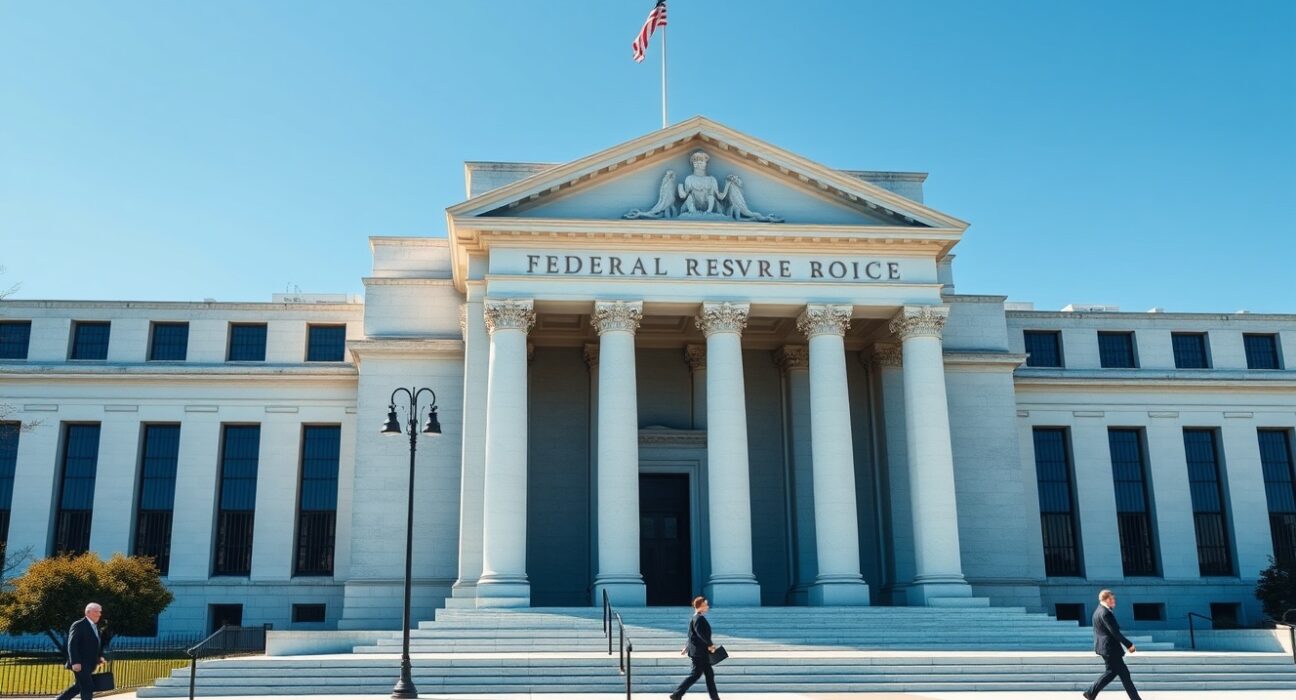
WASHINGTON, D.C., March 2025 – The Federal Reserve maintains its measured approach to monetary policy normalization, implementing gradual interest rate reductions while carefully monitoring inflation metrics. According to recent analysis from Danske Bank, this deliberate strategy aims to balance economic growth with price stability throughout 2025. Financial markets closely watch these developments, as they significantly impact global investment decisions and economic forecasting.
Federal Reserve’s Gradual Rate Cut Strategy
The Federal Open Market Committee continues its methodical approach to monetary policy adjustments. Recent meetings have confirmed a pattern of measured interest rate reductions, typically in 25-basis-point increments. This cautious methodology reflects the central bank’s commitment to avoiding economic disruption while addressing changing financial conditions.
Several factors influence this gradual approach. First, labor market resilience provides policymakers with flexibility. Second, service sector inflation demonstrates persistent characteristics. Third, global economic uncertainties require careful navigation. The Federal Reserve consistently emphasizes data dependency in its decision-making process.
Historical context reveals important patterns. Previous tightening cycles typically featured more aggressive rate increases than current reductions. The current cycle’s measured pace contrasts with earlier periods of rapid policy shifts. This difference reflects lessons learned from previous economic transitions and improved analytical frameworks.
Inflation Trajectory and Economic Indicators
Inflation metrics show consistent movement toward the Federal Reserve’s 2% target. Core Personal Consumption Expenditures, the central bank’s preferred inflation gauge, demonstrates gradual moderation. Recent data indicates sustainable progress without dramatic declines that might signal economic weakness.
Key inflation components display varying behaviors:
- Goods inflation shows significant moderation due to supply chain improvements
- Housing costs continue gradual deceleration with regional variations
- Services inflation remains more persistent but shows early signs of easing
- Wage growth maintains moderate levels that support consumer spending
Employment statistics provide crucial context for monetary policy decisions. The unemployment rate remains near historical lows while job creation continues at a sustainable pace. Labor force participation shows gradual improvement, particularly among prime-age workers. These factors support continued consumer spending and economic stability.
Danske Bank’s Economic Analysis
Danske Bank’s research division provides detailed analysis of Federal Reserve policy implications. Their economists emphasize several critical factors influencing monetary policy decisions. First, financial conditions remain relatively accommodative despite rate increases. Second, fiscal policy continues to provide economic support. Third, international developments create both opportunities and challenges.
The banking institution’s forecasting models incorporate multiple scenarios. Their baseline projection anticipates continued gradual policy normalization throughout 2025. Alternative scenarios consider various economic developments and their potential impacts. This comprehensive approach helps investors understand potential policy paths and their implications.
Comparative analysis with other central banks reveals important distinctions. The European Central Bank maintains different policy priorities and timing. The Bank of England faces unique domestic inflation challenges. The Bank of Japan continues its gradual policy normalization. These differences create complex interactions in global financial markets.
Market Implications and Investment Considerations
Financial markets demonstrate sophisticated responses to Federal Reserve communications. Treasury yields reflect expectations for future policy actions. Equity markets incorporate growth projections and valuation adjustments. Currency markets respond to interest rate differentials and economic outlook variations.
Fixed income investors face particular challenges in this environment. Duration management becomes increasingly important as rate expectations evolve. Credit spreads require careful monitoring as economic conditions change. Yield curve dynamics offer insights into market expectations and potential economic developments.
Equity market sectors show differentiated responses to monetary policy developments. Financial institutions benefit from certain aspects of the current environment. Technology companies demonstrate varying sensitivities to interest rate changes. Consumer sectors respond to evolving economic conditions and policy impacts.
Historical Context and Policy Evolution
The current monetary policy approach reflects decades of institutional learning. The Federal Reserve’s dual mandate of maximum employment and price stability guides all decisions. Recent experience with pandemic-era policies informs current cautious approaches. Communication strategies have evolved significantly to enhance transparency and predictability.
Policy framework changes implemented in recent years continue to influence decisions. The move to average inflation targeting provides additional flexibility. Enhanced focus on employment inclusivity represents an important development. These framework adjustments help explain current policy approaches and future directions.
International coordination remains an important consideration. Central bank communications increasingly reference global economic conditions. Policy spillovers receive greater attention in decision-making processes. Financial stability considerations incorporate international dimensions more comprehensively than in previous periods.
Economic Outlook and Risk Assessment
The 2025 economic landscape presents both opportunities and challenges. Growth projections indicate moderate expansion with manageable inflation. Labor market conditions suggest continued resilience with gradual normalization. Consumer spending patterns show adaptation to evolving economic conditions.
Several risk factors require careful monitoring. Geopolitical developments could impact energy markets and supply chains. Financial market volatility may increase during policy transitions. International economic conditions create potential spillover effects. The Federal Reserve maintains readiness to adjust policies as conditions warrant.
Forward guidance continues to play a crucial role in policy implementation. Clear communication helps anchor market expectations. Gradual policy adjustments reduce uncertainty and disruption. Data-dependent approaches ensure responsiveness to changing economic conditions.
Conclusion
The Federal Reserve’s gradual approach to interest rate reductions reflects careful balancing of multiple economic objectives. Inflation progress toward the 2% target continues steadily while employment conditions remain strong. Danske Bank’s analysis provides valuable insights into policy implications and market impacts. This measured strategy supports economic stability while allowing flexibility for future adjustments as conditions evolve throughout 2025 and beyond.
FAQs
Q1: What is the Federal Reserve’s current approach to interest rates?
The Federal Reserve implements gradual, measured reductions in interest rates while carefully monitoring inflation progress and employment conditions. This approach balances multiple economic objectives and responds to evolving data.
Q2: How does inflation influence Federal Reserve decisions?
Inflation metrics, particularly Core PCE, directly guide monetary policy decisions. The central bank seeks sustained movement toward its 2% target while considering broader economic conditions and employment goals.
Q3: What analysis does Danske Bank provide on Federal Reserve policy?
Danske Bank offers comprehensive economic analysis including policy implications, market impacts, and forecasting scenarios. Their research examines multiple factors influencing monetary policy decisions and their economic consequences.
Q4: How do financial markets respond to Federal Reserve policies?
Financial markets incorporate policy expectations into asset prices across Treasury securities, equities, and currencies. Different market segments show varied sensitivities to interest rate changes and economic outlook adjustments.
Q5: What risks could alter the Federal Reserve’s current policy path?
Significant changes in inflation trends, employment conditions, financial stability, or international developments could prompt policy adjustments. The Federal Reserve maintains data-dependent flexibility to respond to evolving economic circumstances.
Disclaimer: The information provided is not trading advice, Bitcoinworld.co.in holds no liability for any investments made based on the information provided on this page. We strongly recommend independent research and/or consultation with a qualified professional before making any investment decisions.
