

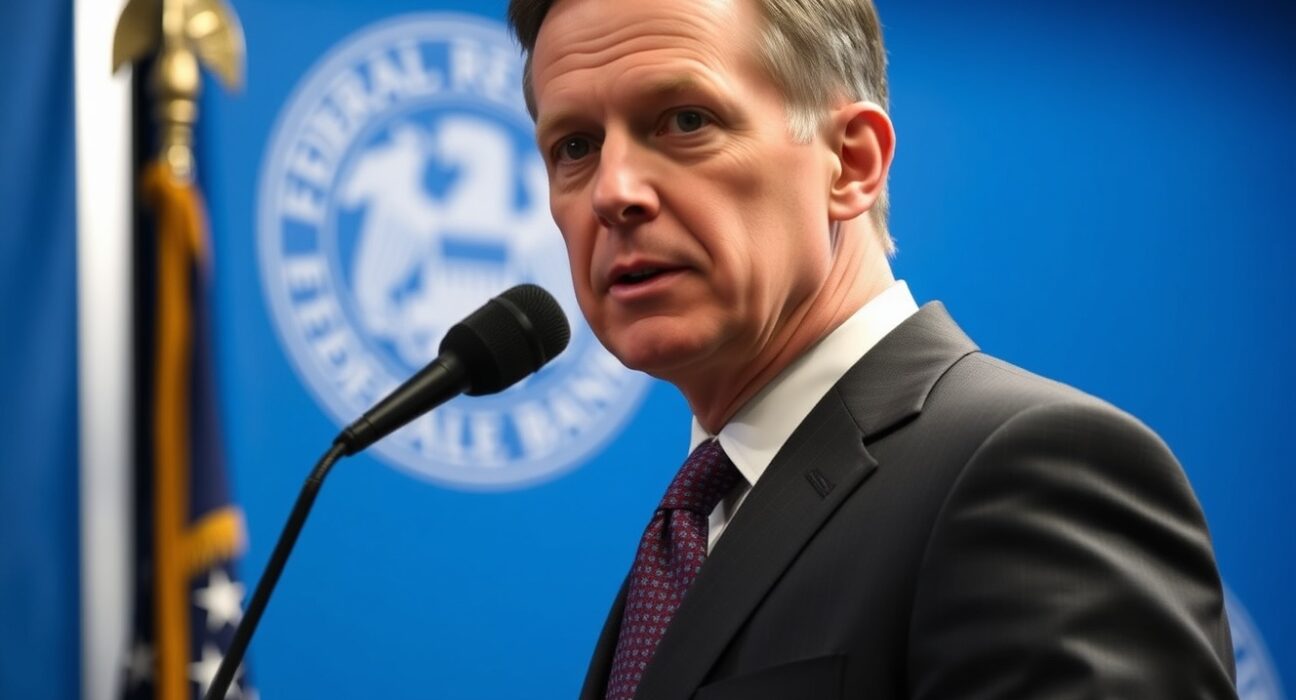
Federal Reserve Bank of Chicago President Austan Goolsbee on Tuesday offered a nuanced view on the relationship between productivity gains and monetary policy, stating that the net effect on inflation and interest rates could swing in either direction. Speaking at an economic forum, Goolsbee emphasized that while productivity improvements typically help cool price pressures over the long term, the short-term dynamics are far less predictable.
Productivity’s Dual-Edged Impact on Inflation
Goolsbee explained that rising productivity can lower unit labor costs, which generally supports lower inflation. However, it can also boost economic growth and demand, potentially fueling price increases if supply fails to keep pace. “The direction of the impact on inflation and interest rates is not predetermined,” Goolsbee said, according to prepared remarks. “It depends on how the gains are distributed and whether demand outpaces supply.”
The remarks come as the Fed navigates a delicate balancing act between taming inflation and avoiding unnecessary damage to the labor market. Recent data shows inflation moderating but still above the Fed’s 2% target, while the economy continues to add jobs at a solid pace.
Implications for Interest Rate Policy
Goolsbee’s comments suggest that the central bank is not ready to commit to a specific timeline for rate cuts, despite market expectations for easing later this year. He cautioned that productivity trends could complicate the inflation outlook, making it harder for policymakers to gauge the appropriate stance. “We need to be humble about our ability to forecast the path of productivity,” he added.
Market participants have been closely watching Fed officials’ remarks for clues on the timing of the first rate cut. Current futures pricing indicates a roughly 60% probability of a cut at the September meeting, but Goolsbee’s uncertainty could temper those expectations.
Why This Matters for Investors and Consumers
For investors, the uncertainty means interest rate-sensitive assets like bonds and growth stocks may face continued volatility. For consumers, the Fed’s path on rates directly influences mortgage rates, credit card APRs, and auto loan costs. If productivity gains fail to translate into lower inflation, the Fed may hold rates higher for longer, keeping borrowing costs elevated.
Goolsbee’s stance aligns with other Fed officials who have urged patience. Fed Chair Jerome Powell recently noted that the central bank needs “greater confidence” that inflation is sustainably moving toward 2% before cutting rates.
Conclusion
Chicago Fed President Austan Goolsbee’s remarks highlight the complexity of forecasting inflation in an environment of shifting productivity dynamics. While productivity gains are generally disinflationary, the net effect on interest rates remains uncertain. The Fed is likely to maintain a data-dependent approach, with no clear timeline for rate cuts. Investors and consumers should prepare for a period of prolonged policy uncertainty.
FAQs
Q1: How does productivity affect inflation?
Higher productivity reduces unit labor costs, which can lower prices. However, it can also boost demand and economic growth, potentially pushing prices up if supply doesn’t keep pace.
Q2: What did Goolsbee say about interest rates?
Goolsbee said the impact of productivity on inflation and interest rates is uncertain, urging caution on the timing of rate cuts. He emphasized the Fed needs to remain data-dependent.
Q3: When is the Fed expected to cut rates?
Market pricing suggests a roughly 60% chance of a rate cut at the September 2025 meeting, but Goolsbee’s comments indicate the Fed is not committed to a specific timeline.
Disclaimer: The information provided is not trading advice, Bitcoinworld.co.in holds no liability for any investments made based on the information provided on this page. We strongly recommend independent research and/or consultation with a qualified professional before making any investment decisions.
