
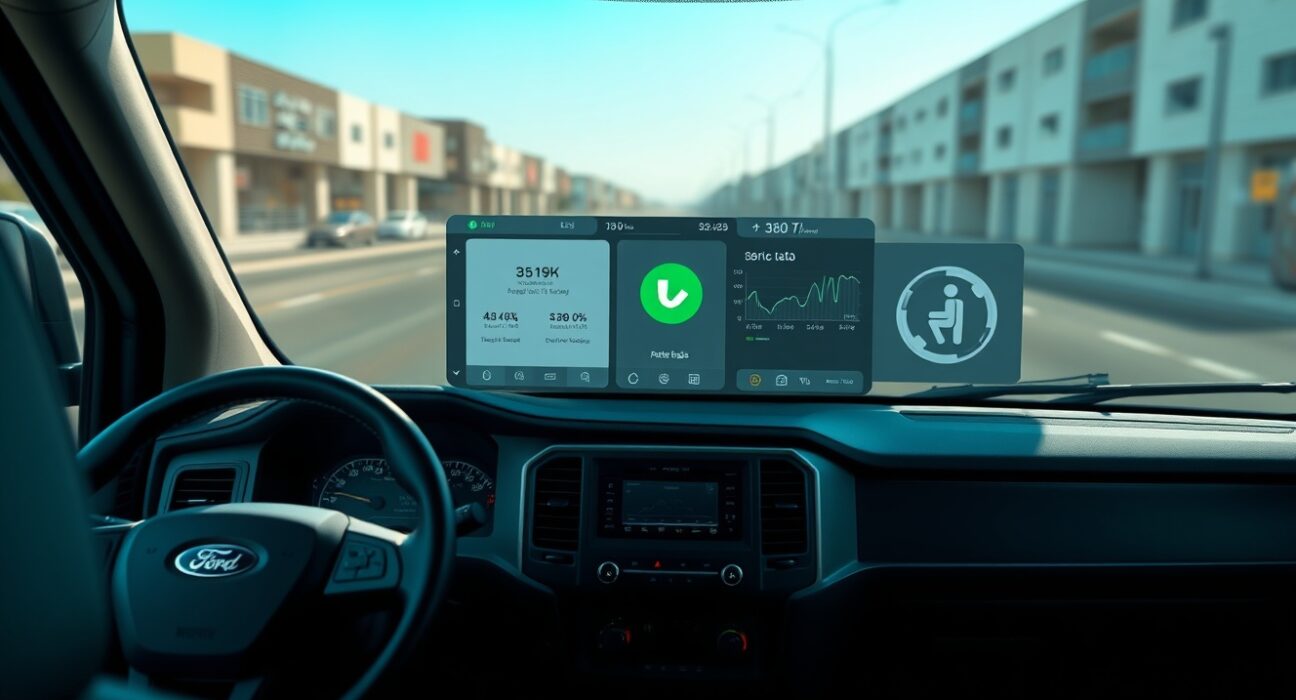
INDIANAPOLIS, June 9, 2025 – Ford Motor Company has unveiled a groundbreaking artificial intelligence system that fundamentally changes how commercial fleet operators manage safety and efficiency. The Ford Pro AI assistant, launched this week at Work Truck Week, represents a significant shift toward software-driven revenue in the automotive industry. This innovative platform analyzes millions of data points to provide actionable insights, with seatbelt usage monitoring emerging as a particularly impactful feature for improving driver safety across commercial operations.
Ford Pro AI Revolutionizes Commercial Fleet Management
Ford’s strategic investment in artificial intelligence reflects broader industry trends toward software monetization. The company’s Ford Pro division, which generated $66.3 billion in revenue last year, serves as the perfect testing ground for this technology. Consequently, commercial customers now receive the AI assistant as part of their existing telematics subscription. This integration demonstrates Ford’s commitment to adding value for its paying customers through advanced software solutions.
The system operates on Google Cloud infrastructure and utilizes multiple AI agents to process fleet data. Significantly, Ford emphasizes that this technology goes beyond simple diagnostic reporting. Instead, it provides detailed operational intelligence that directly impacts business outcomes. The platform’s ability to monitor seatbelt usage represents just one component of a comprehensive safety and efficiency monitoring system.
Beyond Basic Telematics: Advanced Safety Monitoring
Traditional fleet management systems typically provide basic vehicle diagnostics and location tracking. However, Ford Pro AI introduces unprecedented depth in safety monitoring. The system tracks seatbelt usage across entire fleets, giving managers real-time visibility into compliance patterns. Additionally, it monitors other critical safety metrics including speeding incidents, harsh acceleration events, and excessive idling times.
Ford executives stress that this represents more than just a chatbot interface. The proprietary system transforms raw vehicle data into actionable business intelligence. For instance, managers can identify which vehicles or drivers show consistent seatbelt non-compliance. They can then implement targeted training programs to address specific safety concerns. This data-driven approach potentially reduces insurance costs while improving overall fleet safety records.
The Data Advantage: Reducing AI Hallucinations
Ford’s implementation addresses one of the most significant challenges in enterprise AI deployment: accuracy. The company utilizes internal data from each customer’s specific fleet operations to train and refine its AI models. This approach substantially reduces the potential for AI hallucinations and errors that plague more generalized systems. Essentially, the AI learns from actual operational patterns within each organization, creating highly relevant and reliable insights.
This data-specific training represents what Ford describes as its “secret sauce” in AI development. By grounding the AI in real operational data, the system provides recommendations that reflect actual business conditions rather than theoretical scenarios. The result is a tool that fleet managers can trust for critical decision-making regarding safety protocols and operational efficiency improvements.
Commercial Success and Expansion Plans
The Ford Pro business division reported impressive financial results in 2025, with $6.8 billion in net income. Software subscriptions within this division grew by 30% during the same period, indicating strong market acceptance of Ford’s digital offerings. Currently, Ford Pro serves more than 840,000 global subscribers, though the company hasn’t disclosed specific U.S. user numbers.
This commercial success hasn’t gone unnoticed within Ford’s broader corporate strategy. Earlier this year at CES 2026, the company announced plans to develop a consumer-facing AI assistant for passenger vehicle owners. This system will debut in Ford’s smartphone application before expanding to vehicle integration in 2027. The consumer version will likely incorporate many of the data analysis capabilities proven successful in the commercial Ford Pro AI platform.
Industry Context: The Software Monetization Trend
Ford’s move aligns with broader automotive industry shifts toward software and service revenue streams. Major automakers increasingly view vehicles as platforms for ongoing software relationships rather than one-time hardware sales. This transition mirrors patterns seen in technology sectors where hardware becomes the delivery mechanism for valuable software services.
The financial implications are substantial. Software typically carries higher profit margins than physical vehicle components. Furthermore, subscription models create predictable recurring revenue streams. Ford’s 30% growth in paid software subscriptions demonstrates strong market validation of this approach within the commercial vehicle sector.
Workforce Implications and Industry Transformation
As Ford accelerates its AI initiatives, executive leadership has been transparent about potential workforce impacts. CEO Jim Farley previously predicted that artificial intelligence could reduce white-collar job numbers by approximately 50% in the United States. However, Farley also emphasized the continued need for essential workers to build and maintain the infrastructure supporting AI development.
This dual perspective reflects the complex reality of technological transformation. While AI automates certain analytical and monitoring functions, it simultaneously creates demand for new skill sets in implementation, maintenance, and strategic application. The transportation industry faces particular challenges in balancing efficiency gains from automation with workforce development and transition support.
Conclusion
Ford’s AI assistant represents a significant advancement in commercial fleet management technology, with seatbelt monitoring serving as just one visible application of its capabilities. The system’s ability to transform raw vehicle data into actionable business intelligence marks a new era in transportation technology. As Ford expands this technology from commercial to consumer applications, the broader implications for vehicle safety, efficiency, and software monetization will continue to unfold across the automotive industry. The Ford Pro AI platform demonstrates how targeted artificial intelligence applications can deliver tangible business value while improving critical safety metrics like seatbelt compliance across entire fleets.
FAQs
Q1: How does Ford’s AI assistant monitor seatbelt usage?
The system uses vehicle sensor data integrated with Ford’s telematics platform to detect when seatbelts are engaged. This information gets processed through AI algorithms that identify patterns and provide compliance reports to fleet managers.
Q2: What other data does the Ford Pro AI system analyze?
Beyond seatbelt monitoring, the platform tracks fuel consumption patterns, vehicle health indicators, idle times, speeding incidents, and acceleration events across entire fleets, providing comprehensive operational intelligence.
Q3: Is the Ford AI assistant available for consumer vehicles?
Currently, the system is available only for Ford Pro commercial customers. However, Ford announced at CES 2026 that a consumer version will launch in their smartphone app first, with vehicle integration planned for 2027.
Q4: How does Ford ensure the accuracy of its AI recommendations?
The company uses internal data from each customer’s specific fleet operations to train its AI models, reducing the potential for errors and hallucinations that can occur with more generalized artificial intelligence systems.
Q5: What business benefits do fleet operators gain from this technology?
Operators receive detailed insights that can improve safety compliance, reduce fuel costs, optimize maintenance schedules, lower insurance premiums, and enhance overall fleet efficiency through data-driven decision making.
Disclaimer: The information provided is not trading advice, Bitcoinworld.co.in holds no liability for any investments made based on the information provided on this page. We strongly recommend independent research and/or consultation with a qualified professional before making any investment decisions.