
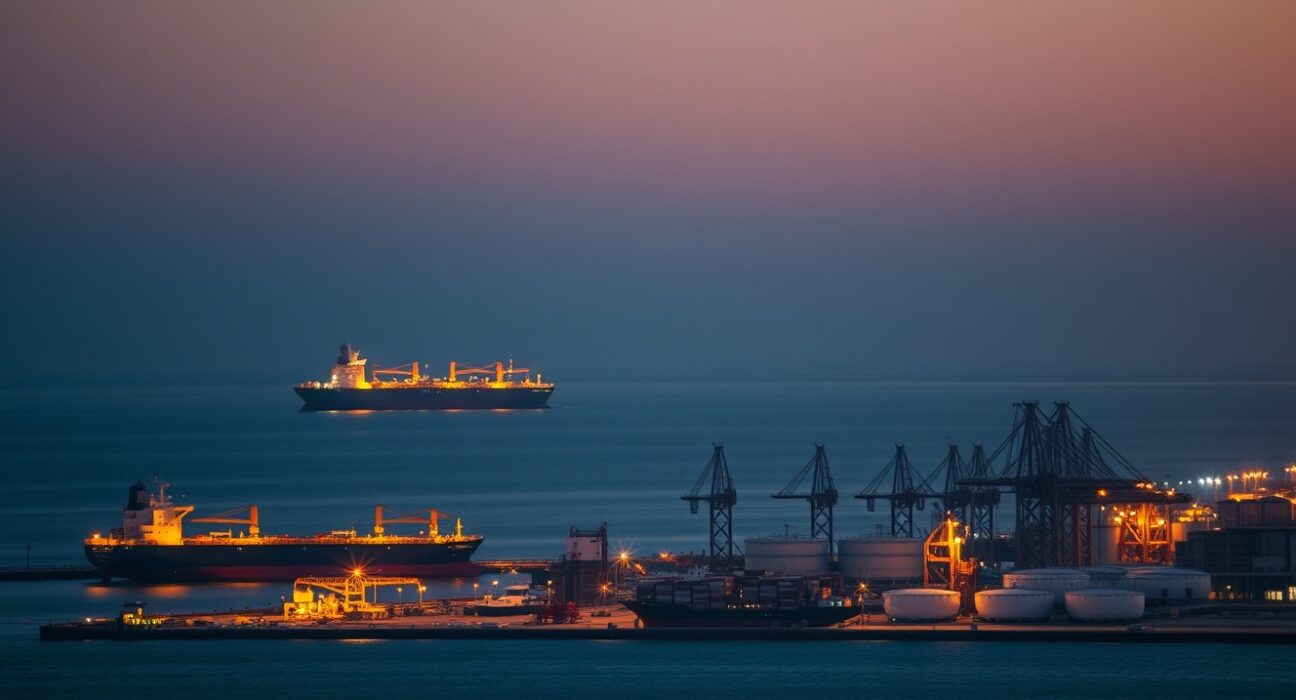
FUJAIRAH, UAE – March 2025: The Port of Fujairah has suspended all oil loadings for the second time this year, creating immediate disruptions to Middle Eastern energy exports and global crude markets. This critical development follows similar incidents that have plagued the strategic facility, raising serious questions about regional energy security and supply chain resilience. Consequently, shipping companies and oil traders are scrambling to reroute cargoes while analysts assess the broader implications for global energy flows.
Fujairah Port Oil Loading Suspension Details
The suspension affects all crude oil and refined product loadings at Fujairah’s offshore terminals. Port authorities issued the directive early Tuesday morning local time, citing unspecified “operational requirements.” However, maritime security analysts immediately noted increased naval patrols in the surrounding waters. Meanwhile, shipping data shows at least eight Very Large Crude Carriers (VLCCs) currently anchored outside the port, awaiting loading instructions. Furthermore, the disruption comes during peak maintenance season for regional refineries, amplifying the timing’s significance.
The port handles approximately 2 million barrels per day of crude and refined products. This volume represents nearly 15% of the UAE’s total petroleum exports. Key statistics include:
- Daily Throughput: 1.8-2.2 million barrels
- Storage Capacity: 10.2 million cubic meters
- Anchored Tankers: 8 VLCCs (as of March 25)
- Previous Suspension: January 2025 (48 hours)
Historical Context of Fujairah Disruptions
This incident marks the fourth significant disruption at Fujairah since 2022. Previous incidents included drone attacks in 2022, cybersecurity breaches in 2023, and the January 2025 suspension. Each event has progressively highlighted the facility’s vulnerability despite substantial security investments. Additionally, Fujairah’s geographical position outside the Strait of Hormuz makes it theoretically safer than Persian Gulf ports. Nevertheless, recent events challenge this assumption directly.
The table below shows recent Fujairah disruptions:
| Date | Incident Type | Duration | Impact |
|---|---|---|---|
| July 2022 | Drone Attack | 72 hours | Limited damage |
| November 2023 | Cyber Incident | 24 hours | Operational delay |
| January 2025 | Security Alert | 48 hours | Full suspension |
| March 2025 | Operational Suspension | Ongoing | Full suspension |
Expert Analysis on Regional Energy Security
Energy security specialists emphasize Fujairah’s critical role in global supply chains. Dr. Elena Rodriguez, Senior Fellow at the Gulf Energy Security Institute, explains: “Fujairah represents the UAE’s primary export route bypassing the Strait of Hormuz. Any sustained disruption there forces tankers back through the choke point, increasing insurance premiums and transit times significantly.” Similarly, maritime security consultant James Chen notes: “The pattern suggests systemic vulnerabilities rather than isolated incidents. Consequently, the energy industry needs contingency planning for prolonged Fujairah outages.”
Immediate Market Impacts and Reactions
Global oil markets reacted swiftly to the news. Brent crude futures rose 3.2% in early Asian trading, while Middle East crude differentials widened considerably. Shipping rates for VLCCs from the Arabian Gulf to Asia jumped 15% overnight. Moreover, European refiners expressed concern about diesel supplies, as Fujairah is a key export point for Middle Eastern middle distillates. Meanwhile, alternative ports like Oman’s Sohar and Saudi Arabia’s Yanbu reported increased inquiries for spare capacity.
Key immediate effects include:
- Price Impact: Brent +$2.85/barrel
- Shipping Rates: VLCC rates up 15-20%
- Insurance Premiums: War risk coverage increased
- Alternative Routes: Increased Suez Canal bookings
Long-Term Implications for Global Energy Flows
Sustained Fujairah disruptions could accelerate several existing energy trends. First, Asian buyers might increase diversification efforts toward Atlantic Basin crudes. Second, Middle Eastern producers could accelerate pipeline projects bypassing maritime choke points entirely. Third, the incident highlights the growing importance of digital security for physical infrastructure. Finally, it underscores the fragility of just-in-time energy logistics in tense geopolitical environments.
The UAE has invested heavily in expanding Fujairah’s capacity and security. Projects include additional storage tanks, enhanced radar coverage, and cybersecurity upgrades. However, these measures appear insufficient against determined threats. Therefore, the current suspension may prompt further investment in redundant systems and alternative export routes.
Comparative Analysis with Other Global Hubs
Fujairah’s challenges mirror those facing other critical energy infrastructure worldwide. For example, the Louisiana Offshore Oil Port (LOOP) in the United States faces hurricane vulnerabilities. Similarly, Singapore’s refining hub contends with maritime congestion issues. However, Fujairah’s unique position outside the Strait of Hormuz makes its reliability particularly crucial for global energy security. Consequently, its repeated disruptions warrant international attention beyond regional concerns.
Conclusion
The Fujairah port oil loading suspension represents another critical test for Middle Eastern energy infrastructure and global supply chains. While the immediate market impacts are manageable, the pattern of repeated disruptions raises fundamental questions about long-term reliability. As the world continues relying on Middle Eastern hydrocarbons, securing alternative export routes and enhancing infrastructure resilience becomes increasingly urgent. The current Fujairah incident serves as a stark reminder that energy security requires continuous investment and international cooperation.
FAQs
Q1: How long will the Fujairah port suspension last?
Port authorities have not provided a timeline, but previous similar incidents lasted 24-72 hours. Shipping companies are preparing for potential extended disruptions.
Q2: What products does Fujairah export besides crude oil?
The port handles diesel, jet fuel, gasoline, and fuel oil. It is particularly important for middle distillate exports to Asia and Europe.
Q3: Are other UAE ports affected by this suspension?
Currently, the suspension appears limited to Fujairah. Ports like Jebel Ali and Khalifa remain operational for container and dry bulk shipments.
Q4: How does this affect global oil prices?
Initial reaction pushed Brent crude up over 3%. Sustained disruption could add further pressure, especially if inventories draw down significantly.
Q5: What are the main alternatives to Fujairah for Middle East exports?
Options include using Persian Gulf ports (with Strait of Hormuz transit), Saudi Arabia’s Red Sea ports via pipeline, or increasing exports from Oman’s Sohar terminal.
Disclaimer: The information provided is not trading advice, Bitcoinworld.co.in holds no liability for any investments made based on the information provided on this page. We strongly recommend independent research and/or consultation with a qualified professional before making any investment decisions.