
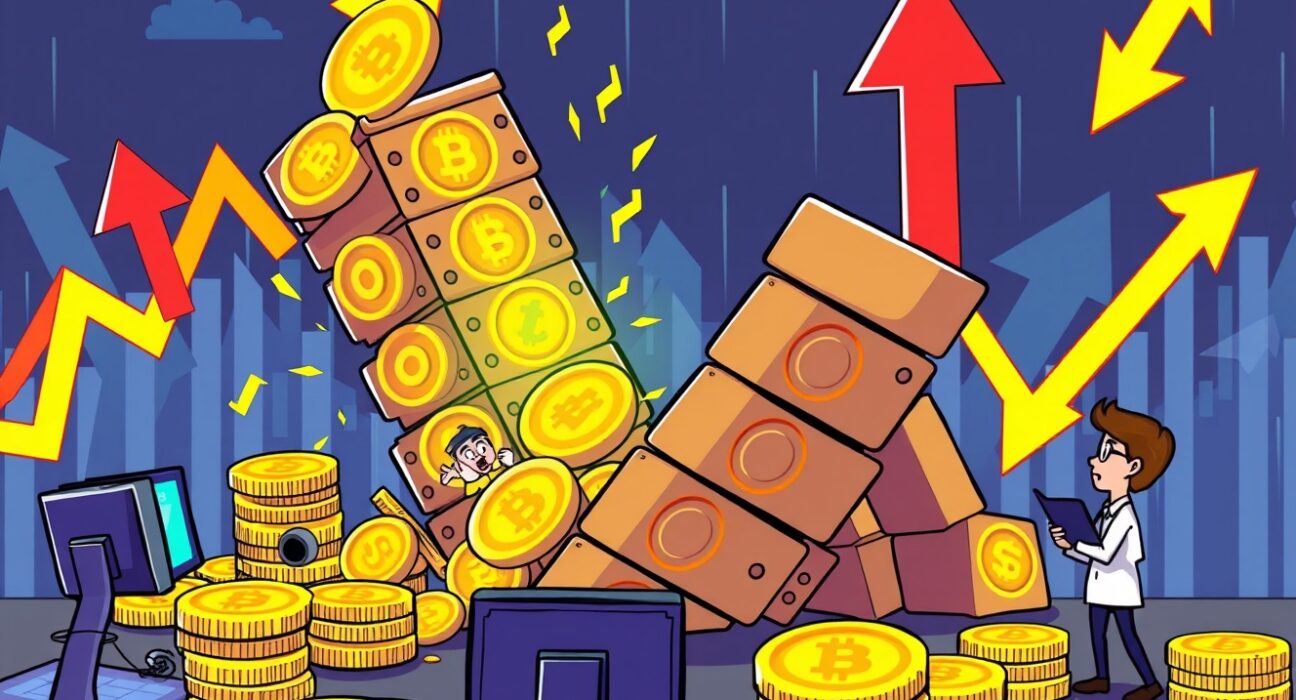
The cryptocurrency market just experienced a brutal hour of reckoning. Major exchanges reported a staggering $109 million worth of futures liquidated in just sixty minutes, sending shockwaves through trading communities. This intense volatility serves as a powerful reminder of the high-stakes nature of leveraged crypto trading.
What Does $109 Million in Futures Liquidated Actually Mean?
When we talk about futures being liquidated, we’re referring to the forced closure of leveraged trading positions. Traders using borrowed funds to amplify their bets get automatically sold out by exchanges when prices move against them. The $109 million futures liquidated figure represents the total value of these positions that were wiped out. This isn’t just paper losses—it’s real capital vanishing from trader accounts almost instantly.
To put this in perspective, the past 24 hours saw a total of $347 million in liquidations. However, the concentration of over a third of that total in a single hour indicates an exceptionally sharp and sudden price movement that caught many traders off guard.
What Triggered This Massive Liquidation Event?
Several factors typically converge to create these explosive futures liquidated scenarios:
- Leverage overload: Too many traders using excessive borrowing (often 10x, 25x, or even 100x)
- Market sentiment shift: Sudden news or whale movements triggering rapid price changes
- Cascading effect: Initial liquidations force more selling, which triggers more liquidations
- Liquidity gaps: Thin order books that amplify price swings during volatile periods
The most dangerous aspect is the domino effect. As positions get futures liquidated, the forced selling pushes prices further in the unfavorable direction, which then triggers even more liquidations. This creates a feedback loop that can turn a moderate correction into a dramatic crash within minutes.
How Can Traders Protect Against Future Liquidations?
While volatility is inherent to cryptocurrency markets, there are practical strategies to avoid becoming part of the next $109 million futures liquidated statistic:
- Use sensible leverage: Higher multipliers mean smaller price movements can wipe you out
- Set stop-loss orders: Automated exits at predetermined levels prevent total account wipeouts
- Monitor funding rates Extreme rates often precede volatility spikes
- Diversify strategies: Don’t put all your capital in highly leveraged positions
- Keep reserves: Maintain enough collateral to withstand normal market fluctuations
Remember that every time you see headlines about massive amounts of futures liquidated, it represents both danger and opportunity. For every trader getting liquidated, there’s typically someone on the other side of that trade profiting from the volatility.
The Bigger Picture: What This Means for Crypto Markets
Events with $109 million futures liquidated in an hour aren’t just trader tragedies—they’re market health indicators. Such volatility tests exchange infrastructure, reveals leverage levels in the system, and often precedes periods of consolidation or trend reversals.
For long-term investors, these liquidation events can create buying opportunities as panic selling drives prices below fundamental values. However, they also highlight why cryptocurrency remains a high-risk asset class requiring careful position sizing and risk management.
The takeaway is clear: leverage amplifies both gains and losses. While the dream of massive returns attracts traders to futures, the reality of sudden futures liquidated events serves as a recurring reminder of the risks involved.
Frequently Asked Questions
What exactly are futures liquidations?
Futures liquidations occur when a trader’s leveraged position loses enough value that their collateral can no longer cover potential losses. The exchange then automatically closes the position to prevent negative balances.
Why do liquidations happen so quickly in crypto?
Cryptocurrency markets operate 24/7 with high leverage availability and sometimes thin liquidity. This combination allows prices to move rapidly, triggering cascading liquidations within minutes.
Can I get my money back after being liquidated?
No, liquidation represents a complete loss of the position’s collateral. The funds are used to cover the trade’s losses, with any remaining balance (if applicable) returned to the trader.
How can I check if liquidations are happening?
Several websites track liquidation data in real-time, showing amounts, ratios (long vs. short), and which cryptocurrencies are experiencing the most activity.
Are liquidations always bad for the market?
While painful for affected traders, liquidations can help reset excessive leverage in the system, potentially making markets healthier in the long run by removing overextended positions.
What’s the difference between isolated and cross-margin liquidation?
Isolated margin limits risk to specific position collateral, while cross-margin uses your entire account balance. Cross-margin provides more buffer against liquidation but risks your complete account if things go wrong.
Share This Insight
Did this analysis help you understand the dramatic $109 million futures liquidated event? Help other traders navigate crypto volatility by sharing this article on your social media channels. Knowledge about risk management could prevent someone in your network from becoming the next liquidation statistic.
To learn more about the latest cryptocurrency market trends, explore our article on key developments shaping Bitcoin price action and institutional adoption.
Disclaimer: The information provided is not trading advice, Bitcoinworld.co.in holds no liability for any investments made based on the information provided on this page. We strongly recommend independent research and/or consultation with a qualified professional before making any investment decisions.