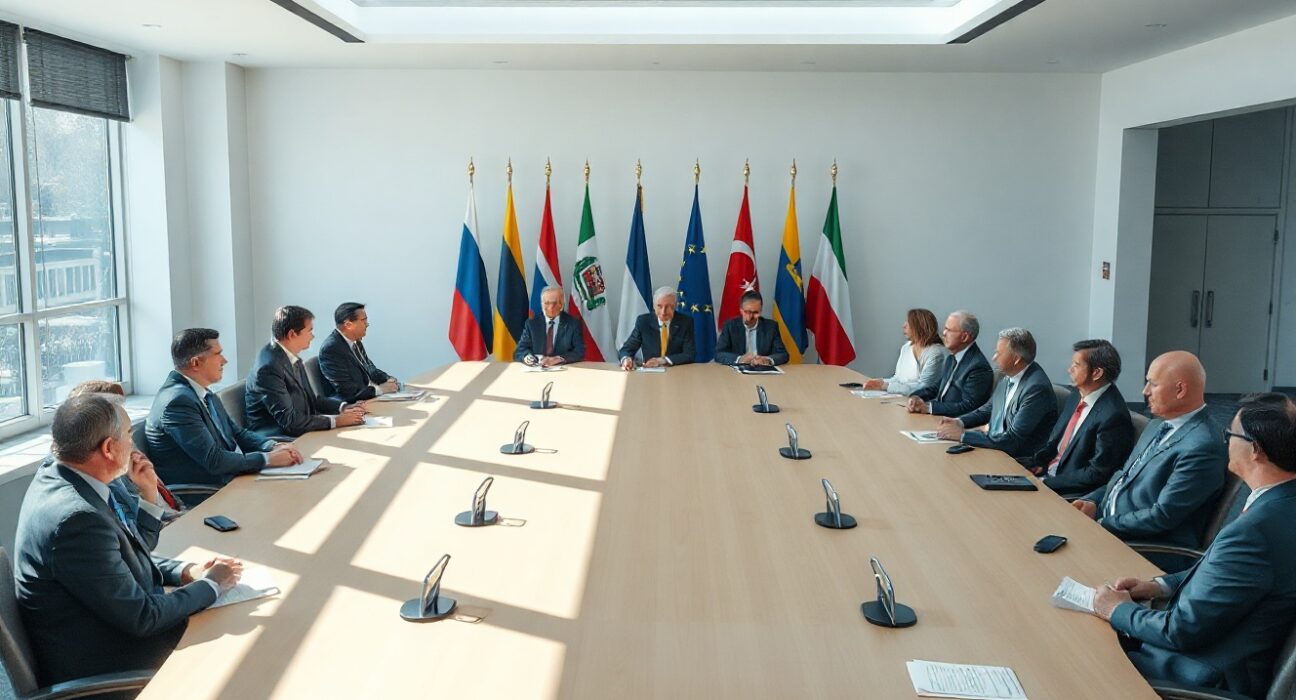
At the G7 Summit on Wednesday, world leaders including French President Emmanuel Macron and Indian Prime Minister Narendra Modi voiced serious concerns that the United States could unilaterally cut off access to top American AI models, exposing a growing vulnerability in global technology infrastructure. The warnings came after the Trump administration blocked Anthropic from exporting its newest Mythos 5 and Fable 5 models on national security grounds, following Amazon’s flagging of potential safety guardrail bypasses.
The Switch That Can Be Flipped Overnight
During a working lunch with G7 leaders and top AI executives — including Anthropic CEO Dario Amodei, OpenAI CEO Sam Altman, and President Donald Trump — Macron warned that if the U.S. can “from one day to the next turn off the switch,” it would not only harm the economies of European customers but also damage the AI firms themselves. The comment underscored a broader anxiety: any company or government that builds on U.S. AI infrastructure now faces the risk that access can be revoked overnight, for reasons that may never be fully explained.
Prime Minister Modi echoed those concerns, stating that democratic nations must have unfettered access to top AI models to protect critical infrastructure. His remarks, reported by the Financial Times, highlighted the geopolitical stakes as nations seek to maintain technological independence while relying on American innovation.
Digital Sovereignty vs. American Dominance
The episode has laid bare a tension that many international companies have been grappling with: the concentration of advanced AI capabilities in a small number of U.S. firms creates a single point of failure for global economies. Aidan Gomez, co-founder and CEO of Canadian enterprise AI firm Cohere, said in a statement shared with Bitcoin World: “The recent restriction on access to Anthropic’s models confirms what we at Cohere have known all along: that companies and democratic nations remaining dependent on a small handful of big tech companies is dangerous to resilience.”
Gomez added: “Digital sovereignty is not just about market competition or any one company or nation. It’s about who controls the foundational technology that will shape our economic security and national sovereignty for decades to come.”
A Trusted Partners Scheme Emerges
During the meeting, G7 leaders discussed the creation of a “trusted partners” scheme that would grant non-U.S. nations access to advanced AI models from firms like Anthropic and OpenAI. The goal is to maintain an open trade network that bypasses U.S. restrictions. Both countries and companies could qualify as trusted partners, provided they use the models to develop stronger defenses against rivals like China.
However, it remains unclear how far that scheme would extend, or whether it offers a practical solution for a startup in Paris or Bangalore that suddenly finds its product broken without warning. Macron noted that it would make strategic sense for Washington to back such a framework, warning that nobody would want to buy U.S. AI access if it could disappear overnight.
Why This Matters
The debate comes at a time when Europe and other non-U.S. nations are pushing for AI sovereignty — an increasingly difficult goal as American models continue to pull ahead in capability. The risk is not just economic but strategic: critical infrastructure, defense systems, and essential services in allied nations could become dependent on technology that a foreign government can unilaterally disable. For readers, this story underscores the fragility of the current AI ecosystem and the urgent need for diversified, resilient infrastructure that serves democratic values without creating new vulnerabilities.
Conclusion
The G7 Summit has exposed a fundamental tension in the global AI landscape: the desire for American innovation clashing with the need for reliable, sovereign access. Whether the trusted partners scheme can bridge that gap remains to be seen, but the message from world leaders is clear — digital sovereignty is no longer a luxury, but a necessity.
FAQs
Q1: Why did the U.S. block Anthropic’s AI models?
The Trump administration blocked Anthropic from exporting its Mythos 5 and Fable 5 models on national security grounds, after Amazon flagged that certain safety guardrails could be bypassed.
Q2: What is the “trusted partners” scheme discussed at the G7?
It is a proposed framework that would grant non-U.S. nations access to advanced AI models from firms like Anthropic and OpenAI, bypassing U.S. restrictions, provided they use the technology to develop defenses against rivals like China.
Q3: How does this affect everyday businesses outside the U.S.?
Any company or government that builds on U.S. AI infrastructure now faces the risk that access can be revoked overnight, potentially disrupting critical operations, products, and services without warning.
Disclaimer: The information provided is not trading advice, Bitcoinworld.co.in holds no liability for any investments made based on the information provided on this page. We strongly recommend independent research and/or consultation with a qualified professional before making any investment decisions.