

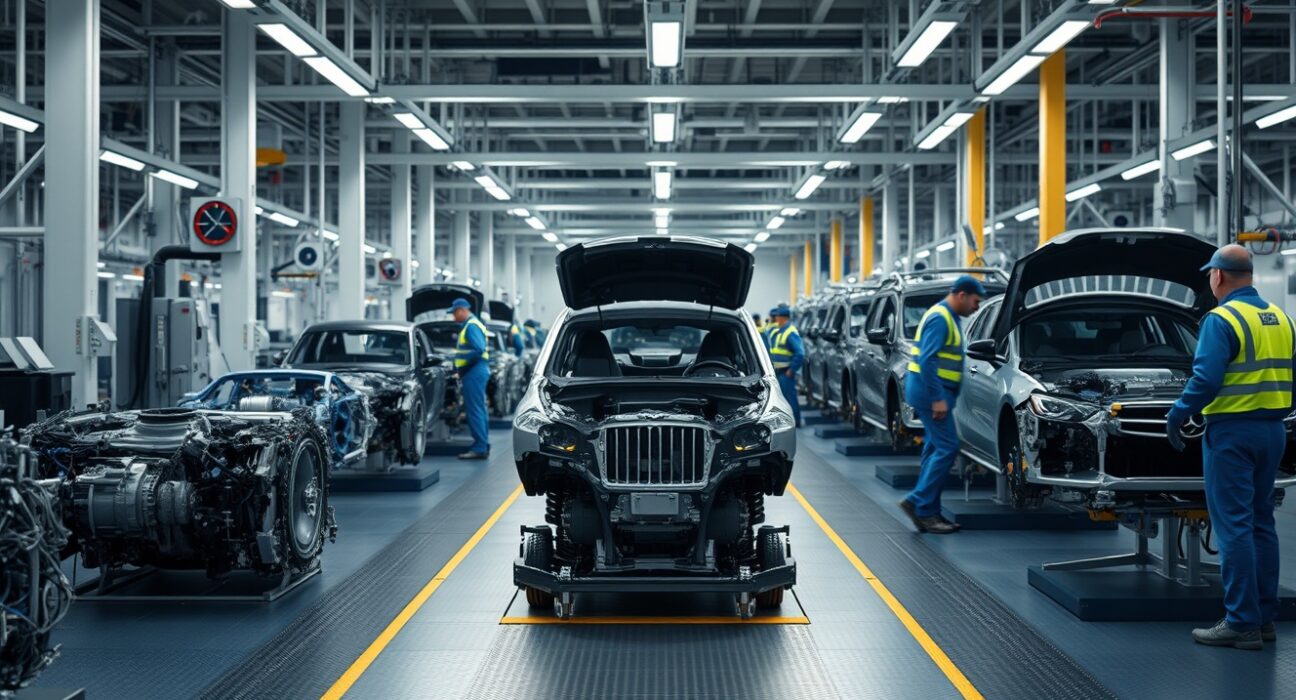
Germany’s factory orders rose by 1.9% in May, according to data released by the Federal Statistical Office (Destatis) on Tuesday, comfortably exceeding the 1.2% increase forecast by economists. The stronger-than-expected performance offers a tentative signal of stabilization in Europe’s largest industrial economy, which has faced persistent headwinds from weak global demand, elevated energy costs, and a protracted manufacturing slowdown.
May data beats forecasts amid ongoing challenges
The monthly gain was driven primarily by a surge in orders for capital goods, including machinery and vehicles, which rose 3.8% compared to the previous month. Orders for intermediate goods edged up 0.6%, while consumer goods saw a slight decline of 0.4%. On a year-over-year basis, however, factory orders remained 1.3% lower than in May 2024, underscoring the fragility of the recovery.
Economists had widely expected a modest rebound after a downwardly revised 0.6% decline in April, but the magnitude of the May increase surprised many market participants. The data suggests that some industrial sectors may be benefiting from a gradual easing of supply chain pressures and a stabilization in export demand, particularly from key trading partners outside the eurozone.
Context within the broader German economy
Germany’s industrial sector has been under significant strain since late 2022, grappling with the dual shocks of high energy prices following the Russia-Ukraine conflict and a slowdown in Chinese demand. The manufacturing purchasing managers’ index (PMI) has remained in contraction territory for much of the past year, although the latest reading showed a modest improvement to 43.5 in May, still below the 50.0 threshold that separates growth from contraction.
The factory orders data is often viewed as a leading indicator for industrial production, which in turn is a key driver of German GDP. While the May figure is encouraging, analysts caution against interpreting a single month’s data as a definitive turning point. The underlying trend remains subdued, and forward-looking indicators such as business confidence surveys continue to reflect caution among industrial firms.
Implications for the European Central Bank and monetary policy
The better-than-expected orders data may provide some relief to policymakers at the European Central Bank (ECB), who are navigating a delicate balancing act between taming inflation and supporting a sluggish eurozone economy. While the ECB has signaled that interest rate cuts could begin later this year, the timing remains uncertain. Stronger industrial data could reduce the urgency for aggressive monetary easing, although the overall economic picture remains mixed.
Market reaction to the release was muted, with the euro edging slightly higher against the US dollar and German bond yields ticking up modestly. Equity markets in Frankfurt showed little change, as investors weighed the positive data against ongoing geopolitical risks and uncertainty over global trade policy.
Conclusion
The 1.9% rise in German factory orders for May provides a welcome upside surprise for an industrial sector that has been searching for a floor. While the year-on-year comparison remains negative, the monthly beat suggests that the worst of the downturn may be passing. However, sustained improvement will depend on a recovery in global demand, particularly from Asia, and further easing of structural cost pressures at home. For now, the data offers a cautiously optimistic signal, but not yet a clear all-clear for Germany’s industrial engine.
FAQs
Q1: What does the factory orders data measure?
Factory orders track the total value of new orders received by German manufacturers. It is a key leading indicator for industrial production and overall economic activity in Germany.
Q2: Why did the May data beat expectations?
The 1.9% increase exceeded the 1.2% consensus forecast, driven mainly by a strong rise in orders for capital goods such as machinery and vehicles, suggesting some recovery in investment demand.
Q3: Does this mean the German economy is recovering?
While the monthly data is positive, the year-on-year figure remains negative at -1.3%. Economists view this as a tentative improvement but caution that a sustained recovery will require further strengthening in global demand and industrial confidence.
Disclaimer: The information provided is not trading advice, Bitcoinworld.co.in holds no liability for any investments made based on the information provided on this page. We strongly recommend independent research and/or consultation with a qualified professional before making any investment decisions.
