
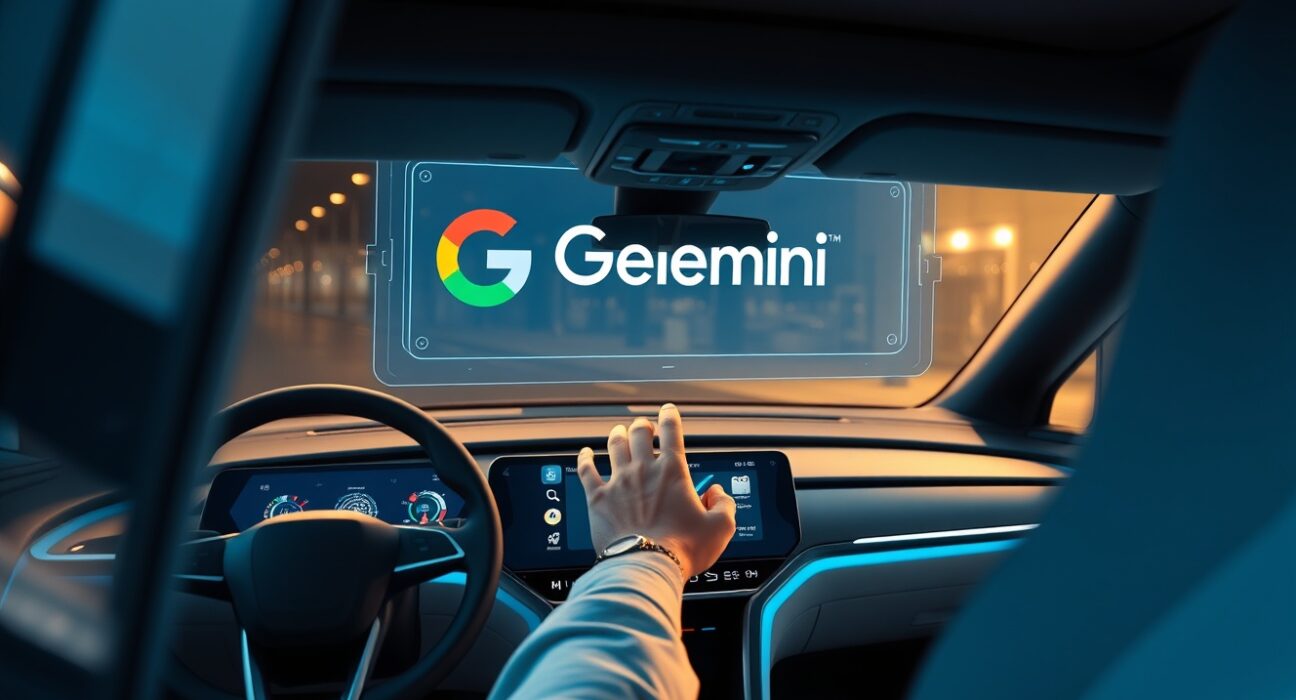
In the rapidly evolving landscape of automotive technology, where innovation drives the future, General Motors (GM) is making a significant leap. By 2026, GM vehicles will feature a conversational AI assistant powered by Google Gemini, promising a truly transformative in-car experience. This integration marks a pivotal moment, not just for GM, but for the entire automotive industry, setting a new benchmark for how drivers interact with their vehicles and the digital world.
What Does Google Gemini Bring to Your Next General Motors Vehicle?
Imagine a driving experience where your car understands you better than ever before. GM’s decision to embed Google Gemini into its cars, trucks, and SUVs is a testament to the growing demand for intuitive and seamless technology. Announced at the GM Forward event in New York City, this rollout is among the first wave of tech enhancements, far ahead of other planned innovations like electrical architecture overhauls and advanced automated driving features slated for 2028.
The core benefit of the Google Gemini integration lies in its ability to offer a more natural and context-aware interaction. Dave Richardson, senior vice president of software and services at GM, highlighted the frustrations with current voice assistants. He explained to Bitcoin World, "One of the challenges with current voice assistants is that, if you’ve used them, you’ve probably also been frustrated by them because they’re trained on certain code words or they don’t understand accents very well or if you don’t say it quite right, you don’t get the right response."
In contrast, large language models like Gemini excel in:
- Natural Language Understanding: They are less affected by accents or precise phrasing.
- Contextual Awareness: They retain information from previous conversations, making interactions feel more fluid and intelligent.
- Flexibility: Drivers can speak more naturally, without needing specific commands.
This means mundane tasks like drafting messages, planning multi-stop routes (including charging stations or coffee shops), or even preparing for a meeting on the go will become significantly smoother and less distracting.
Beyond Voice Commands: The Power of AI Assistant in Smart Cars
The integration of an advanced AI assistant transforms a vehicle from a mere mode of transport into a truly intelligent companion. For GM, this means leveraging the full potential of smart cars by giving drivers unparalleled access to information and control, directly from their infotainment screens. Already, GM brands like Buick, Chevrolet, Cadillac, and GMC come with "Google built-in," offering Google Assistant, Google Maps, and other apps.
The Gemini-powered assistant will expand these capabilities significantly:
- Web Access: Drivers can ask general knowledge questions, such as "What’s the history of this bridge I’m driving over?" and get real-time answers.
- Personalized Recommendations: The assistant can learn from driving habits to offer tailored suggestions for routes, music, or even dining.
- Vehicle Data Integration: Connected through OnStar, the AI can access vehicle systems to provide maintenance alerts, explain features like one-pedal driving, or pre-condition the car’s climate before entry.
This level of integration moves beyond simple commands, offering a proactive and personalized driving environment that anticipates needs and enhances convenience. The Gemini assistant will be delivered as an over-the-air upgrade via the Play Store to OnStar-equipped vehicles from model year 2015 and above, ensuring a broad reach for this groundbreaking technology.
The Automotive AI Race: How General Motors Stacks Up
General Motors is not alone in recognizing the transformative potential of generative AI. The automotive industry is witnessing a significant push towards integrating sophisticated AI assistants, turning cars into more intuitive and responsive machines. Other major players are also making their moves:
- Stellantis: Collaborating with French AI firm Mistral.
- Mercedes: Integrating ChatGPT into its vehicles.
- Tesla: Bringing xAI’s Grok to its vehicles.
GM’s long-standing relationship with Google, including the existing "Google built-in" ecosystem and the use of Google Cloud’s Dialogflow for OnStar features since 2023, gives it a unique advantage. The transition to Google Gemini is a natural progression, building on an already established and robust digital infrastructure. While Gemini is the initial choice, GM plans to test foundational models from other AI firms, including OpenAI and Anthropic, indicating a strategic approach to finding the best fit for its evolving custom-built AI goals.
Navigating the Road Ahead: Privacy and User Control in In-Car AI
The discussion around in-car AI inevitably leads to crucial questions about data privacy and user control. Given GM’s recent controversy regarding the sale of customer driving and geolocation data to insurance brokers, the company’s emphasis on privacy for its Gemini integration is particularly noteworthy. Dave Richardson explicitly stated that any data collected by the Gemini assistant would be used solely for product improvement and would not be sold for additional revenue.
GM has proactively addressed these concerns by:
- Strengthening Data Governance: Bringing on a new data team, including Christina Montgomery (former IBM chief privacy and trust officer), to implement standard processes and data governance technology.
- Prioritizing Consent: Ensuring that all data usage is driven by explicit customer consent, allowing drivers to opt-in or opt-out at any time.
- Building Privacy In: Adopting a philosophy where "data and privacy has to be built into everything that we do."
Drivers will have granular control over what information the assistant can access and use, empowering them to manage their digital footprint within their vehicle. This commitment to user control and privacy is paramount for fostering trust and ensuring widespread adoption of these advanced in-car AI systems.
A New Era of Driving Begins
General Motors’ embrace of Google Gemini represents more than just a technological upgrade; it signals a fundamental shift in the automotive experience. By delivering a sophisticated, natural-sounding, and context-aware AI assistant, GM is not only enhancing convenience and safety but also laying the groundwork for a future where vehicles are truly intelligent extensions of our digital lives. As 2026 approaches, the promise of smarter, more intuitive smart cars powered by cutting-edge AI moves closer to reality, promising a revolutionary drive for millions.
To learn more about the latest AI assistant trends, explore our article on key developments shaping AI features and institutional adoption.
Disclaimer: The information provided is not trading advice, Bitcoinworld.co.in holds no liability for any investments made based on the information provided on this page. We strongly recommend independent research and/or consultation with a qualified professional before making any investment decisions.