

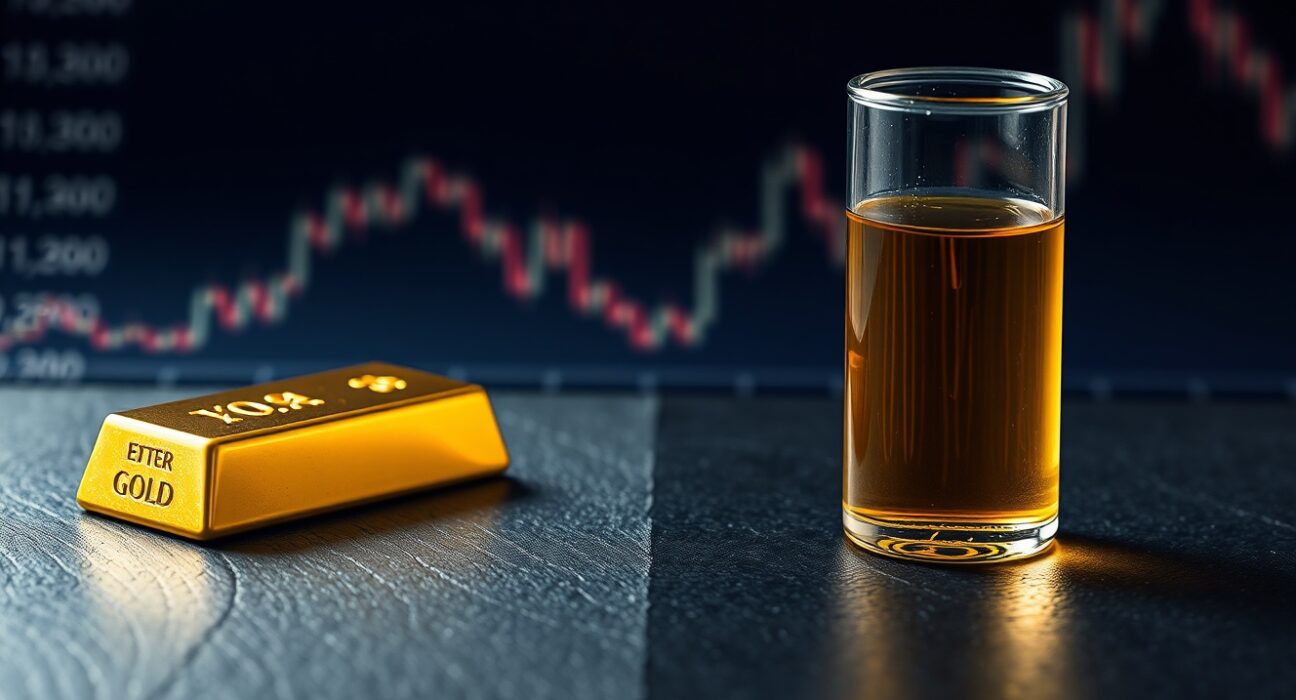
Global financial markets witnessed a stark divergence on Tuesday, as a sharp rally in crude oil prices triggered a significant sell-off in gold, intensifying investor anxiety about a potential return to a ‘higher-for-longer’ interest rate environment. This inverse movement between two key commodities directly reflects shifting expectations for monetary policy and inflation. Consequently, traders are now reassessing portfolios amid renewed concerns that central banks, led by the Federal Reserve, may delay anticipated rate cuts.
Gold Price Decline Amidst Oil Market Surge
The spot price of gold fell by over 2% in Tuesday’s trading session, breaching a key technical support level. Simultaneously, Brent crude oil futures surged past the $90 per barrel mark, reaching their highest point in five months. This powerful correlation is not coincidental. Historically, rising oil prices act as a direct input cost for the global economy, often translating into broader inflationary pressures. Therefore, markets immediately interpret sustained oil gains as a signal that underlying inflation may prove more persistent than recent data suggested.
Market analysts point to several factors driving oil’s ascent. Firstly, ongoing geopolitical tensions in major producing regions continue to threaten supply stability. Secondly, recent data indicates stronger-than-expected demand from key economies. Finally, strategic inventory decisions by major nations have further tightened the physical market. As a result, the energy complex is exhibiting remarkable strength, which directly challenges the narrative of rapidly cooling inflation.
The Interest Rate Mechanism and Market Psychology
The fundamental link between commodity prices and interest rates forms the core of this market reaction. Gold, a non-yielding asset, becomes less attractive when interest rates rise or are expected to remain elevated. Higher rates increase the opportunity cost of holding gold, as investors can earn interest in bonds or savings accounts. Conversely, oil-driven inflation compels central banks to maintain restrictive monetary policies to prevent prices from spiraling.
Recent communications from Federal Reserve officials have reinforced this cautious stance. For instance, several governors have emphasized the need for more consistent evidence of inflation returning to the 2% target before considering policy easing. The latest oil price spike provides a tangible reason for this patience, potentially delaying the timeline for the first rate cut. Consequently, Treasury yields have edged higher, applying further downward pressure on gold.
Expert Analysis on the Commodity Divergence
Dr. Anya Sharma, Chief Commodity Strategist at Global Markets Insight, explains the current dynamic. “The market is reacting to a classic stagflationary signal—rising input costs without commensurate growth. While gold is a traditional inflation hedge, it struggles in an environment where the policy response to that inflation is higher real interest rates. The strength in oil is forcing a recalibration of the entire interest rate curve.” Sharma’s analysis highlights the nuanced relationship where gold can underperform even amid inflationary signals if those signals prompt aggressive central bank action.
Historical data supports this pattern. During previous cycles of Fed tightening, gold has often experienced periods of weakness, particularly in the early stages when rate hike expectations are being priced in. The current environment mirrors this, as traders shift from anticipating imminent cuts to pricing in a prolonged plateau for the federal funds rate.
Broader Market Impacts and Sector Rotation
The repercussions of this shift extend far beyond the commodities complex. Equity markets showed sector-specific movements, with energy stocks rallying while rate-sensitive technology shares faced headwinds. The U.S. dollar also strengthened, as higher rate prospects increase the currency’s yield appeal. This dollar strength creates an additional headwind for dollar-denominated commodities like gold.
For investors, this environment necessitates a strategic review. Portfolios heavily weighted toward long-duration assets or speculative growth stocks may require rebalancing. Conversely, sectors that benefit from higher rates or elevated commodity prices, such as financials and energy, may see renewed interest. The table below summarizes the key market movements and their primary drivers:
| Asset | Price Movement | Primary Driver |
|---|---|---|
| Gold (XAU/USD) | ↓ -2.3% | Higher real yield expectations, stronger USD |
| Brent Crude Oil | ↑ +3.8% | Geopolitical risk, supply constraints, strong demand |
| U.S. 10-Year Treasury Yield | ↑ +12 bps | Re-pricing of Fed rate cut timeline |
| U.S. Dollar Index (DXY) | ↑ +0.9% | Interest rate differential expectations |
Furthermore, this dynamic places increased importance on upcoming economic data releases. Key indicators to watch now include:
- Monthly CPI and PCE Inflation Reports: Will they confirm or contradict the oil-driven inflation narrative?
- Federal Reserve Meeting Minutes: For deeper insight into policymakers’ sensitivity to commodity prices.
- Weekly U.S. Oil Inventory Data: To gauge the sustainability of the current oil price trend.
Conclusion
The simultaneous drop in gold prices and surge in oil markets serves as a powerful reminder of the interconnected nature of global finance. This movement directly stokes fears of higher-for-longer interest rates, forcing a significant reassessment of the macroeconomic outlook. While gold’s role as a long-term store of value remains intact, its short-term trajectory is heavily influenced by real interest rates and central bank policy. Investors and analysts will now closely monitor whether this commodity divergence marks a temporary fluctuation or the beginning of a more sustained regime shift, with profound implications for asset allocation and economic forecasting in the coming months.
FAQs
Q1: Why do rising oil prices lead to fears of higher interest rates?
Rising oil prices increase transportation and production costs across the economy, which can feed into broader consumer inflation. Central banks, like the Federal Reserve, may respond to persistent inflation by keeping interest rates higher for longer to cool demand and stabilize prices.
Q2: If gold is an inflation hedge, why does its price fall when oil (an inflationary signal) rises?
Gold struggles as an inflation hedge when the market believes the central bank’s response will be effective. Higher interest rates increase the opportunity cost of holding non-yielding gold and often strengthen the dollar, making gold more expensive for foreign buyers. The expectation of aggressive policy can outweigh the inflationary benefit.
Q3: What are ‘real interest rates’ and why do they matter for gold?
Real interest rates are nominal interest rates adjusted for inflation. They represent the true return on holding a yield-bearing asset. Higher real rates make assets like bonds more attractive relative to gold, which offers no yield, leading to selling pressure on the metal.
Q4: Could this relationship between gold and oil break down?
Yes, the correlation is not absolute. In scenarios of extreme geopolitical stress or a crisis of confidence in fiat currencies, gold and oil can rise together as ‘safe-haven’ or ‘real asset’ plays, decoupling from interest rate narratives. The relationship is strongest during periods of normalized market functioning focused on monetary policy.
Q5: What should investors watch to gauge if this trend will continue?
Key indicators include core inflation data (excluding volatile food and energy), Federal Reserve commentary, the trajectory of the U.S. dollar, and any signs of demand destruction in the oil market that could cap its rally. Sustained high oil prices will keep rate fears alive, while a sharp reversal could quickly reset expectations.
Disclaimer: The information provided is not trading advice, Bitcoinworld.co.in holds no liability for any investments made based on the information provided on this page. We strongly recommend independent research and/or consultation with a qualified professional before making any investment decisions.
