

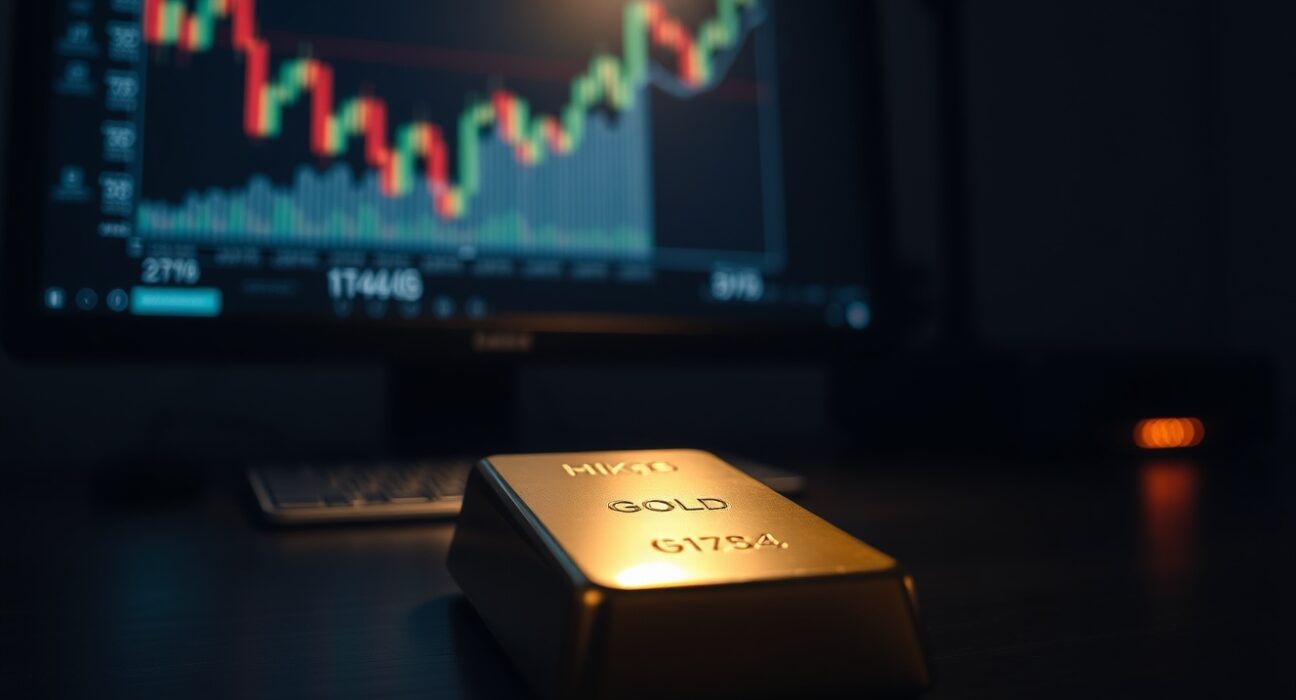
Gold prices extended their recent decline on Tuesday, touching a fresh low not seen since early March, as mounting inflation concerns fueled expectations that the Federal Reserve will maintain a hawkish stance on interest rates. The move lower comes just ahead of the highly anticipated US Consumer Price Index (CPI) report, which is expected to provide further clues on the trajectory of monetary policy.
Inflation Data in Focus
The precious metal has come under sustained pressure in recent weeks as a string of stronger-than-expected economic data, coupled with persistent price pressures, has led traders to scale back bets on rate cuts. The latest sell-off accelerated after comments from several Fed officials underscored a cautious approach, emphasizing the need for more evidence that inflation is sustainably moving toward the 2% target before easing policy.
Market participants now assign a lower probability to a rate cut at the Fed’s next meeting, with some analysts suggesting that a rate hike, while still unlikely, is no longer completely off the table if inflation data surprises to the upside. The upcoming CPI release is therefore seen as a critical catalyst that could either validate the current hawkish repricing or trigger a sharp reversal in expectations.
Gold’s Sensitivity to Real Yields
Gold’s price action remains closely tied to real interest rates and the US dollar. As inflation expectations rise, nominal yields have climbed faster than breakeven rates, pushing real yields higher. This dynamic increases the opportunity cost of holding non-yielding assets like gold, prompting investors to reduce their exposure. The US Dollar Index has also strengthened, adding further headwinds for the dollar-denominated metal.
Impact on Investor Sentiment
The shift in rate expectations has led to notable outflows from gold-backed exchange-traded funds (ETFs), with data showing a decline in holdings over the past week. Meanwhile, speculative positioning in the futures market has turned more bearish, with the net long position shrinking. This suggests that institutional and retail investors alike are bracing for a prolonged period of tight monetary policy.
What to Watch in the CPI Report
The core CPI reading, which excludes volatile food and energy prices, will be the primary focus. A print above the consensus estimate of 0.3% month-over-month could reinforce the narrative that inflation is proving stubborn, potentially pushing gold toward the $1,900 per ounce level. Conversely, a softer-than-expected number might provide temporary relief, but analysts caution that any rally could be short-lived given the broader hawkish backdrop.
Conclusion
Gold’s slide to a fresh multi-month low reflects a market recalibrating its expectations for US interest rates in response to persistent inflation. With the CPI report on the horizon, volatility is likely to remain elevated. For investors, the key question is whether the current sell-off represents a buying opportunity or the beginning of a deeper correction, a question that only the upcoming data can begin to answer.
FAQs
Q1: Why is gold falling despite inflation being high?
Gold typically acts as an inflation hedge, but its price is more directly influenced by real interest rates. When inflation leads to expectations of higher interest rates, real yields rise, making gold less attractive compared to yield-bearing assets.
Q2: How does the US CPI report affect gold prices?
The CPI report provides key data on inflation trends. A higher-than-expected CPI can strengthen the case for the Fed to keep rates high or hike further, which is negative for gold. A lower CPI may ease rate hike fears and support gold prices.
Q3: Could gold fall below $1,900?
Yes, if the CPI report comes in hot and reinforces hawkish rate bets, gold could test support levels around $1,900 or lower. However, a soft CPI could trigger a bounce, though sustained recovery would require a shift in Fed policy expectations.
Disclaimer: The information provided is not trading advice, Bitcoinworld.co.in holds no liability for any investments made based on the information provided on this page. We strongly recommend independent research and/or consultation with a qualified professional before making any investment decisions.
