

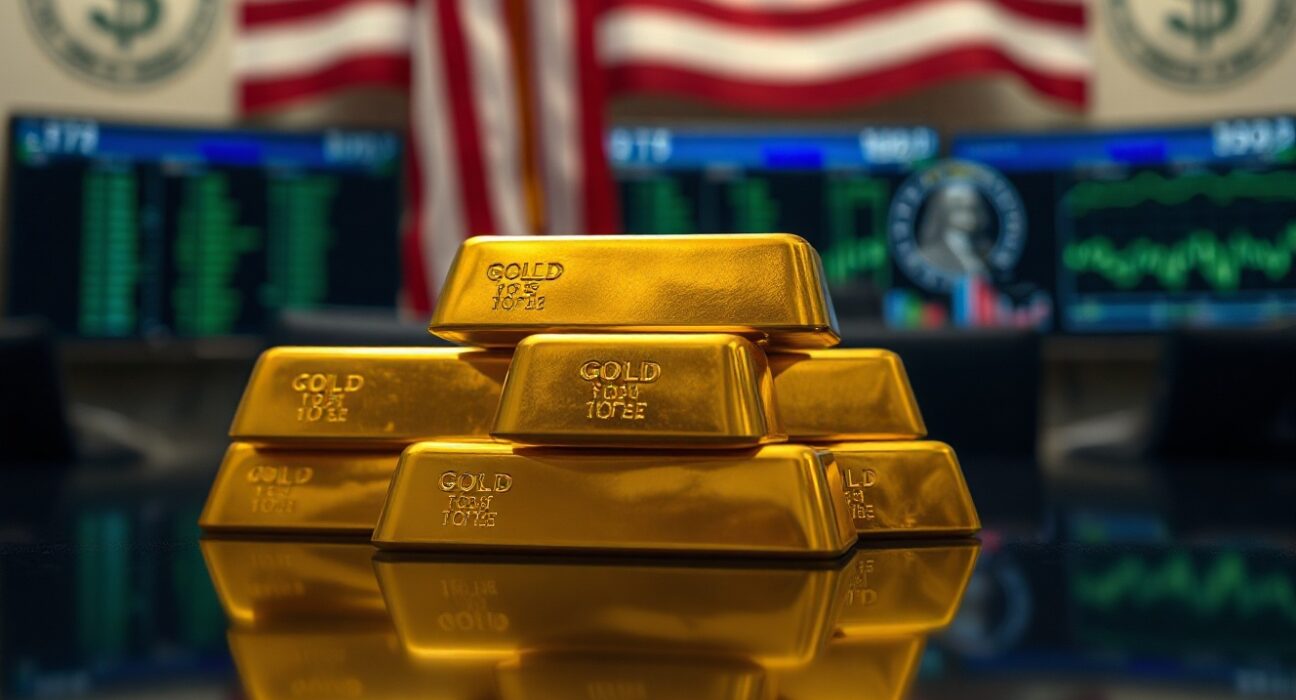
Gold prices remain supported near the $4,400 level as fading expectations of further Federal Reserve rate hikes continue to pressure the US Dollar, providing a tailwind for the precious metal.
As of the latest trading session, spot gold is holding steady around $4,400 per ounce, underpinned by a softer dollar and shifting monetary policy expectations. Market participants have scaled back bets on additional Fed tightening, following recent economic data and comments from policymakers that suggest a more cautious approach to interest rates.
What Is Driving Gold’s Resilience?
The primary driver behind gold’s strength is the inverse relationship between the precious metal and the US Dollar. When the dollar weakens, gold becomes cheaper for foreign buyers, boosting demand. The dollar index has slipped in recent sessions as traders reassess the likelihood of further rate hikes, with futures pricing indicating a lower probability of a move at the next Fed meeting.
Additionally, persistent geopolitical uncertainties and central bank buying continue to provide a floor under gold prices. Central banks, particularly in emerging markets, have been diversifying reserves away from the dollar, adding to gold’s appeal as a safe-haven asset.
Market Context and Implications
The current environment reflects a delicate balance. On one hand, cooling inflation and a softening labor market have led investors to expect the Fed to pause its tightening cycle. On the other hand, any surprise in upcoming economic data could reignite rate hike fears, potentially weighing on gold.
For investors, gold’s ability to hold above $4,400 signals robust support, but the metal remains sensitive to shifts in monetary policy expectations. A clear break above this level could open the door to further gains, while a failure to maintain it might trigger a pullback toward the $4,300 support zone.
Why This Matters for Your Portfolio
Gold’s resilience in the face of a strong dollar environment highlights its role as a portfolio diversifier. With real yields still elevated, the metal’s performance suggests that investors are looking beyond traditional yield metrics. The ongoing demand from central banks and retail investors underscores a structural shift in the global financial landscape.
As the Fed navigates between inflation control and economic stability, gold is likely to remain a key asset to watch. Understanding these dynamics can help investors make informed decisions about their exposure to precious metals.
Conclusion
Gold’s stability near $4,400 is a direct reflection of fading Fed rate hike expectations and a softer US Dollar. While the metal faces headwinds from potential policy shifts, the current environment offers a supportive backdrop. Investors should monitor upcoming economic releases and Fed communications for further direction.
FAQs
Q1: Why does gold price move inversely to the US Dollar?
Gold is priced in US Dollars, so when the dollar weakens, gold becomes cheaper for buyers using other currencies, increasing demand and pushing prices up. Conversely, a stronger dollar tends to weigh on gold prices.
Q2: What does ‘fading Fed rate hike bets’ mean?
It means that traders and investors are reducing their expectations that the Federal Reserve will raise interest rates further. This can weaken the dollar and reduce the opportunity cost of holding non-yielding assets like gold.
Q3: Is gold a good investment during times of economic uncertainty?
Gold is often considered a safe-haven asset that can preserve value during market volatility and economic downturns. However, its performance depends on various factors, including interest rates, inflation, and geopolitical events.
Disclaimer: The information provided is not trading advice, Bitcoinworld.co.in holds no liability for any investments made based on the information provided on this page. We strongly recommend independent research and/or consultation with a qualified professional before making any investment decisions.
