

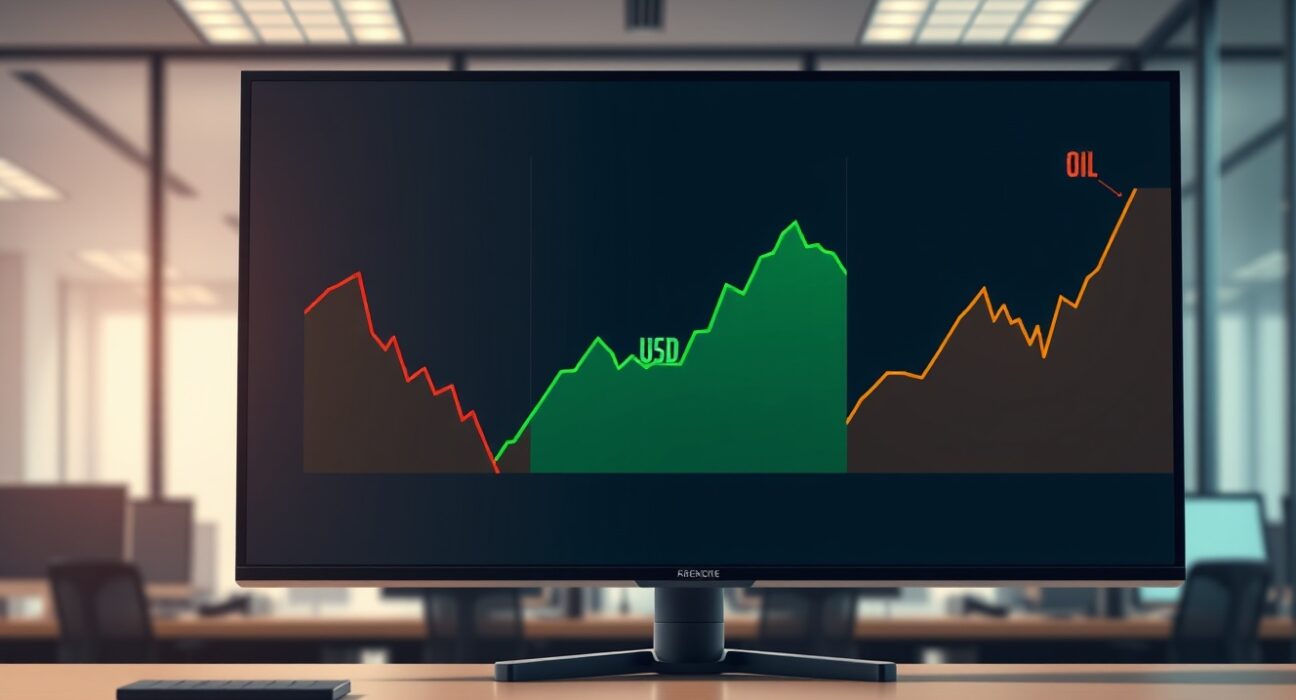
Global financial markets witnessed a significant realignment on March 15, 2025, as the price of gold experienced a sharp decline, moving in direct opposition to a surging US Dollar and climbing crude oil prices. This powerful trifecta of movements highlights deep-seated macroeconomic forces at play, consequently reshaping investor strategies and portfolio allocations worldwide.
Gold Price Drop Amidst Dollar Strength
The spot price of gold fell sharply, breaking below key technical support levels. Market data from major exchanges showed a decline of over 3% in a single trading session. This drop represents the most significant single-day loss for the precious metal in several months. Analysts immediately pointed to the concurrent rally in the US Dollar Index (DXY) as the primary catalyst. The DXY, which measures the dollar against a basket of six major currencies, climbed to its highest level this year. A stronger dollar typically makes dollar-denominated commodities like gold more expensive for holders of other currencies, thereby reducing demand and exerting downward pressure on the price.
Historically, gold and the US dollar share an inverse relationship. For instance, during periods of dollar weakness following the 2008 financial crisis, gold entered a prolonged bull market. Conversely, the sustained dollar rally of the mid-2010s capped gold’s gains. The current dynamic fits this established pattern, but the intensity of the move is noteworthy. Furthermore, rising US Treasury yields have diminished gold’s appeal as a non-yielding asset, providing an additional headwind for the precious metal.
Analyzing the US Dollar Surge
The US Dollar’s ascent is not occurring in a vacuum. Several concrete factors are driving its strength. Firstly, recent economic data from the United States has consistently surprised to the upside, showing robust job growth and persistent service-sector inflation. This data has led markets to recalibrate expectations for the Federal Reserve’s interest rate path. Consequently, traders now anticipate a slower pace of potential rate cuts, keeping US interest rates comparatively high and attracting foreign capital into dollar-based assets.
Secondly, geopolitical tensions in several regions have fueled a classic ‘flight to safety.’ The US Dollar remains the world’s primary reserve currency and is traditionally seen as a safe haven during periods of uncertainty. This status boosts demand for dollars, further amplifying its value. The combination of relative economic strength and its safe-haven role creates a powerful tailwind for the currency, explaining its synchronized surge against the euro, yen, and pound sterling.
Expert Perspective on Currency Markets
Dr. Anya Sharma, Chief Economist at Global Macro Advisors, provides context: “The dollar’s strength is a function of divergent monetary policy expectations. While other major central banks are signaling a more dovish stance, the Fed’s data-dependent approach suggests a higher-for-longer rate environment. This interest rate differential is the fundamental engine behind the current dollar rally. It’s a classic carry trade dynamic playing out on a global scale.”
The Role of Rising Oil Prices
Complicating the narrative is the simultaneous rise in crude oil prices. Brent crude futures traded above a key threshold, marking a multi-week high. Supply-side concerns are the main driver. Ongoing production cuts by OPEC+ nations continue to tighten the physical market. Additionally, renewed instability in key oil-producing regions has sparked fears of potential supply disruptions. These factors have provided a firm floor under oil prices, pushing them higher.
The relationship between oil and the dollar is also traditionally inverse, but this correlation can break down during specific supply shocks. In the current scenario, the oil price increase is largely supply-driven, while the dollar’s strength is demand-driven from capital flows. This allows both to rise in tandem. However, higher oil prices can have inflationary consequences, which may, in turn, support the Fed’s cautious stance on rates, indirectly reinforcing dollar strength—a feedback loop that markets are closely monitoring.
The impact is immediate and global:
- For Importers: Nations that are net importers of oil face a double whammy of a stronger dollar (making oil more expensive) and higher commodity prices, pressuring their trade balances and currencies.
- For Exporters: Oil-exporting countries see increased revenue, but the stronger dollar can mitigate some of the local-currency benefits.
- For Inflation: Central banks worldwide must now weigh the disinflationary impact of a strong dollar against the inflationary pressure from costlier energy.
Historical Context and Market Impact
Periods where gold falls while the dollar and oil rise are rare but instructive. One such episode occurred in late 2016, following the US election. The dollar rallied on anticipated fiscal stimulus and rate hikes, oil rose due to OPEC production cuts, and gold sold off as risk appetite returned. The current environment shares similarities but is distinct in its underlying drivers, which are more focused on monetary policy divergence and geopolitical risk premiums.
The immediate market impact is clear across asset classes. Mining stocks and gold ETFs have faced significant selling pressure. Conversely, the financial sector, which often benefits from a steeper yield curve and dollar strength, has seen inflows. Currency markets have experienced heightened volatility, particularly in emerging market currencies, which are sensitive to dollar strength and energy costs. Portfolio managers are actively rebalancing, often reducing exposure to traditional hedges like gold in favor of cash or short-duration bonds in strong currencies.
Conclusion
The simultaneous gold price drop, US dollar surge, and oil price increase represent a powerful convergence of macroeconomic trends. This triad of movements is primarily driven by shifting expectations for US monetary policy, supply constraints in the energy complex, and a persistent demand for dollar-denominated safety. While historical patterns provide a framework, the unique combination of factors in 2025 requires careful, real-time analysis. For investors, this environment underscores the importance of dynamic asset allocation and a deep understanding of the interlinked forces governing currency, commodity, and capital markets. The weeks ahead will be crucial in determining whether this is a short-term correction or the beginning of a sustained new regime for these critical global benchmarks.
FAQs
Q1: Why does a stronger US Dollar cause gold prices to fall?
A stronger US Dollar makes gold more expensive for buyers using other currencies. This typically reduces international demand for gold, leading to lower prices. Gold is priced in dollars globally, so dollar strength acts as a natural headwind.
Q2: Can oil and the US Dollar both rise at the same time?
Yes. While they often move inversely, this correlation can decouple. If oil prices rise due to supply shortages (like OPEC+ cuts or geopolitical disruption) and the dollar rises due to strong economic data or safe-haven demand, both can appreciate simultaneously, as seen in the current market.
Q3: What does this market shift mean for the average consumer?
Consumers may feel opposing effects. A strong dollar can make imported goods cheaper, but rising oil prices directly increase costs for gasoline, heating, and transportation. The net effect depends on individual spending habits and geographic location.
Q4: Are rising oil prices inflationary, and how might the Fed respond?
Yes, rising energy costs are generally inflationary as they increase production and transportation costs economy-wide. This could encourage the Federal Reserve to maintain higher interest rates for longer to combat inflation, which would likely continue to support dollar strength.
Q5: Is now a bad time to invest in gold?
Market timing is difficult. While the current environment is challenging for gold due to dollar strength and high yields, gold’s role as a long-term portfolio diversifier and hedge against extreme market stress remains. Investment decisions should align with individual risk tolerance and long-term financial goals, not short-term price movements.
Disclaimer: The information provided is not trading advice, Bitcoinworld.co.in holds no liability for any investments made based on the information provided on this page. We strongly recommend independent research and/or consultation with a qualified professional before making any investment decisions.
