
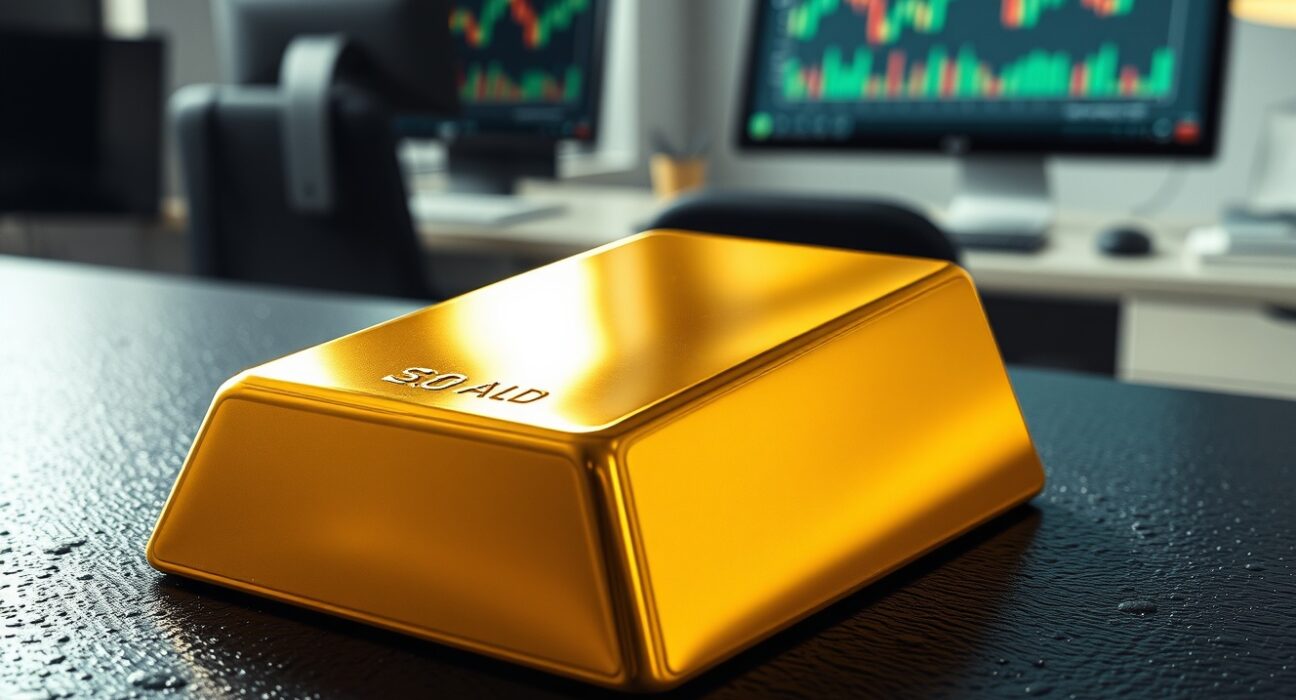
Gold prices experienced significant downward pressure this week as Federal Reserve officials reinforced their commitment to maintaining restrictive monetary policies, sending shockwaves through global financial markets and precious metals trading floors worldwide.
Gold Prices Face Sustained Pressure from Monetary Policy
The precious metals market entered a period of pronounced weakness following the Federal Reserve’s latest policy statements. Consequently, gold prices declined for the third consecutive trading session. Market analysts immediately noted the correlation between Fed communications and gold’s performance. Historically, gold demonstrates inverse relationships with both interest rates and dollar strength. Therefore, the current environment presents multiple challenges for the yellow metal.
Federal Reserve Chair Jerome Powell emphasized the central bank’s determination to combat persistent inflation during recent congressional testimony. Specifically, he indicated that rate cuts would require more convincing evidence of cooling price pressures. This hawkish messaging immediately strengthened the US dollar index, which subsequently climbed to three-month highs. A stronger dollar typically makes gold more expensive for holders of other currencies, thereby reducing international demand.
Market data reveals significant technical damage to gold’s chart structure. The metal broke below its 50-day moving average, a key technical indicator watched by institutional traders. Additionally, trading volumes surged during the decline, suggesting substantial institutional selling pressure. Several major investment banks revised their gold price forecasts downward following the Fed communications.
Understanding the Federal Reserve’s Current Policy Stance
The Federal Reserve maintains its most restrictive monetary policy stance in over two decades. Currently, the benchmark federal funds rate sits between 5.25% and 5.50%. This represents the highest level since 2001. Moreover, the central bank continues its quantitative tightening program, reducing its balance sheet by approximately $95 billion monthly.
Recent economic data has complicated the Fed’s policy calculus. While inflation has moderated from its peak, core measures remain stubbornly above the 2% target. Simultaneously, employment indicators continue showing remarkable strength. This combination creates what economists term a “high-pressure equilibrium” that allows the Fed to maintain restrictive policies without immediately triggering recession concerns.
The Fed’s updated Summary of Economic Projections reveals important insights. Committee members now anticipate fewer rate cuts in 2025 than previously projected. Furthermore, the long-run neutral rate estimate increased slightly. These adjustments signal that monetary policy may remain tighter for longer than markets had anticipated just months ago.
Expert Analysis of Gold Market Dynamics
Financial analysts identify three primary transmission channels affecting gold prices. First, higher interest rates increase the opportunity cost of holding non-yielding assets like gold. Second, dollar appreciation creates headwinds for international buyers. Third, reduced inflation expectations diminish gold’s traditional hedging appeal.
“The current environment presents a perfect storm for gold,” explains Dr. Sarah Chen, Senior Commodities Strategist at Global Markets Research. “We’re seeing synchronized pressure from multiple directions. The Fed’s messaging has been remarkably consistent and unambiguous. Market participants now understand that policy normalization will proceed gradually and data-dependently.”
Historical patterns provide important context for current movements. During previous Fed tightening cycles, gold typically underperformed during the initial rate hike phases. However, performance often improved during later stages as growth concerns emerged. The current cycle differs because economic resilience has persisted longer than many analysts anticipated.
Global Market Reactions and Comparative Performance
Gold’s weakness extended across the precious metals complex. Silver prices declined even more sharply, reflecting its dual characteristics as both monetary metal and industrial commodity. Platinum and palladium also faced selling pressure, though their movements remained more influenced by automotive sector dynamics.
Comparative asset performance reveals interesting patterns. While gold declined, Treasury yields climbed to multi-month highs. The 10-year Treasury yield approached 4.5%, creating additional competition for investor capital. Equity markets showed mixed reactions, with technology stocks particularly sensitive to interest rate expectations.
International gold markets displayed varying responses. London gold fixing prices mirrored New York declines. Asian trading sessions saw particularly heavy selling as the stronger dollar impacted regional buyers. Central bank gold purchases, which provided support earlier this year, showed signs of moderation according to recent IMF data.
Technical Analysis and Key Price Levels
Chart analysis identifies several critical support and resistance levels for gold traders. The $2,150 per ounce level represents immediate psychological support. A break below this level could trigger additional technical selling. Conversely, resistance now appears around $2,250, where previous buying interest emerged.
Several technical indicators warrant attention. The Relative Strength Index (RSI) approached oversold territory but hadn’t reached extreme levels. Moving average convergence divergence (MACD) showed bearish momentum increasing. Trading volume patterns confirmed the downward move’s significance.
Options market activity provides additional insights. Put option volume increased substantially at strike prices below current market levels. This suggests traders are hedging against further declines. Implied volatility expanded but remained within normal ranges for gold.
Broader Economic Implications and Future Outlook
The gold market’s reaction reflects broader financial system adjustments. Monetary policy transmission continues working through global markets. Investors are repricing assets across multiple categories based on revised interest rate expectations. This repricing process creates volatility but represents healthy market functioning.
Several factors could alter gold’s trajectory in coming months. Geopolitical developments always influence safe-haven demand. Additionally, inflation data surprises could change Fed policy expectations. Finally, physical demand patterns during upcoming festival seasons in key markets will provide important demand-side signals.
Market participants should monitor several upcoming events. The next Federal Reserve meeting in July will provide updated policy guidance. August’s Jackson Hole Economic Symposium often signals policy direction shifts. Monthly employment and inflation reports will continue driving short-term volatility.
Conclusion
Gold prices face sustained pressure from the Federal Reserve’s hawkish monetary policy outlook. The combination of higher interest rate expectations and dollar strength creates significant headwinds for the precious metal. Market participants must navigate this challenging environment while monitoring evolving economic data and policy communications. Ultimately, gold’s trajectory will depend on the interplay between monetary policy, economic growth, and geopolitical developments in coming months.
FAQs
Q1: Why does Federal Reserve policy affect gold prices?
The Federal Reserve’s monetary policy decisions influence gold prices through multiple channels. Higher interest rates increase the opportunity cost of holding non-yielding gold. Additionally, hawkish Fed policy typically strengthens the US dollar, making gold more expensive for international buyers. Finally, policy signals affect inflation expectations, which impact gold’s appeal as an inflation hedge.
Q2: What does “hawkish outlook” mean in monetary policy?
A hawkish monetary policy outlook indicates that central bank officials prioritize combating inflation over supporting economic growth. This stance typically involves maintaining or increasing interest rates, reducing monetary stimulus, and communicating willingness to tolerate some economic slowing to achieve price stability. Hawkish signals often strengthen the domestic currency and increase borrowing costs.
Q3: How does the US dollar’s strength impact gold markets?
Gold is globally priced in US dollars, creating an inverse relationship with dollar strength. When the dollar appreciates against other currencies, gold becomes more expensive for buyers using euros, yen, or other currencies. This reduced affordability typically decreases international demand, placing downward pressure on gold prices. The relationship isn’t perfectly correlated but represents a significant historical pattern.
Q4: Are other precious metals affected similarly by Fed policy?
Most precious metals experience similar pressures from hawkish monetary policy, though magnitude varies. Silver often shows greater volatility due to its industrial demand components. Platinum and palladium respond to both monetary policy and automotive sector dynamics. All precious metals face opportunity cost increases when interest rates rise, but their specific supply-demand fundamentals create differentiated performance patterns.
Q5: What indicators should investors watch regarding gold’s future direction?
Investors should monitor several key indicators: Federal Reserve communications and interest rate decisions, monthly US employment and inflation data, US dollar index movements, Treasury yield curves, physical gold demand from central banks and key consumer markets, and geopolitical developments that influence safe-haven demand. Technical chart levels and trading volume patterns also provide important market sentiment signals.
Disclaimer: The information provided is not trading advice, Bitcoinworld.co.in holds no liability for any investments made based on the information provided on this page. We strongly recommend independent research and/or consultation with a qualified professional before making any investment decisions.