

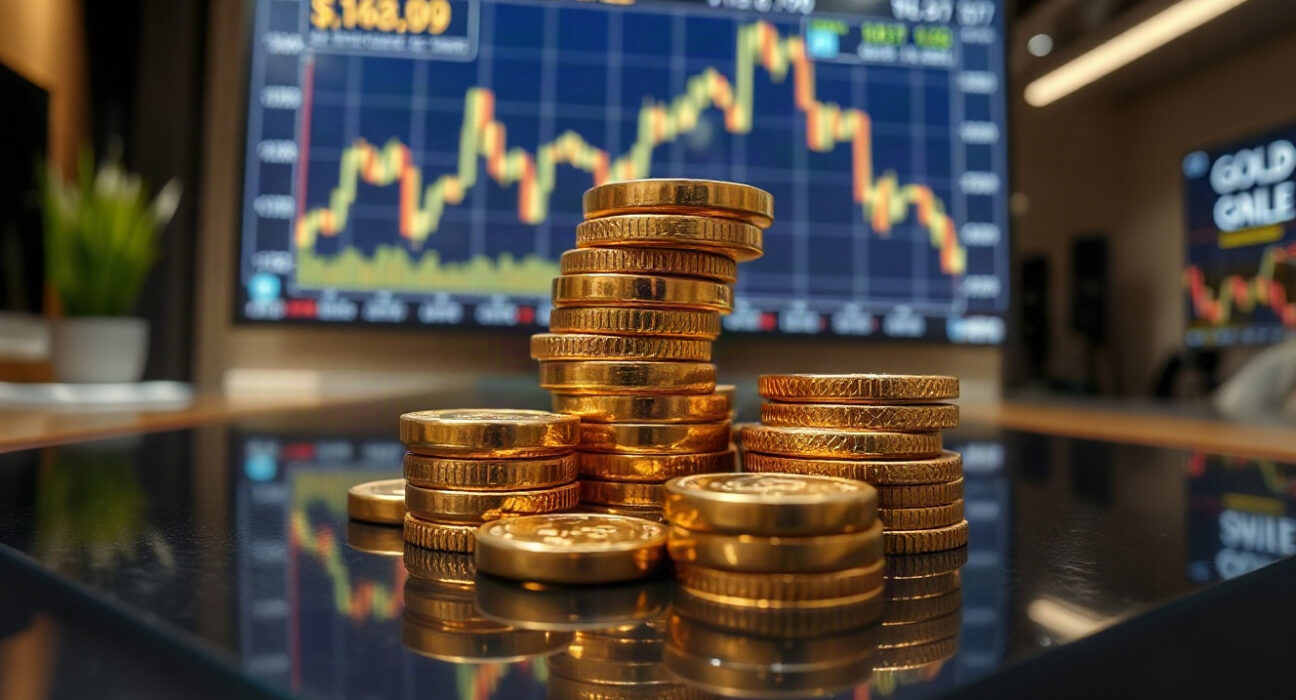
Gold prices retreated on [Date], as escalating Middle East tensions and renewed uncertainty over the Federal Reserve’s interest rate path prompted investors to reassess safe-haven demand. The pullback comes after a period of gains driven by geopolitical risk, with the metal now trading at [price] per ounce, down [percentage]% from recent highs.
Market Drivers Behind the Pullback
The decline in gold prices reflects a complex interplay of geopolitical and monetary policy factors. While Middle East tensions typically boost gold’s appeal as a safe-haven asset, the latest developments have also strengthened the U.S. dollar, which tends to pressure gold prices. Additionally, mixed signals from Federal Reserve officials have left investors uncertain about the timing and magnitude of future rate cuts, reducing the metal’s appeal as a non-yielding asset.
As of [Date], the U.S. Dollar Index has risen [percentage]% this week, making gold more expensive for holders of other currencies. Meanwhile, the yield on 10-year Treasury notes has climbed to [percentage]%, reflecting growing expectations that the Fed may keep rates higher for longer. These factors have outweighed the traditional safe-haven bid from geopolitical strife.
Geopolitical Risks and Safe-Haven Flows
The Middle East remains a key driver of gold’s volatility. Recent escalations, including [specific event if known, otherwise describe generally], have triggered intermittent safe-haven buying. However, market participants are also weighing the potential for diplomatic resolutions, which could reduce demand for defensive assets.
Historically, gold has reacted sharply to geopolitical shocks, but the magnitude and duration of such moves depend on the broader economic context. In the current environment, the metal faces headwinds from higher real yields and a resilient U.S. economy, which may limit its upside despite ongoing conflicts.
Impact on Investors and Market Outlook
For investors, the current pullback presents a nuanced picture. Those seeking portfolio diversification may view any dip as an opportunity to add exposure, while others may adopt a wait-and-see approach given the uncertainty around Fed policy. Analysts suggest that gold’s trajectory will hinge on upcoming U.S. economic data, particularly inflation reports and employment figures, which could influence the Fed’s decision-making.
The metal’s ability to hold key support levels will be crucial in determining its short-term direction. A break below [support level] could trigger further selling, while a rebound above [resistance level] might reignite bullish momentum. As always, geopolitical developments remain a wildcard, capable of shifting sentiment quickly.
Conclusion
Gold’s retreat underscores the delicate balance between geopolitical risk and monetary policy expectations. While tensions in the Middle East provide a floor under prices, the strength of the U.S. dollar and the prospect of sustained high interest rates are capping gains. Investors should monitor both fronts closely, as any major shift in either could set the tone for the precious metals market in the coming weeks.
FAQs
Q1: Why does gold usually rise during geopolitical tensions?
Gold is considered a safe-haven asset, meaning investors buy it during times of uncertainty or crisis to preserve wealth. Its value tends to hold or increase when other markets are volatile, as it is not tied to any single economy or government.
Q2: How do Federal Reserve interest rate decisions affect gold prices?
Gold does not pay interest, so when interest rates rise, the opportunity cost of holding gold increases, making it less attractive. Conversely, when rates are cut, gold becomes more appealing as yields on other assets fall.
Q3: What should investors consider before buying gold?
Investors should consider their overall portfolio strategy, risk tolerance, and the current economic environment. Gold can provide diversification and hedge against inflation, but it also carries price volatility and may not generate income. Consulting a financial advisor is recommended.
Disclaimer: The information provided is not trading advice, Bitcoinworld.co.in holds no liability for any investments made based on the information provided on this page. We strongly recommend independent research and/or consultation with a qualified professional before making any investment decisions.
