
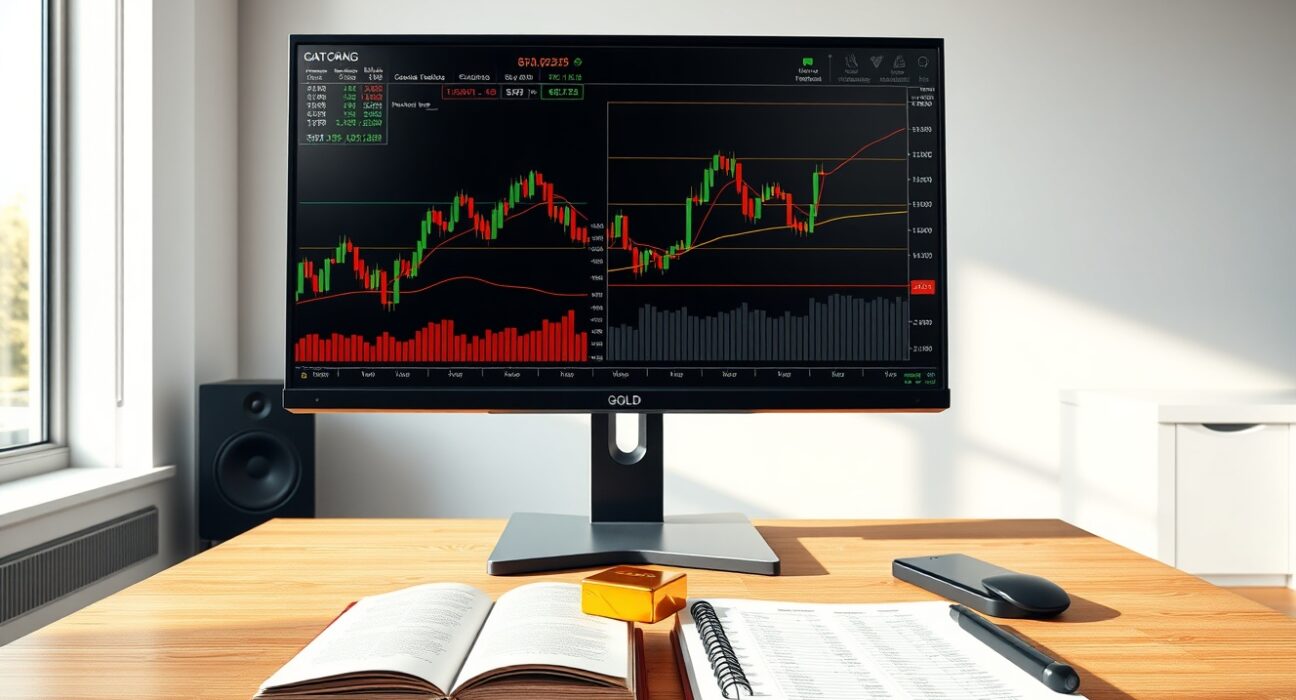
Singapore, March 2025 – DBS Bank’s latest commodities analysis presents a compelling outlook for gold, identifying a distinct range-bound trading pattern with a pronounced upside skew. This technical assessment arrives during a period of significant macroeconomic uncertainty, making the precious metal a focal point for investors globally. The bank’s research team meticulously examined multiple chart patterns, historical data, and current market drivers to arrive at this nuanced forecast.
Gold Price Analysis: Decoding the Range-Bound Pattern
DBS analysts highlight that gold has established a well-defined trading corridor between $2,150 and $2,350 per ounce over the past several quarters. This consolidation phase follows a volatile period characterized by rapid appreciation. Market participants now observe a period of equilibrium where supply and demand forces appear balanced. However, the “upside skew” noted by DBS suggests underlying bullish pressure. This pressure manifests in higher lows within the range, indicating accumulation by institutional buyers. Furthermore, trading volume analysis reveals increased activity near the range’s support level, a classic sign of strong buyer defense.
Several technical indicators support this view. The 100-day and 200-day moving averages have converged, creating a dynamic support zone. Meanwhile, momentum oscillators like the Relative Strength Index (RSI) consistently bounce from neutral levels without reaching overbought extremes. This behavior allows for gradual upward pressure without triggering significant technical sell-offs. The chart structure, therefore, suggests a coiled spring dynamic, where prolonged consolidation often precedes a decisive directional move.
Market Drivers and Macroeconomic Context
The range-bound activity does not occur in a vacuum. It reflects a complex interplay of global macroeconomic factors. Central bank policies, particularly from the Federal Reserve and the European Central Bank, remain paramount. Markets currently price in a cautious approach to interest rate adjustments. Historically, lower real interest rates diminish the opportunity cost of holding non-yielding assets like gold, providing a fundamental tailwind. Geopolitical tensions continue to foster safe-haven demand, injecting periodic volatility that tests the range’s boundaries.
Simultaneously, robust physical demand from central banks, especially across emerging markets, provides a solid demand floor. According to World Gold Council data, official sector purchases have exceeded 1,000 tonnes annually for two consecutive years. This structural buying absorbs selling pressure from other market segments. On the supply side, mining production has plateaued, with major producers reporting declining ore grades and rising operational costs. This supply constraint further reinforces the range’s lower boundary.
Expert Insight: The Significance of the Upside Skew
Financial strategists interpret the “upside skew” as more than a technical observation. It represents a market consensus leaning toward gradual appreciation. This skew emerges from options market data, where demand for call options (bets on higher prices) exceeds that for put options at a growing rate. The cost to insure against a price surge has risen relative to the cost of insuring against a collapse. This derivatives market activity provides a forward-looking sentiment gauge often preceding spot market moves. Portfolio managers are increasingly allocating to gold as a diversifier, not merely a hedge, recognizing its unique correlation properties during equity market drawdowns.
Comparative Analysis and Historical Precedents
Current chart patterns bear resemblance to previous consolidation phases in gold’s long-term bull market. A comparative analysis reveals instructive parallels.
| Period | Consolidation Range | Duration | Subsequent Move |
|---|---|---|---|
| 2018-2019 | $1,170 – $1,350 | 14 months | Breakout to $2,070+ |
| 2021-2022 | $1,780 – $1,950 | 11 months | Breakout to current highs |
| 2024-2025 (Current) | $2,150 – $2,350 | 8 months (ongoing) | Pending |
The key takeaway from history is that prolonged, tight ranges often resolve in the direction of the primary trend, which for gold remains upward since the early 2000s. Each prior consolidation phase served to shake out weak hands and build a stronger foundation for the next leg higher. The current range is occurring at a higher price plateau, indicating a market that has structurally re-rated.
Technical Levels and Trajectory Scenarios
DBS identifies several critical price levels that will dictate gold’s near-term trajectory. The immediate support zone clusters around $2,150-$2,180, defended by the converging moving averages and previous resistance-turned-support. A sustained break below this zone would invalidate the bullish skew and signal a deeper correction. Conversely, resistance is firm between $2,330 and $2,350. A weekly close above $2,350 on significant volume would confirm a breakout, with technical targets extending toward $2,500.
Analysts outline two primary scenarios:
- Base Case (60% Probability): Range-bound continuation with a gradual grind higher. Price oscillates within the corridor but spends more time in the upper half, slowly eroding overhead resistance.
- Bull Case (30% Probability): Catalytic breakout. A macroeconomic shock, such as a sudden dovish pivot by major central banks or an escalation in geopolitical conflict, triggers a volatile surge above $2,350.
- Bear Case (10% Probability): Breakdown. A sharp, sustained rise in real yields and US dollar strength overwhelms other drivers, pushing gold below $2,100 toward $2,000 support.
Conclusion
DBS’s analysis of gold presents a market in a state of poised tension. The range-bound trade with an upside skew reflects a balance between potent bullish fundamentals and near-term macroeconomic headwinds. The technical charts suggest a market building energy for its next significant move. For investors, this environment favors strategic accumulation at range supports rather than speculative chasing. The precious metal’s role as a portfolio stabilizer and store of value remains intact, underpinned by persistent central bank demand and enduring geopolitical risks. The coming quarters will test the resilience of the current range, with the bias, as DBS notes, tilted cautiously to the upside.
FAQs
Q1: What does “range-bound trade with upside skew” mean for gold?
It means gold’s price is moving within a specific high-low band (e.g., $2,150-$2,350), but the market behavior and technical indicators suggest a higher probability of eventually breaking upward rather than downward from that range.
Q2: What are the main factors keeping gold in a range currently?
The primary factors are the tension between persistent inflation (bullish) and elevated interest rates (bearish), along with strong physical demand from central banks offsetting selling from exchange-traded funds (ETFs).
Q3: How does DBS use charts to determine this outlook?
Analysts use multiple technical tools: identifying support/resistance levels from price history, analyzing moving average convergences, assessing trading volume at key prices, and reviewing momentum oscillators like the RSI for overbought or oversold signals.
Q4: What would trigger a breakout from the current range to the upside?
A decisive breakout above resistance would likely require a catalyst such as a clear signal of impending interest rate cuts from the Federal Reserve, a sharp downturn in equity markets, or a significant escalation in geopolitical instability.
Q5: Is now a good time for retail investors to buy gold?
Based on a range-bound outlook, strategies like dollar-cost averaging (making regular, smaller purchases) may be more prudent than making a single large investment, allowing investors to build a position at varying prices within the range.
Disclaimer: The information provided is not trading advice, Bitcoinworld.co.in holds no liability for any investments made based on the information provided on this page. We strongly recommend independent research and/or consultation with a qualified professional before making any investment decisions.