

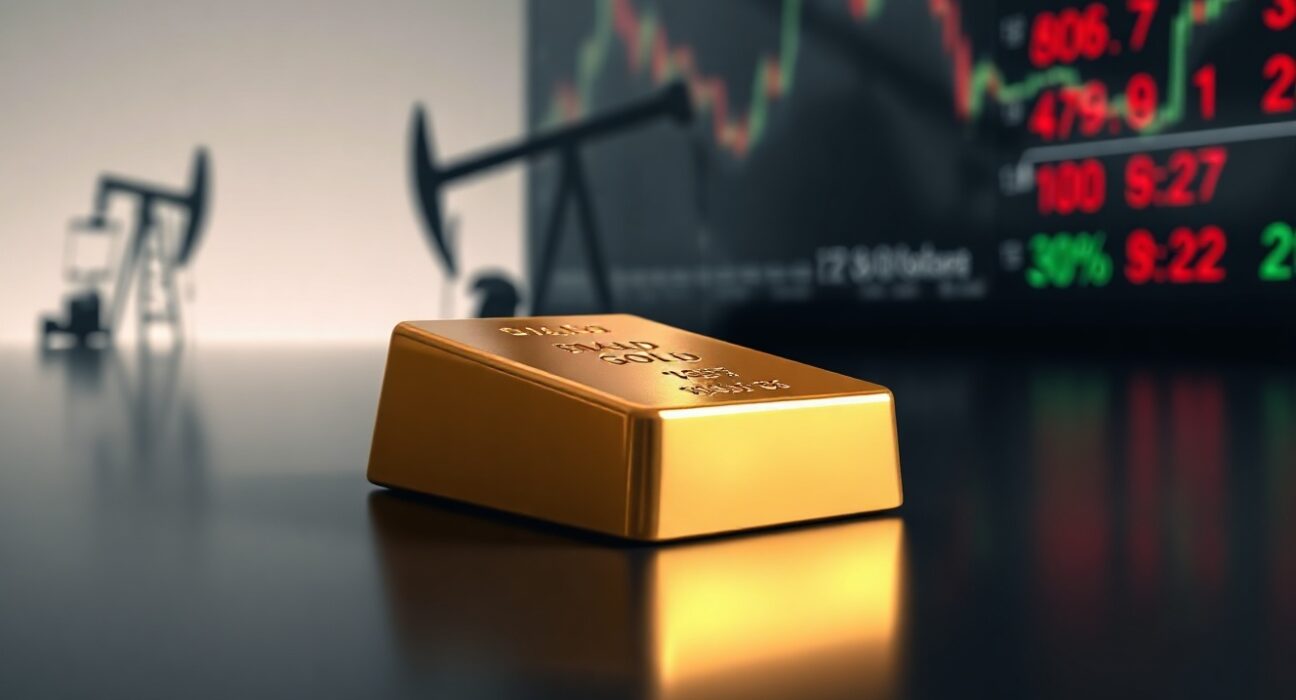
Gold prices are struggling to sustain a meaningful recovery, and according to analysts at OCBC, the path higher depends on two key macroeconomic conditions: a decline in oil prices and the market fully pricing in the peak of Federal Reserve interest rate expectations. The analysis, published by the Singapore-based bank, offers a sobering view for gold bulls hoping for a swift rebound.
OCBC’s Dual Condition for Gold Recovery
OCBC’s commodity strategists argue that gold’s recent weakness is tied to persistent inflation fears, largely driven by elevated energy costs. Higher oil prices feed into broader inflation readings, which in turn keep the Federal Reserve on a hawkish footing. For gold to stage a durable recovery, the bank suggests two conditions must be met: oil prices must soften, reducing inflationary pressure, and the market must reach a peak in repricing of Fed rate expectations. Once the market believes rates have peaked, the opportunity cost of holding non-yielding gold diminishes, making the metal more attractive.
Macro Context: Why Oil and Fed Policy Matter for Gold
The relationship between oil, Fed policy, and gold is well-established in commodity markets. Crude oil is a major input in global production and consumer prices. When oil rises, it pushes inflation higher, prompting central banks to maintain or increase interest rates. Gold, which pays no interest, becomes less competitive in a high-rate environment. Conversely, if oil prices decline, inflation expectations moderate, and the pressure on the Fed to keep rates elevated eases. This creates a more favorable backdrop for gold.
OCBC’s analysis aligns with broader market sentiment. The Federal Reserve has signaled it is in no rush to cut rates, with inflation remaining above the 2% target. Market participants have repeatedly pushed back expectations for rate cuts, repricing them further into 2025 or even 2026. Until that repricing process reaches its conclusion, gold may remain under pressure.
Implications for Investors and Traders
For investors tracking gold, OCBC’s framework provides a clear set of indicators to watch. A sustained drop in Brent or WTI crude oil prices below key support levels could signal the beginning of a more favorable environment for gold. Similarly, if market pricing for Fed rate cuts stabilizes or begins to move earlier, gold could find a floor. Traders should also monitor real yields, as falling real interest rates typically support gold prices.
It is important to note that OCBC’s outlook is conditional. The bank does not forecast an immediate gold rally but rather outlines the necessary conditions for one to develop. This nuanced view contrasts with more bullish calls that ignore the current headwinds from energy markets and monetary policy.
Conclusion
OCBC’s analysis offers a measured, condition-based outlook for gold. The metal’s recovery is not imminent but depends on tangible shifts in oil prices and Fed expectations. For now, gold remains range-bound, awaiting clearer signals from energy markets and central bank policy. Investors should focus on these macro drivers rather than short-term price noise.
FAQs
Q1: Why does oil price affect gold?
Higher oil prices increase inflation expectations, which can lead to higher interest rates. Gold, as a non-yielding asset, becomes less attractive when rates rise, pressuring its price. Conversely, falling oil prices reduce inflation pressure and can support gold.
Q2: What does ‘peak Fed repricing’ mean?
It refers to the point at which financial markets have fully adjusted their expectations for the highest level of Federal Reserve interest rates. Once markets believe rates have peaked, the negative pressure on gold from rate expectations begins to fade.
Q3: Is OCBC predicting a gold rally?
No. OCBC outlines conditions that would need to be met for a gold recovery to occur, rather than forecasting an imminent rally. The outlook is conditional on softer oil prices and peak Fed repricing.
Disclaimer: The information provided is not trading advice, Bitcoinworld.co.in holds no liability for any investments made based on the information provided on this page. We strongly recommend independent research and/or consultation with a qualified professional before making any investment decisions.
