

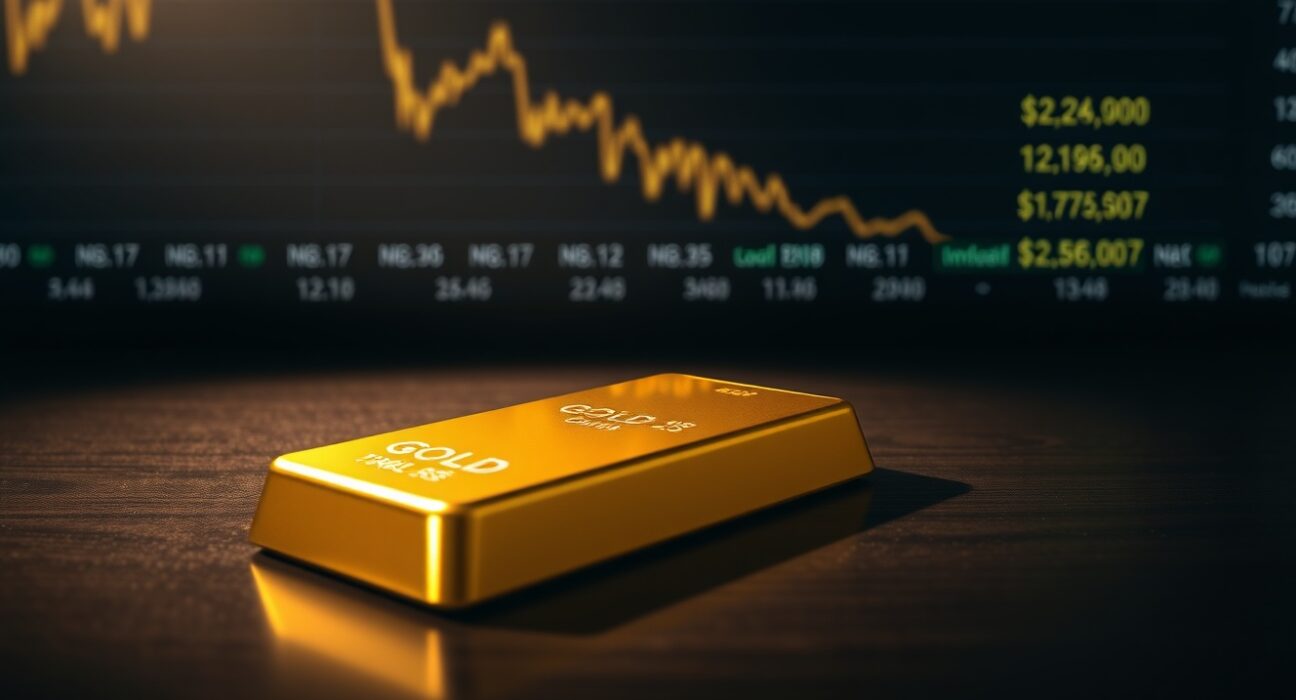
Gold prices edged lower on Wednesday, retreating from a two-week high, as the US dollar strengthened on growing expectations that the Federal Reserve will maintain a hawkish monetary policy stance. The precious metal’s decline also reflects a complex interplay of safe-haven demand driven by ongoing geopolitical tensions and the countervailing pressure from a firmer greenback.
Dollar Strength Weighs on Bullion
The US dollar index, which measures the currency against a basket of six major peers, climbed to a fresh multi-week high, making gold more expensive for holders of other currencies. This upward momentum in the dollar was fueled by recent comments from Fed officials signaling that interest rate cuts may not come as soon as markets had anticipated. Traders are now pricing in a higher probability of rates staying elevated for longer, which diminishes the appeal of non-yielding assets like gold.
Geopolitical Uncertainty Provides a Floor
Despite the pressure from a stronger dollar, gold’s decline was limited by persistent geopolitical risks. Escalating tensions in Eastern Europe and the Middle East continue to drive safe-haven flows into the precious metal. Analysts note that while a hawkish Fed typically dampens gold’s appeal, the metal remains supported as a hedge against uncertainty. This tug-of-war between monetary policy expectations and geopolitical anxiety is likely to keep gold prices volatile in the near term.
Market Implications for Investors
For investors, the current environment suggests a cautious approach. The retreat from the two-week high may signal a short-term correction, but the underlying support from geopolitical risks could prevent a sharp sell-off. Market participants are closely watching upcoming US economic data, particularly inflation figures and employment reports, for further clues on the Fed’s next moves. A stronger-than-expected economic print could reinforce hawkish bets and push gold lower, while any signs of economic weakness might revive rate-cut expectations and boost bullion.
Conclusion
Gold’s retreat from its recent high underscores the delicate balance between a hawkish Federal Reserve and persistent geopolitical uncertainties. While the stronger dollar and higher rate expectations are near-term headwinds, the metal’s safe-haven status continues to provide a floor. Traders should remain alert to shifting Fed rhetoric and global developments that could tilt the balance in either direction.
FAQs
Q1: Why did gold prices fall despite geopolitical tensions?
Gold prices fell primarily because the US dollar strengthened on hawkish Federal Reserve bets, making gold more expensive for foreign buyers. While geopolitical risks usually support gold, the stronger dollar and higher rate expectations outweighed that support in the short term.
Q2: What does a hawkish Fed mean for gold?
A hawkish Fed signals a willingness to keep interest rates high or raise them further to combat inflation. Higher rates increase the opportunity cost of holding non-yielding assets like gold, typically pushing prices lower.
Q3: Could gold rebound soon?
Yes, a rebound is possible if geopolitical tensions escalate further or if upcoming US economic data disappoints, weakening the dollar and reviving expectations of Fed rate cuts. However, sustained gains would require a clear shift in monetary policy outlook or a significant safe-haven event.
Disclaimer: The information provided is not trading advice, Bitcoinworld.co.in holds no liability for any investments made based on the information provided on this page. We strongly recommend independent research and/or consultation with a qualified professional before making any investment decisions.
