
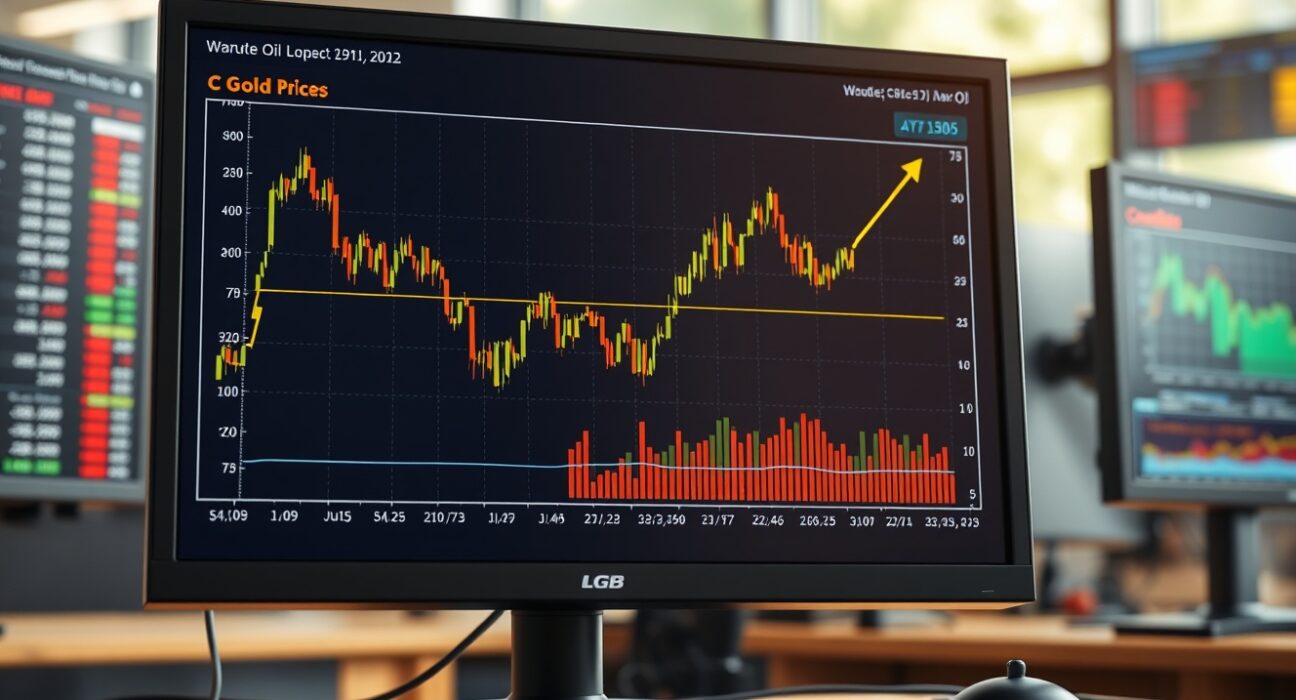
Gold prices face significant pressure in early 2025 as persistent oil-driven inflation fears compel global central banks to maintain a hawkish monetary policy stance, thereby reshaping the interest rate outlook and traditional safe-haven asset dynamics.
Gold Struggles Amid Shifting Monetary Policy Winds
Traditionally, investors flock to gold during periods of economic uncertainty. However, the current market environment presents a complex challenge. Consequently, rising crude oil prices have reignited inflation concerns across major economies. Therefore, central banks, particularly the Federal Reserve and the European Central Bank, signal a prolonged period of elevated interest rates. This monetary policy stance directly undermines gold’s appeal. Specifically, higher interest rates increase the opportunity cost of holding non-yielding assets like bullion. Meanwhile, a stronger U.S. dollar, often a byproduct of tighter policy, makes dollar-priced gold more expensive for foreign buyers. Recent trading data shows spot gold hovering near multi-week lows. For instance, prices have retreated from the $2,400 per ounce level reached earlier in the year. Market analysts point to sustained outflows from major gold-backed exchange-traded funds (ETFs) as clear evidence of shifting sentiment. Furthermore, options market activity indicates growing bearish positioning among institutional traders.
The Oil Price Inflation Engine
Brent crude futures have consistently traded above $90 per barrel throughout the first quarter. Several interconnected factors drive this sustained elevation. Geopolitical tensions in key producing regions continue to threaten supply stability. Simultaneously, OPEC+ maintains production discipline, supporting prices. Moreover, resilient global demand, particularly from emerging Asian economies, provides a solid demand floor. The direct impact on consumer price indices is significant. Energy costs represent a substantial component of headline inflation calculations. Central banks monitor core inflation, which excludes food and energy. Nevertheless, persistently high oil prices create second-round effects. Businesses face higher transportation and production costs. Subsequently, these increased costs often translate into higher consumer prices for goods and services. This wage-price spiral dynamic complicates the inflation fight. Consequently, policymakers remain vigilant against premature policy easing. Historical data illustrates a strong correlation between oil price shocks and subsequent central bank tightening cycles. The current episode appears to follow this established pattern.
Central Bank Responses and Forward Guidance
Federal Reserve officials have recently emphasized a data-dependent approach. Recent meeting minutes reveal a consensus for holding rates steady. The primary concern remains inflation persistence. Chair Jerome Powell noted that progress toward the 2% target has stalled. Similarly, the European Central Bank faces a delicate balancing act. Eurozone growth remains sluggish, yet inflation proves sticky. ECB President Christine Lagarde warned against cutting rates too early. The Bank of England also mirrors this cautious stance. Market-implied probabilities, derived from interest rate futures, show a dramatic shift. Traders now price in fewer than two rate cuts for 2025, a sharp reduction from expectations just three months ago. This repricing directly impacts all asset classes, especially rate-sensitive ones like gold. The table below summarizes recent central bank signals:
| Central Bank | Current Policy Rate | Key Guidance (Q1 2025) |
|---|---|---|
| U.S. Federal Reserve | 5.25% – 5.50% | Need greater confidence inflation is moving sustainably toward 2% |
| European Central Bank | 4.50% | Wage growth remains too strong to consider cuts |
| Bank of England | 5.25% | Services inflation requires restrictive policy for longer |
Comparative Asset Performance and Investor Flows
Gold’s struggle contrasts with the performance of other asset classes. U.S. Treasury yields have climbed, attracting income-focused investors. The 10-year Treasury yield recently breached 4.5%, its highest level this year. Equities, meanwhile, show sector-specific resilience. Energy stocks benefit directly from higher oil prices. Technology shares continue to draw capital amid AI-driven optimism. This rotation out of defensive assets and into yield-bearing or growth-oriented ones pressures gold. Physical gold demand provides some offsetting support. Central bank purchases, led by institutions in China, India, and Turkey, remain a structural buyer. However, this official sector demand has not been sufficient to counterweight the massive selling from financial investors. Key market indicators to watch include:
- Real Yields: Inflation-adjusted Treasury yields are a primary gold driver.
- DXY Index: U.S. dollar strength remains a persistent headwind.
- ETF Holdings: Weekly flows from funds like GLD signal institutional sentiment.
- COMEX Positioning: Commitment of Traders reports show speculative net-long positions.
Historical Context and Market Psychology
The relationship between gold, oil, and interest rates is well-documented. The 1970s stagflation period saw gold surge as inflation outpaced rate hikes. Conversely, the Volcker era of aggressive tightening in the early 1980s crushed gold prices. Today’s scenario differs because central banks aim to avoid triggering a deep recession. This “soft landing” narrative supports risk assets but deprives gold of a major catalyst. Market psychology currently prioritizes income and growth over preservation. Until inflation data shows conclusive cooling, this dynamic will likely persist. Analysts note that gold often experiences weakness in the months preceding a definitive policy pivot. The metal could establish a durable low once the rate hike cycle is universally perceived as complete.
Global Economic Impacts and Regional Divergence
The high-rate environment strains different economies unevenly. Heavily indebted emerging markets face soaring borrowing costs. This pressure could eventually foster financial instability, a potential future catalyst for gold. Developed economies with variable-rate mortgages witness slowing housing markets. Consumer spending shows signs of softening under the weight of persistent inflation. Regional gold demand patterns reflect these divergences. North America and Europe see weak investment demand. Conversely, Asian markets demonstrate stronger physical buying, often treating price dips as buying opportunities. This East-West demand split creates a floor under the market but limits upside momentum. The global macroeconomic picture remains the dominant force. A reacceleration of inflation would force even more aggressive hawkish rhetoric, further pressuring gold. Alternatively, a sudden economic downturn prompting rapid rate cuts would likely trigger a powerful gold rally.
Conclusion
Gold struggles in the current financial landscape primarily due to oil-driven inflation fears prolonging a restrictive global interest rate outlook. The metal’s traditional role as an inflation hedge is being counteracted by the high opportunity cost imposed by elevated bond yields. Central bank communications firmly anchor expectations for “higher for longer” rates, diminishing gold’s near-term investment appeal. Consequently, the path for bullion appears constrained until macroeconomic data provides clear evidence that inflation is decisively tamed, allowing policymakers to pivot. Monitoring oil price dynamics and central bank forward guidance remains crucial for forecasting the next sustained move in the gold market.
FAQs
Q1: Why do higher interest rates hurt the gold price?
Higher interest rates increase the yield on competing assets like government bonds. Since gold pays no interest, its opportunity cost rises, making it less attractive to investors seeking income.
Q2: How do oil prices influence inflation and monetary policy?
Oil is a major input cost for the global economy. Rising oil prices directly increase transportation and production costs, which can feed into broader consumer price inflation, prompting central banks to maintain or raise interest rates to cool demand.
Q3: Is central bank gold buying enough to support the price?
While significant, official sector purchases from countries like China have recently been offset by substantial selling from Western financial investors and ETFs, leading to net downward pressure on price.
Q4: What would cause gold to start rising again in this environment?
A clear shift in central bank rhetoric toward imminent rate cuts, a sharp drop in oil prices easing inflation fears, or a sudden onset of financial market stress that revives safe-haven demand could catalyze a gold rally.
Q5: How are other commodities performing compared to gold?
Industrial commodities like copper often follow economic growth expectations, while energy commodities like oil are driven by specific supply-demand dynamics. Gold’s unique role as a monetary metal makes it most sensitive to real interest rates and currency movements.
Disclaimer: The information provided is not trading advice, Bitcoinworld.co.in holds no liability for any investments made based on the information provided on this page. We strongly recommend independent research and/or consultation with a qualified professional before making any investment decisions.