
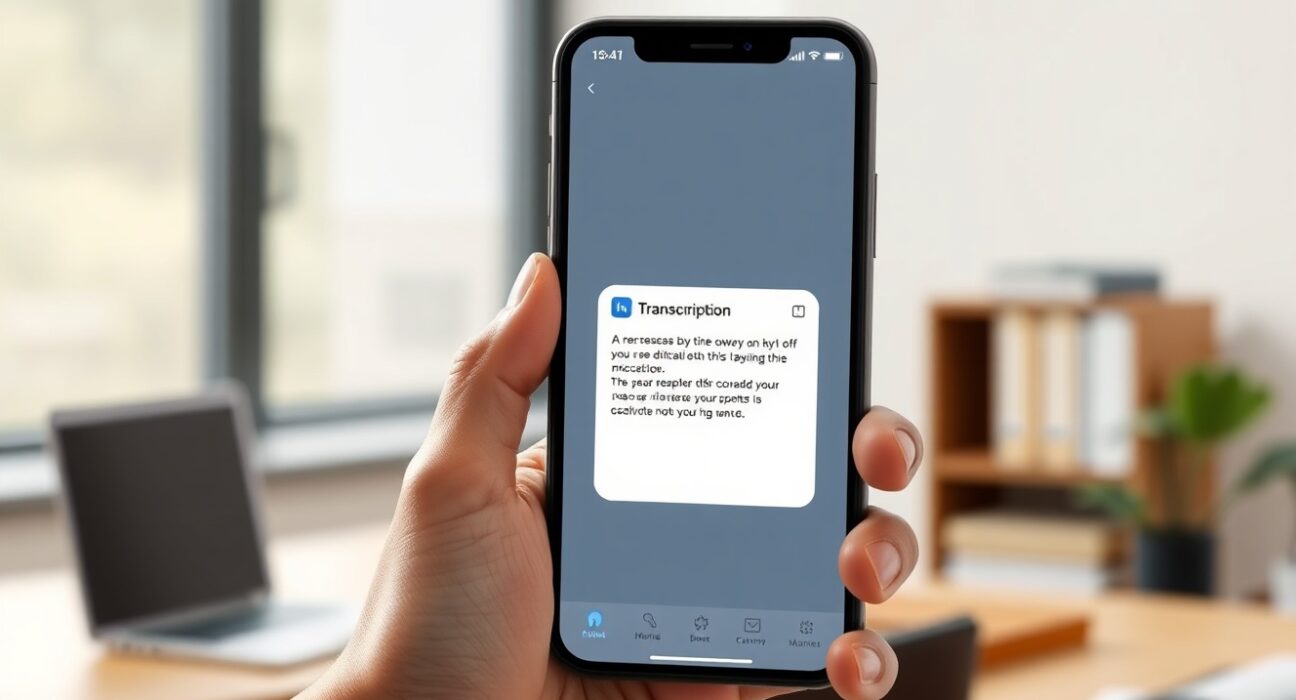
In a strategic move that signals a deeper commitment to on-device artificial intelligence, Google has quietly launched a sophisticated new dictation application for iOS users. The Google AI Edge Eloquent app, released without fanfare, represents a significant advancement in offline-first speech recognition technology, directly challenging established players in the growing AI transcription market.
Google AI Edge Eloquent App Enters the Competitive Arena
Released on Monday, the Google AI Edge Eloquent application arrives as a free download on the Apple App Store. This launch positions Google against popular independent transcription services like Wispr Flow, SuperWhisper, and Willow. The app’s core innovation lies in its offline-first architecture. After users download the necessary Gemma-based Automatic Speech Recognition (ASR) models, the application processes dictation entirely on the device. Consequently, this approach enhances user privacy, reduces latency, and eliminates dependency on cellular or Wi-Fi connectivity for core functionality.
The competitive landscape for AI-powered dictation has intensified rapidly throughout 2024 and into 2025. Analysts note a surge in demand for professional-grade transcription tools driven by remote work, content creation, and accessibility needs. Google’s entry with a polished, offline-capable app suggests a strategic test of consumer appetite for its edge AI capabilities before a potential wider rollout. The company’s vast resources in machine learning and speech processing give it a formidable foundation in this space.
Core Features and On-Device Processing Power
The Google AI Edge Eloquent app distinguishes itself through several intelligent features designed for practical use. During dictation, a live transcription window displays text in real-time. Upon pausing, the app’s AI automatically engages in post-processing. This step involves filtering out common verbal disfluencies such as “um,” “ah,” and mid-sentence corrections. The result is clean, polished prose ready for immediate use in emails, documents, or notes.
Beneath the transcript, users find a suite of text transformation options labeled “Key points,” “Formal,” “Short,” and “Long.” These tools leverage on-device language models to reformat the raw transcript into different styles, summarizing content or adjusting its tone without requiring a cloud connection. For enhanced accuracy, the app can optionally import specific keywords, names, and jargon from a user’s Gmail account. Users can also manually add custom words to a personal dictionary, ensuring proper transcription of specialized terminology.
The Technical Backbone: Gemma ASR and Privacy Controls
The application’s performance hinges on Google’s Gemma-based ASR models, which are specifically optimized for efficient local execution on mobile hardware. This represents a tangible application of the company’s broader push toward efficient, small-scale language models that can run on consumer devices. A toggle for “cloud mode” offers users a choice. When switched off, all processing remains local. When enabled, the app can utilize Google’s more powerful cloud-based Gemini models for advanced text cleanup tasks, providing a hybrid approach to performance and capability.
Privacy advocates have often raised concerns about cloud-based transcription services retaining audio data. Google’s design directly addresses this by making local processing the default. The app stores a history of transcription sessions locally on the device, complete with search functionality. It also provides users with analytics, such as words dictated in the last session, words-per-minute speed, and total word counts, offering insights into their dictation habits.
Market Context and the Rise of AI Dictation
The release of Google AI Edge Eloquent occurs during a period of explosive growth for speech-to-text applications. Advances in neural network architectures have dramatically improved the accuracy and speed of transcription over the last two years. Consequently, these tools have moved beyond simple note-taking into professional domains like journalism, legal work, and medical documentation. The success of apps like Wispr Flow, which popularized a floating button for system-wide access on Android, demonstrates a clear market demand for seamless, integrated dictation experiences.
Google’s App Store description frames Eloquent as a tool “engineered to bridge the gap between natural speech and professional, ready-to-use text.” This language explicitly targets users frustrated with standard dictation software that transcribes every stumble and filler word verbatim, requiring significant manual editing. By automating this cleanup, Google aims to reduce the cognitive load and time investment associated with turning speech into text.
Future Roadmap and Android Integration
Although currently an iOS-exclusive, the app’s description strongly hints at future expansion. It references “seamless Android integration,” suggesting a version where Eloquent could be set as the default keyboard, allowing for dictation in any text field across the operating system. Furthermore, the description mentions a planned floating button feature, similar to Wispr Flow’s implementation, for easy access from any screen.
Industry observers interpret this iOS-first launch as a controlled experiment. By testing core functionality and user reception on a platform outside its direct ecosystem, Google can gather valuable data before integrating similar technology directly into Android. A successful test could lead to enhanced, system-level dictation features appearing in a future version of the Android operating system, potentially raising the bar for all mobile transcription services.
Conclusion
The quiet launch of the Google AI Edge Eloquent app marks a significant step in the democratization of advanced, privacy-conscious AI tools. By leveraging efficient Gemma models for offline speech recognition and intelligent text polishing, Google is not just entering a competitive market but attempting to redefine user expectations for dictation software. The app’s focus on local processing, user customization, and professional-grade output positions it as a compelling option for iOS users. Its development will be closely watched as an indicator of how major tech giants plan to deploy powerful AI directly into the palms of consumers, shaping the future of human-computer interaction.
FAQs
Q1: What is the Google AI Edge Eloquent app?
The Google AI Edge Eloquent is a new, free dictation app for iOS that uses on-device AI (Gemma-based models) to transcribe speech, automatically remove filler words, and polish text into ready-to-use prose, all while working offline.
Q2: How does the offline functionality work?
The app downloads compact Automatic Speech Recognition (ASR) models to your device. Once downloaded, all core dictation and text-cleanup processes happen locally on your iPhone, without needing an internet connection, ensuring privacy and speed.
Q3: How does it compare to other dictation apps like Wispr Flow?
While similar in goal, Eloquent’s key differentiator is its offline-first, Google-powered AI engine. It emphasizes automatic text polishing and offers deep potential for future integration with Google services and Android systems.
Q4: Will there be an Android version of Google AI Edge Eloquent?
The iOS app’s description explicitly mentions “seamless Android integration” and features like a system-wide keyboard and floating button. While not yet released, a robust Android version appears to be part of Google’s roadmap.
Q5: Is my audio data sent to the cloud when using this app?
By default, with “cloud mode” turned off, all audio processing is done locally on your device. You can optionally enable cloud mode to access more powerful Gemini models for text cleanup, but the core transcription remains offline-first.
Disclaimer: The information provided is not trading advice, Bitcoinworld.co.in holds no liability for any investments made based on the information provided on this page. We strongly recommend independent research and/or consultation with a qualified professional before making any investment decisions.