
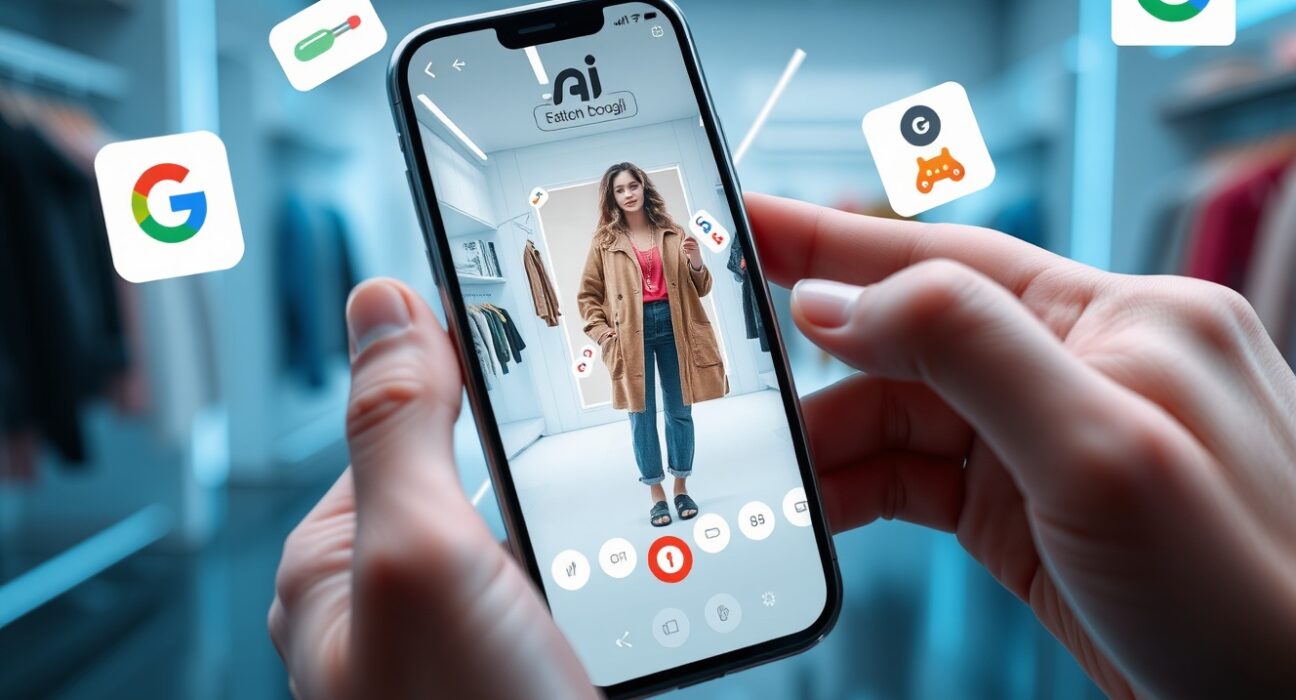
Imagine scrolling through your phone and seeing a perfect outfit that seems made just for you—and you can try it on instantly with artificial intelligence before buying. That’s exactly what Google is now offering with its experimental AI fashion app, Doppl. In a bold move that signals a major shift in e-commerce strategy, Google has introduced a shoppable discovery feed powered entirely by AI-generated videos. This development comes as tech giants race to capture the lucrative intersection of social media, artificial intelligence, and online shopping.
What is Google Doppl’s New Shoppable Discovery Feed?
Google announced on Monday that it’s introducing a shoppable discovery feed in Doppl, its experimental app that uses AI to visualize how different outfits might look on you. The tech giant says the idea behind the new feed is to display recommendations so users can discover and virtually try on new items. Nearly everything in the feed is shoppable, with direct links to merchants.
The discovery feed features AI-generated videos of real products and suggests outfits based on your personalized style. Google determines your style by analyzing:
- The preferences you share with Doppl
- The items you interact with within the app
- Your virtual try-on history
- Your saved items and collections
How Does This AI Fashion App Work?
Doppl represents Google’s ambitious entry into the AI-powered fashion space. The app creates a virtual version of yourself that can try on different outfits through artificial intelligence visualization. What makes the new discovery feed particularly innovative is its use of AI-generated videos rather than static images.
While the app initially created images of a virtual version of yourself wearing different outfits, it can now turn these static images and convert them into AI-generated videos. The purpose of this is to give you a better sense of how the outfit would look on you in real life—showing movement, drape, and fit in a way that static images cannot capture.
| Feature | Description | Benefit |
|---|---|---|
| AI-Generated Videos | Dynamic video content created by artificial intelligence | Shows clothing movement and fit realistically |
| Personalized Style Algorithm | Analyzes user preferences and interactions | Creates tailored outfit recommendations |
| Direct Shopping Links | Nearly all items link directly to merchants | Seamless purchase experience |
| Virtual Try-On Technology | AI visualization of outfits on user’s virtual avatar | Reduces returns and increases confidence |
Why This E-commerce Strategy Matters Now
The move comes as short-form video feeds, particularly on TikTok and Instagram, have conditioned users to scroll visual feeds and buy what they see. However, unlike on TikTok and Instagram, where real influencers showcase products, Google’s new feed only consists of AI-generated content.
This e-commerce strategy makes sense for several reasons:
- Market Timing: Consumers are already accustomed to discovering products through video feeds
- Competitive Pressure: Google continues to lose ground to companies like Amazon and social media platforms in e-commerce
- Cost Efficiency: AI-generated content eliminates influencer fees and production costs
- Scalability: AI can generate endless variations of content for different user preferences
The Rise of AI-Generated Content in Social Commerce
Although a feed consisting solely of AI-generated content would have seemed strange a year ago, the idea is now gaining traction across the tech industry. This trend represents a significant shift in how companies approach content creation and e-commerce integration.
Other major players exploring similar territory include:
- OpenAI: In September launched Sora, a social media platform of just AI videos
- Meta: Has a short-form video feed of AI-generated videos called “Vibes” in the Meta AI app
- TikTok: Experimenting with AI-generated influencer avatars for brand partnerships
Availability and Target Audience
The new discovery feed is rolling out to Doppl on iOS and Android in the U.S. for users 18 and above. This limited rollout suggests Google is testing the waters before a potential broader release. The age restriction reflects both practical considerations (shopping requires payment methods typically available to adults) and ethical considerations around AI and data privacy for younger users.
Potential Challenges and Considerations
While innovative, Google’s approach faces several potential challenges:
- Authenticity Concerns: Some users may prefer real human influencers over AI-generated content
- Accuracy Issues: AI may not perfectly represent how clothing fits different body types
- Privacy Questions: The extent of data collection needed for personalization
- Market Saturation: Increasing competition in the AI fashion and virtual try-on space
What This Means for the Future of Online Shopping
Google’s Doppl update represents more than just another app feature—it signals a fundamental shift in how e-commerce might evolve. By combining AI-generated content with personalized recommendations and seamless shopping, Google is attempting to create a new paradigm for product discovery.
The implications could be far-reaching:
- Reduced reliance on human influencers and content creators
- More personalized shopping experiences at scale
- New opportunities for smaller brands to get discovered through AI algorithms
- Potential changes in how fashion trends emerge and spread
FAQs About Google’s Doppl and AI Fashion Technology
What is Google Doppl?
Doppl is Google’s experimental AI fashion app that allows users to create a virtual version of themselves to try on different outfits using artificial intelligence visualization technology.
How does the shoppable discovery feed work?
The feed uses AI to generate videos of products and suggests outfits based on your personalized style preferences. Nearly all items include direct links to merchants for purchasing.
How is this different from TikTok or Instagram shopping?
Unlike TikTok and Instagram where real influencers showcase products, Google’s feed consists entirely of AI-generated content without human presenters.
What companies are competing in this space?
Major players include Amazon with its various fashion initiatives, Meta with its AI video feed “Vibes,” and various startups focused on virtual try-on technology.
Is my data safe with this AI fashion app?
Google states that it uses data to personalize recommendations, but as with any app collecting personal information, users should review privacy settings and understand what data is being collected.
Conclusion: A Transformative Moment for AI in E-commerce
Google’s introduction of a shoppable discovery feed in Doppl represents a significant milestone in the convergence of artificial intelligence, social media behaviors, and e-commerce. While the approach of using entirely AI-generated content may face initial skepticism from consumers accustomed to human influencers, it addresses several key challenges in online shopping—particularly around scalability, personalization, and reducing return rates through better visualization.
The success of this e-commerce strategy will depend on several factors: the accuracy of AI’s representation of clothing fit and movement, user adoption of AI-generated content over human-created content, and Google’s ability to compete with established players like Amazon and social platforms. What’s clear is that we’re witnessing the early stages of a fundamental transformation in how consumers discover and shop for fashion online—one where artificial intelligence plays an increasingly central role in every step of the journey.
To learn more about the latest AI and e-commerce trends, explore our article on key developments shaping artificial intelligence features and institutional adoption in retail technology.
Disclaimer: The information provided is not trading advice, Bitcoinworld.co.in holds no liability for any investments made based on the information provided on this page. We strongly recommend independent research and/or consultation with a qualified professional before making any investment decisions.