

LAS VEGAS, January 2026 – Google has unveiled a transformative suite of artificial intelligence features for television at the Consumer Electronics Show, fundamentally redefining how users interact with their living room screens. The company’s Gemini AI, initially integrated into Google TV devices in late 2025, now receives a significant expansion designed specifically for large-screen experiences. This strategic move positions Google at the forefront of the AI-powered entertainment revolution, directly addressing long-standing user frustrations with complex interfaces and passive viewing.
Google Gemini TV Ushers in a New Era of Conversational Control
Google’s vision for Gemini on TV centers on replacing cumbersome remote navigation with natural language conversation. Consequently, users can now simply speak to their television to execute complex tasks. For example, you could ask, “Find a thriller movie set in Tokyo that my partner and I will both enjoy,” and Gemini will analyze both viewing histories to provide tailored suggestions. Furthermore, the system excels at contextual recall. If you remember an actor’s face but not the movie title, describing the plot will trigger Gemini’s deep search capabilities.
This functionality extends beyond simple searches. The AI can generate plot recaps for returning to a series after a break, answer questions about actors or directors in real-time, and even provide recommendations based on current cultural trends. The underlying technology represents a major leap from basic voice commands to a truly conversational and contextual assistant built for leisure.
Beyond Entertainment: Gemini as an Educational Powerhouse
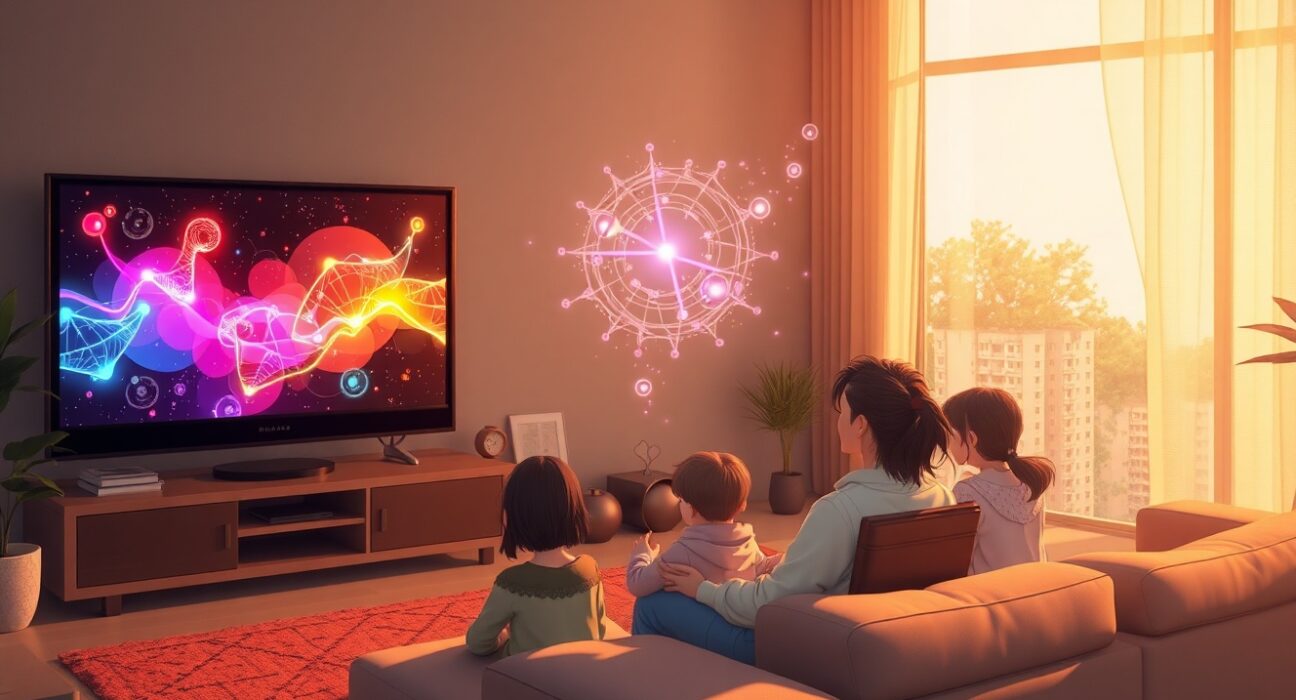
Google demonstrated at CES that the television’s potential extends far beyond passive consumption. With Gemini, the large screen becomes an interactive learning portal. When a viewer asks an educational question—such as “How do black holes form?”—the system generates a visually rich, narrated overview. This presentation simplifies complex concepts using animations, diagrams, and key facts.
Critically, the experience remains interactive. Users can ask follow-up questions to dive deeper into specific aspects, creating a personalized learning journey. This feature taps into the growing trend of “edutainment,” leveraging the communal nature of the living room screen for family learning. It transforms the TV from a distraction into a potential hub for curiosity and knowledge.
The Technical Foundation and Rollout Strategy
Industry analysts note the rollout strategy is pragmatic. Google is partnering first with TCL, a major television manufacturer, to refine the experience on dedicated hardware before a broader software update. This phased approach allows for real-world testing and optimization. The new features require Google TV devices running Android TV OS 14 or higher, a stable internet connection, and a linked Google account.
Initial availability will be limited by language and region, a common practice for global tech launches. This staged deployment helps ensure quality and manage server load as the computationally intensive AI features scale. The requirement for a Google account also underscores the personalized nature of the service, which leverages user data within privacy frameworks to improve recommendations and photo library access.
Personal Media Reimagined with AI Creativity
One of the most visually impressive demonstrations involved personal media. Gemini for TV integrates directly with Google Photos, allowing users to search their library using conversational prompts like “Show me videos from our beach vacation last summer.” More innovatively, the AI can apply artistic styles to personal photos and videos or automatically generate cinematic slideshows set to music.
This transforms the television into a dynamic digital photo frame and creative studio. Families can relive memories in new, visually stunning ways without any editing expertise. The feature highlights AI’s role not just in organization, but in enhancing personal content with professional-grade creative tools, making the TV a center for shared nostalgia and storytelling.
The Practical Revolution: Voice-Activated Settings Optimization
Perhaps the most universally appreciated feature solves a perennial annoyance: digging through labyrinthine TV settings menus. Now, users can vocally command Gemini to adjust technical settings in real-time. Statements like “The screen is too dark for this scene” or “Boost the dialogue volume, I can’t hear the actors” will prompt the AI to automatically adjust brightness, contrast, or audio profiles.
This eliminates the disruptive need to pause content and navigate away. It represents a significant quality-of-life improvement, especially for users less comfortable with advanced settings. By using natural language to describe a problem, the AI interprets the intent and executes the technical solution, making advanced calibration accessible to everyone.
Contextual Framework and Real-Time Integration
Gemini’s responses are not just textual. The system employs a visually adaptive framework that tailors its output to each query. A question about a sports score might bring up a live stats graphic, while asking about an actor might display their filmography in a carousel. This multimodal response system makes information consumption faster and more engaging than reading simple text overlays.
The integration of real-time data—such as sports updates, news, or stock information—further cements the TV’s role as a central information hub. This positions Google TV not merely as a content portal, but as a comprehensive smart display for the living room, competing directly with other ambient computing devices.
Conclusion
Google’s Gemini TV announcement at CES 2026 marks a pivotal shift from the television as a simple display to an intelligent, conversational interface for the home. By combining entertainment discovery, educational tools, creative media manipulation, and practical voice-controlled optimization, Google is addressing multiple facets of the modern viewing experience. The initial launch with TCL provides a controlled testbed for these ambitious Google Gemini TV features before their wider release. Ultimately, this move signals a future where AI doesn’t just recommend what to watch, but actively enhances every interaction with the screen, making television more intuitive, personal, and powerful than ever before.
FAQs
Q1: When will the new Gemini features be available on my Google TV?
The features will first launch on select new TCL televisions in the coming months, followed by a broader rollout to other Google TV devices running Android TV OS 14+ later in 2026. Availability will vary by region and device model.
Q2: Do I need a new TV to use Gemini for Google TV?
Not necessarily. Existing Google TV devices that receive the update to Android TV OS 14 and meet the hardware requirements will gain access to the features. However, performance may vary on older hardware.
Q3: Is my personal data from Google Photos safe when using these features?
According to Google, all processing respects existing Google Photos privacy settings. AI features like searching or applying styles are processed in accordance with Google’s privacy policy, and personal media is not used to train public AI models without explicit consent.
Q4: Will Gemini for TV work without an internet connection?
No. The advanced AI processing for natural language understanding, content search, and media generation requires a cloud connection. Basic playback functions will work offline, but the new Gemini features will not.
Q5: Can I use Gemini to control other smart home devices through my TV?
While the CES demo focused on TV-centric features, the underlying Gemini assistant has smart home capabilities. It is plausible that future updates could enable voice control of compatible lights, thermostats, or plugs directly from the TV interface, creating a unified living room command center.
Disclaimer: The information provided is not trading advice, Bitcoinworld.co.in holds no liability for any investments made based on the information provided on this page. We strongly recommend independent research and/or consultation with a qualified professional before making any investment decisions.
