
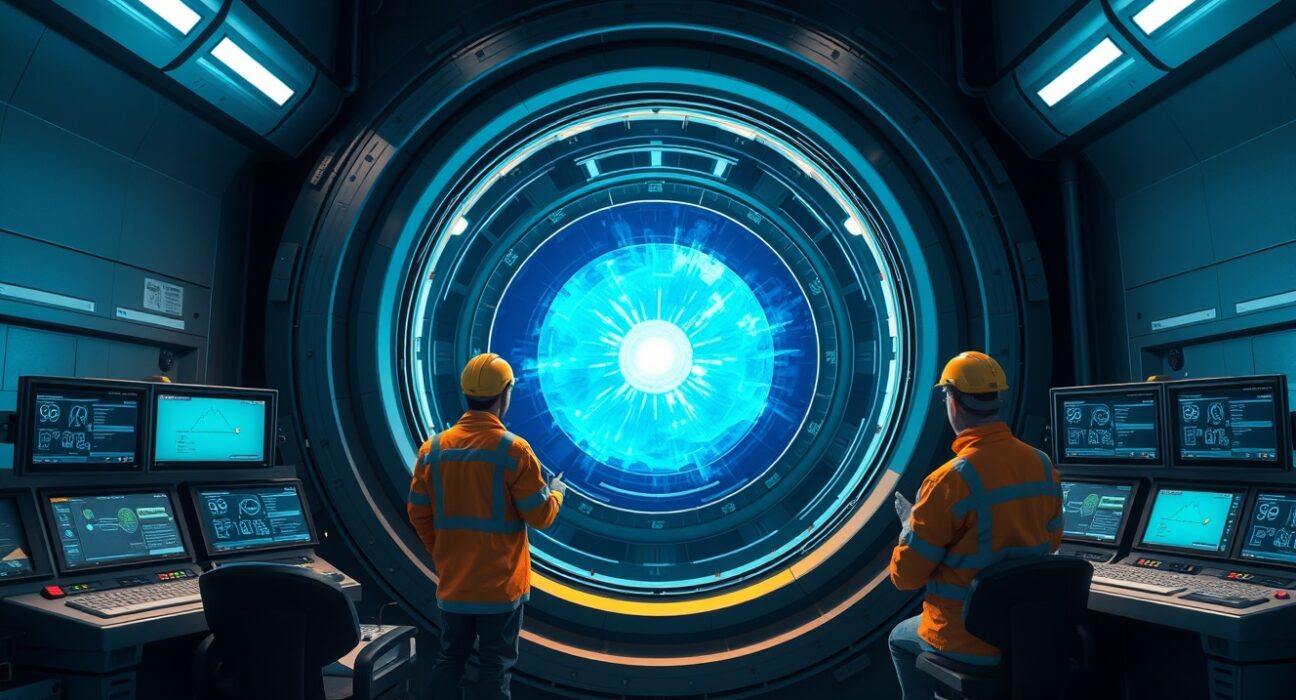
In a move that could reshape the energy landscape for artificial intelligence, fusion energy startup Helion Energy is reportedly in early-stage negotiations to supply massive amounts of power to OpenAI, according to a June 2024 report. Both companies share a notable backer in Sam Altman, highlighting a strategic convergence between frontier AI development and next-generation clean energy. This potential deal follows a similar 2023 agreement between Helion and Microsoft, OpenAI’s primary partner, signaling a concerted push by tech giants to secure sustainable, high-density power for the future.
Helion and OpenAI: A Strategic Power Partnership
The reported talks, first detailed by Axios, center on a power purchase agreement that could guarantee OpenAI access to a significant portion of Helion’s future electricity generation. Specifically, the deal would secure 12.5% of Helion’s planned output, translating to five gigawatts by 2030 and a staggering 50 gigawatts by 2035. For context, one gigawatt can power approximately 750,000 homes. This scale underscores the immense energy demands projected for advanced AI data centers and large language model training.
Helion’s approach to fusion energy differs fundamentally from most competitors. While traditional designs aim to use fusion heat to create steam and spin a turbine, Helion’s technology uses magnetic fields to directly convert fusion energy into electricity. This method, if proven at scale, promises higher efficiency and a simpler mechanical system.
- Direct Energy Conversion: Uses magnets to harness electricity from fusion plasma.
- Polaris Prototype: Current test reactor achieving 150 million degrees Celsius.
- Commercial Target: Requires sustained reactions at 200 million degrees Celsius.
The Scale of Ambition: Gigawatts and Reactors
The figures in the potential agreement reveal Helion’s extraordinarily ambitious production timeline. Each Helion reactor is designed to generate 50 megawatts of electricity. Consequently, to meet its commitments to Microsoft and a potential OpenAI deal, the company would need to deploy 800 functional reactors by 2030 and an additional 7,200 by 2035. This represents a manufacturing and deployment challenge of unprecedented scale in the fusion industry.
Comparatively, most other fusion startups, such as Commonwealth Fusion Systems and TAE Technologies, target the early 2030s for their first commercial pilot plants. Helion’s 2028 target for first power to Microsoft, and its implied scale-up, positions it as one of the most aggressive timelines in the field. Success would place it years ahead of mainstream projections for commercial fusion power.
Financing and Technological Hurdles
Helion’s ambitions are backed by substantial investment. The company raised $425 million in 2023 from a syndicate including Sam Altman, Mithril Capital, Lightspeed Venture Partners, and SoftBank. This capital fuels the development of its Polaris prototype. In February 2024, Helion announced a critical milestone: generating plasmas at 150 million degrees Celsius within Polaris. The company believes 200 million degrees Celsius is the threshold for net-positive energy and commercial viability.
However, the path is fraught with challenges. Fusion science requires confusing superheated plasma at stable conditions long enough to extract more energy than the system consumes—a feat never before achieved commercially. Furthermore, moving from a single prototype to manufacturing hundreds of identical, reliable reactors introduces complex supply chain and engineering obstacles typically associated with the aerospace industry.
The Sam Altman Connection and Strategic Manuevering
Sam Altman’s investment footprint creates a unique link between the AI and fusion ventures. While Altman has reportedly stepped down as chair of Helion’s board and recused himself from the specific OpenAI negotiations, his initial backing facilitated this strategic alignment. This pattern mirrors his actions at Oklo, a small modular fission reactor startup, where he stepped down as board chair to allow the company to pursue partnerships with AI firms.
This suggests a deliberate strategy by Altman to foster symbiotic relationships between his portfolio companies, creating an ecosystem where AI drives demand for advanced, clean baseload power, and fusion provides the solution. For OpenAI, locking in long-term, carbon-free power addresses growing scrutiny over the massive electricity consumption and environmental footprint of training and running advanced AI models.
| Company | Deal with Helion | Target Start Date | Power Commitment |
|---|---|---|---|
| Microsoft | Power Purchase Agreement | 2028 | Undisclosed |
| OpenAI (Potential) | In Negotiation | 2030+ | Up to 50 GW by 2035 |
Implications for the AI and Energy Sectors
This potential deal has profound implications. For the AI industry, it highlights a critical bottleneck: power availability. As models grow larger and more complex, their energy needs skyrocket. Securing affordable, scalable, and sustainable electricity is becoming a core competitive advantage, akin to securing semiconductor chips. For the energy sector, a successful fusion scale-up by Helion would disrupt global energy markets, offering a nearly limitless, carbon-free power source that operates independently of weather or geography.
Moreover, the partnership exemplifies a new trend of deep-tech crossover, where breakthroughs in one field (AI for material science or plasma control) accelerate progress in another (fusion). It also places significant pressure on Helion to deliver on its promises, as the credibility of future AI infrastructure plans may hinge on its success.
Conclusion
The talks between Helion and OpenAI represent more than a simple power deal; they symbolize the collision of two of this century’s most transformative technologies. The potential agreement to supply 50 gigawatts of fusion power by 2035 outlines a bold vision for a future where artificial intelligence is powered by clean, abundant energy. While significant scientific and engineering hurdles remain, the alignment of capital, talent, and urgent demand from the AI sector provides Helion with a unique catalyst. The success or failure of this venture will not only determine the fortunes of these companies but could also fundamentally alter the trajectory of global energy production and technological progress.
FAQs
Q1: What is Helion Energy’s approach to fusion power?
Helion is developing a fusion reactor that uses magnetic fields to directly convert energy from fusion reactions into electricity, bypassing the need for a traditional steam turbine system used in most other designs.
Q2: Why would OpenAI need a dedicated fusion power supply?
Training and operating advanced large language models like GPT-4 require immense computational power, leading to massive electricity consumption. Securing a long-term, high-volume, carbon-free power source is critical for scaling AI sustainably and managing costs.
Q3: How does Helion’s timeline compare to other fusion companies?
Helion’s target to supply power to Microsoft by 2028 and scale to gigawatts by the early 2030s is considered one of the most aggressive in the industry. Most competitors are targeting demonstration plants in the early 2030s, with commercial scale later.
Q4: What role does Sam Altman play in these negotiations?
While Sam Altman is a major investor in both Helion and OpenAI, reports indicate he has recused himself from the direct negotiations between the two companies to avoid conflicts of interest, though his initial investments helped create the connection.
Q5: What are the biggest challenges Helion faces?
The primary challenges are scientific (achieving and sustaining net-positive energy gain at 200 million degrees Celsius), engineering (reliably building and operating reactors), and industrial (mass-producing hundreds of identical reactor units at an unprecedented scale and pace).
Disclaimer: The information provided is not trading advice, Bitcoinworld.co.in holds no liability for any investments made based on the information provided on this page. We strongly recommend independent research and/or consultation with a qualified professional before making any investment decisions.