

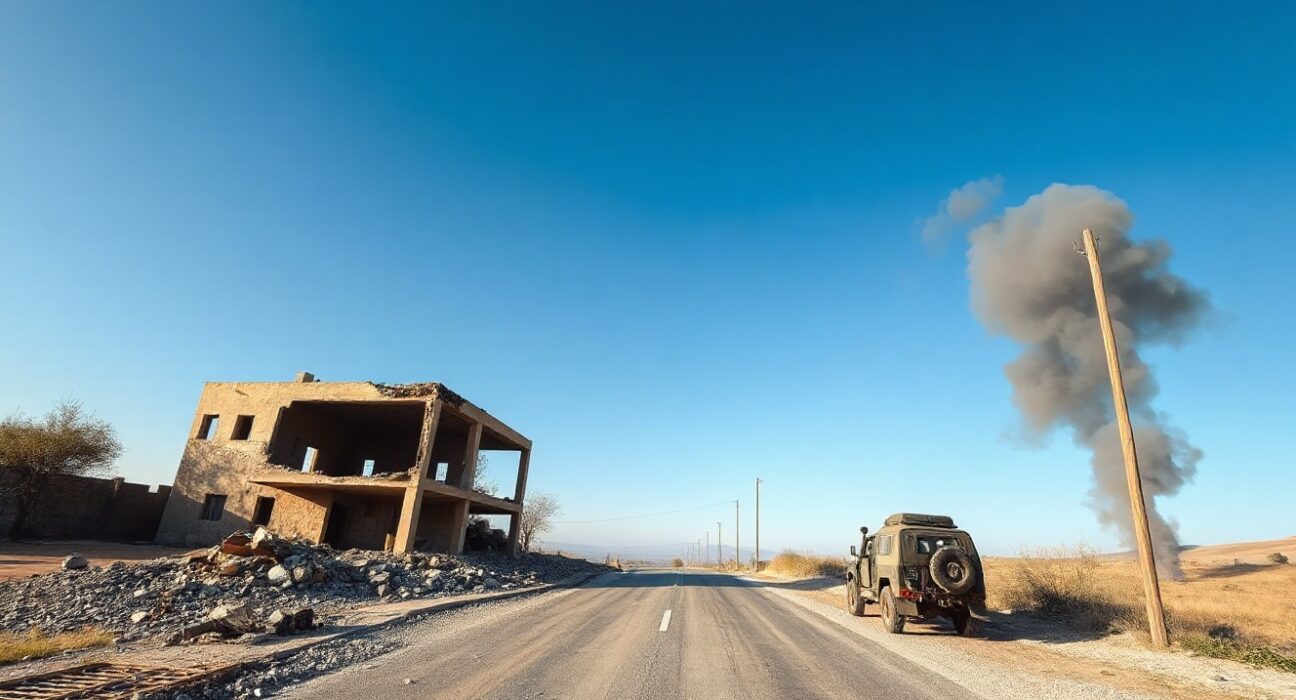
Beirut, Lebanon — The Lebanese militant group Hezbollah has formally accused Israel of violating the terms of a recently established ceasefire agreement, following what it described as an Israeli attack on a position in southern Lebanon. The accusation, issued in a statement on Wednesday, threatens to destabilize the fragile truce that has held since late last month.
Details of the Alleged Violation
According to Hezbollah’s statement, Israeli forces targeted an area near the village of Kafr Kila, which lies within the zone of southern Lebanon that was designated as a demilitarized buffer under the ceasefire terms. The group claimed that the attack involved artillery fire and drone activity, but did not provide immediate evidence or report any casualties. Israeli military officials have not yet commented on the specific incident, though they have previously stated that any violations of the ceasefire would be met with a firm response.
Context of the Ceasefire Agreement
The ceasefire, brokered by international mediators including the United States and France, was intended to end weeks of cross-border hostilities that escalated in late 2023. The agreement mandated the withdrawal of Hezbollah fighters from the area south of the Litani River and the deployment of the Lebanese Armed Forces and United Nations Interim Force in Lebanon (UNIFIL) to maintain stability. Israel, in turn, committed to halting all military operations on Lebanese soil. The current accusation marks the most significant public challenge to the agreement since its implementation.
Implications for Regional Stability
This development places the Lebanese government and UNIFIL in a difficult position. If Hezbollah’s claim is verified, it would represent a direct breach of the ceasefire’s core provisions, potentially triggering a cycle of retaliation. For Israel, any perceived failure to respond could be seen as a weakness, while an aggressive response risks reigniting a broader conflict. The international community is closely monitoring the situation, with diplomats urging both sides to exercise restraint and utilize existing communication channels to de-escalate tensions.
Conclusion
The accusation by Hezbollah introduces a new layer of uncertainty into the already fragile security landscape of southern Lebanon. The coming days will be critical as independent verification of the incident is sought and as both parties weigh their next moves. For now, the ceasefire remains in place but is under significant strain, with the potential for further destabilization if the dispute is not resolved through diplomatic means.
FAQs
Q1: What is the current status of the ceasefire between Israel and Hezbollah?
The ceasefire is technically still in effect, but it is under serious strain following Hezbollah’s accusation that Israel attacked a position in southern Lebanon. The situation is tense, with both sides on alert.
Q2: Who is responsible for monitoring the ceasefire in southern Lebanon?
The United Nations Interim Force in Lebanon (UNIFIL) and the Lebanese Armed Forces are primarily responsible for monitoring the ceasefire and ensuring compliance from all parties in the area south of the Litani River.
Q3: What are the potential consequences if the ceasefire collapses?
A collapse of the ceasefire could lead to a resumption of cross-border hostilities, including rocket fire into northern Israel and Israeli airstrikes on Lebanese territory. This would likely result in civilian casualties, displacement, and a broader regional crisis.
Disclaimer: The information provided is not trading advice, Bitcoinworld.co.in holds no liability for any investments made based on the information provided on this page. We strongly recommend independent research and/or consultation with a qualified professional before making any investment decisions.
