

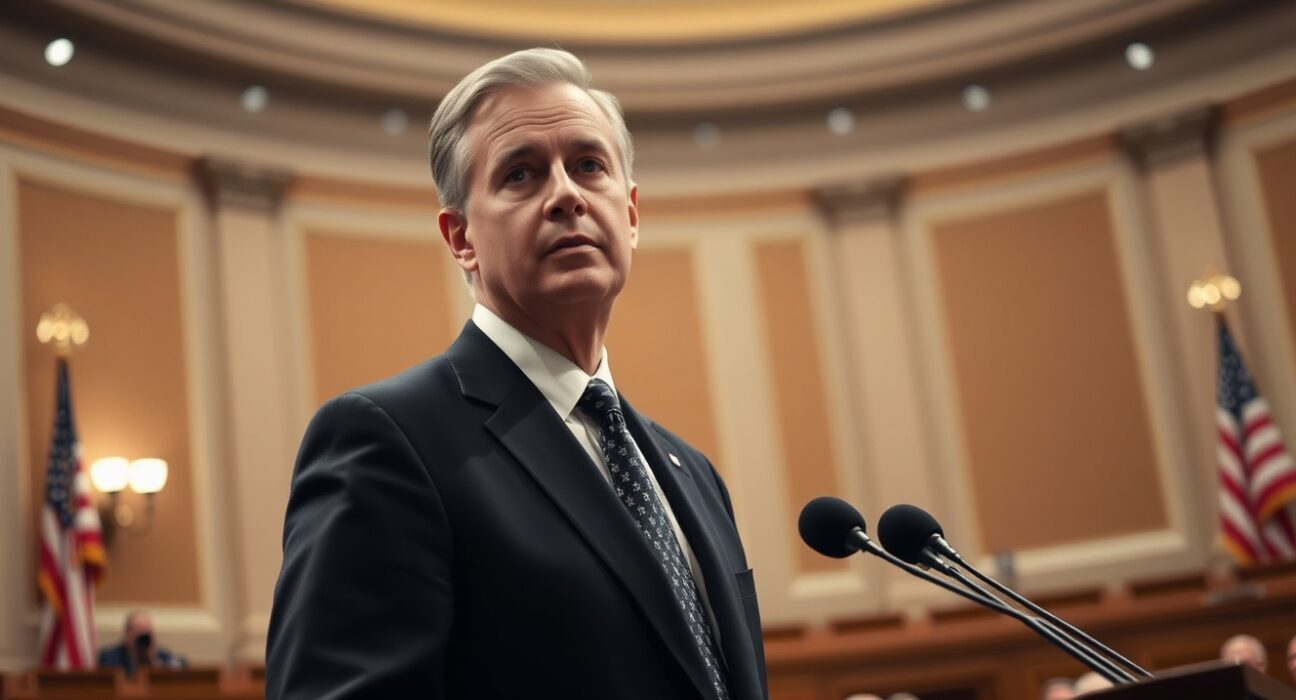
Charles Hoskinson, the founder of the Cardano blockchain network, has publicly urged U.S. lawmakers to preserve a critical provision in the proposed CLARITY Act that shields open-source software developers from legal liability for how their code is used by others. His comments come as the bill, which aims to establish a comprehensive regulatory framework for digital assets, moves through congressional committee discussions.
The Core Dispute Over Section 604
At the heart of Hoskinson’s argument is Section 604 of the CLARITY Act, a clause specifically designed to protect developers of open-source protocols, decentralized applications, and blockchain infrastructure. The provision would prevent developers from being held criminally or civilly liable for actions taken by third parties who use their software for illicit purposes, such as money laundering or sanctions evasion, without the developer’s knowledge or consent.
Hoskinson described recent calls from some policymakers to remove Section 604 as “nonsensical,” arguing that such a move would set a dangerous precedent. He compared holding a developer responsible for a user’s crime to charging an author with murder because a reader was inspired by a book to commit a violent act. The analogy underscores a fundamental tension in crypto regulation: how to hold bad actors accountable without stifling innovation and punishing the creators of neutral technology.
Why This Matters for the Crypto Industry
The CLARITY Act, formally titled the “Cryptocurrency Legal Clarity and Investor Protection Act,” represents one of the most significant attempts by the U.S. Congress to create a federal framework for digital assets. The bill seeks to define which digital assets are securities, commodities, or currencies, and to assign regulatory oversight to the SEC and CFTC accordingly.
Without Section 604, legal experts warn that the U.S. could see a mass exodus of blockchain developers to jurisdictions with clearer liability protections, such as Switzerland, Singapore, or the European Union under its Markets in Crypto-Assets (MiCA) framework. Hoskinson’s intervention highlights a broader industry consensus that developer protections are not a loophole for criminals but a necessary foundation for technological progress.
Industry and Market Implications
The debate over Section 604 is being closely watched by investors and developers alike. Cardano (ADA), which operates as a proof-of-stake blockchain, relies heavily on its open-source developer community for upgrades and ecosystem growth. A regulatory environment that exposes these developers to legal risk could slow down innovation not just for Cardano, but for the entire decentralized finance (DeFi) sector.
Hoskinson’s statement adds a prominent voice to a growing chorus of industry leaders, including representatives from the Blockchain Association and Coin Center, who have submitted testimony to Congress advocating for clear safe harbors. The outcome of this legislative battle could determine whether the United States remains a competitive hub for blockchain development or cedes leadership to more accommodating jurisdictions.
Conclusion
As the CLARITY Act advances through the legislative process, the fate of Section 604 remains uncertain. Charles Hoskinson’s forceful defense of developer protections underscores a pivotal choice for lawmakers: either craft rules that encourage responsible innovation or risk pushing one of the most dynamic technology sectors offshore. The coming weeks of debate will reveal whether Congress heeds the industry’s warnings or prioritizes a more punitive approach.
FAQs
Q1: What is the CLARITY Act?
The CLARITY Act is a proposed U.S. federal law that aims to provide a comprehensive regulatory framework for cryptocurrencies, defining which digital assets fall under SEC or CFTC jurisdiction and establishing rules for exchanges, stablecoins, and developers.
Q2: Why is Section 604 controversial?
Section 604 would protect open-source software developers from being held liable for how third parties use their code. Critics argue it could create a safe harbor for illicit activity, while supporters say it is essential to prevent legal uncertainty from stifling blockchain innovation.
Q3: How does this affect Cardano and its founder?
Charles Hoskinson, as Cardano’s founder, has a direct interest in ensuring that U.S. law does not penalize the developers building on his platform. His public stance aims to influence the legislative outcome to protect the broader open-source developer community.
Disclaimer: The information provided is not trading advice, Bitcoinworld.co.in holds no liability for any investments made based on the information provided on this page. We strongly recommend independent research and/or consultation with a qualified professional before making any investment decisions.
