
Web3 wallets hold your financial future. One wrong click can wipe out everything you own, and there’s no customer service to call for help.
Over $3 billion was stolen in the first half of 2025 alone. Hackers didn’t break through blockchain security. They targeted the weakest link: people who didn’t know how to protect their wallets properly.
Here’s the truth about crypto wallet security. You are your own bank now. That means you handle all security yourself. No insurance. No refunds. No password reset button.
This guide shows you how to lock down your Web3 wallet using practical security measures that actually work. You’ll learn how to protect your private keys, spot common scams, and build defense layers that keep attackers out.
Most people think they’re being careful until they lose everything. Don’t let that be you. The strategies below have protected millions in crypto assets, and they’ll work for you too.
Let’s get into it.
Web3 Wallet Basics You Must Know
A Web3 wallet stores your private keys and lets you interact with blockchains. It’s your personal bank account, but you control everything. No middleman can freeze your funds or reverse transactions.
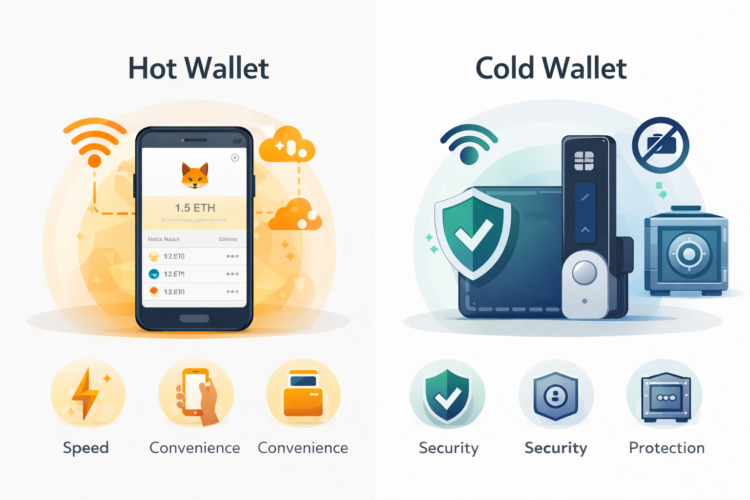
Hot wallets stay connected to the internet (MetaMask, Trust Wallet). They’re convenient for daily use but vulnerable to online attacks.
Cold wallets store keys offline on hardware devices (Ledger, Trezor). They’re safer but less convenient.
Your private key proves you own the wallet. Your seed phrase (12-24 words) generates that key and restores your wallet if needed. Lose your seed phrase and you lose everything forever. No one can recover it for you.
Here’s the reality: you are your own bank now.
Sent crypto to the wrong address? Gone. Approve a malicious contract? Drained. The blockchain won’t reverse mistakes or refunds scams. This is why crypto wallet security isn’t optional.
Essential Security Practices
Protecting your Web3 wallet requires multiple layers of defense. Here are the practices that actually work.
Secure Your Private Keys Properly
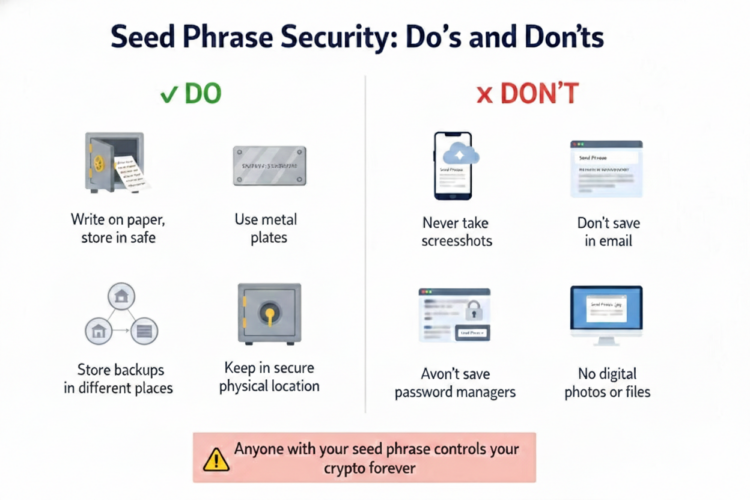
Your seed phrase is the master key to your crypto. Write it on paper or stamp it into metal. Never take screenshots or save it digitally.
Store physical backups in multiple secure locations. A home safe works. A safety deposit box works better.
One mistake costs people everything: taking photos of seed phrases and syncing them to cloud storage. One data breach later, hackers have full wallet access.
Never share your seed phrase with anyone. No support team will ever ask for it. Anyone requesting your seed phrase is trying to rob you.
Choose the Right Wallet Type
Not all your crypto needs the same security level. Smart investors use different wallets for different purposes.
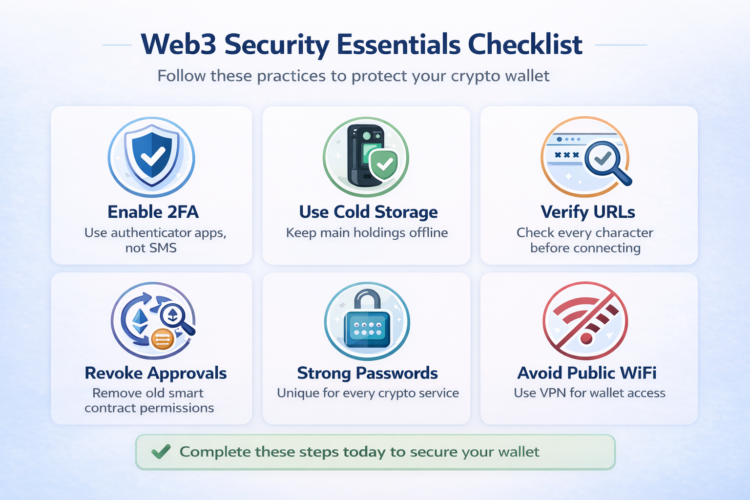
Keep main holdings in a hardware wallet. Buy directly from the manufacturer, never from Amazon or eBay. Compromised devices have been sold before.
Use a hot wallet for daily transactions with small amounts only. Think of it like cash in your physical wallet.
Create a “burner wallet” for risky activities like minting NFTs from unknown projects. Fund it with only the exact amount needed. If compromised, you lose the small test amount, not your entire portfolio.
Enable Strong Authentication
Create unique passwords for every crypto service. Use a password manager to generate and store them. Never reuse passwords.
Enable two-factor authentication (2FA) everywhere. Use authenticator apps like Google Authenticator, not SMS. Phone numbers can be hijacked through SIM swap attacks.
Use Automated Protection Tools
Even careful users make mistakes when rushed or distracted. That’s where automated tools help.
Manual vigilance fails exactly when you need it most. You’re excited about an NFT drop. You’re rushing to catch a price dip. These are when scammers strike.
Tools like Kerberus work in the background, automatically scanning websites before you connect your wallet. The extension blocks malicious sites and flags dangerous transactions in real time, with a 99.9% detection rate across 1000+ chains. It’s maintained zero user losses since 2023.
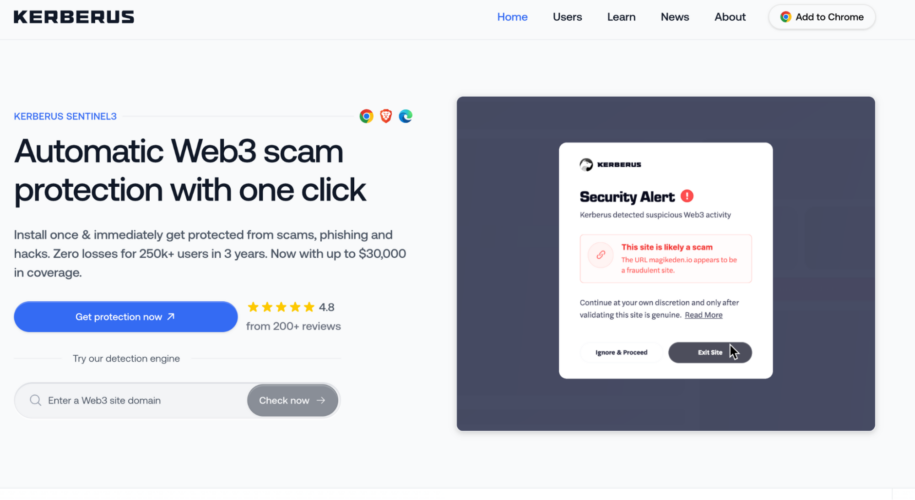
The tool also provides up to $30,000 in coverage as a safety net. One-click installation, and it runs silently until it blocks an actual threat.
Stay Alert to Common Scams
Phishing sites look identical to legitimate platforms. Always verify URLs before connecting your wallet. Bookmark official sites and only access them through bookmarks.
Fake support never asks for seed phrases or private keys. Real teams won’t DM you first or ask you to “validate” your wallet.
Address poisoning tricks users into copying fake addresses from transaction history. Always verify the complete address before sending funds.
Malicious tokens sometimes appear in your wallet uninvited. Don’t interact with them. These are bait designed to drain your wallet.
Fake airdrops work the same way. Unless you qualify through verified channels, treat unexpected “free tokens” as traps.
Quick Security Checklist
Here are the practical steps you should take right now to secure your wallet.
Before Every Transaction
Check the URL carefully. Scammers create fake sites that look identical to real ones. One wrong letter in the domain means you’re on a phishing site.
Read what you’re signing. Don’t just click “approve” automatically. Pay special attention to any transaction requesting “SetApprovalForAll” permissions. This gives a smart contract unlimited access to specific tokens in your wallet.
Verify the recipient address completely. Don’t just check the first and last few characters. Address poisoning attacks rely on people not reading the full address.
Use a transaction simulator when available. These tools show you exactly what will happen before you sign, translating complex contract code into plain English.
Regular Security Practices
Revoke old token approvals periodically. Visit sites like Revokecash to see every smart contract you’ve given permission to spend your tokens. Remove approvals for protocols you no longer use.
Update your wallet software when new versions are released. Developers patch security vulnerabilities regularly. Running outdated versions leaves known security holes open.
Review your connected dApps monthly. Disconnect from platforms you don’t actively use anymore. Each connection represents a potential attack vector.
Network Security
Avoid public WiFi when accessing your wallet. Use a VPN if you must connect on public networks. Free WiFi at coffee shops and airports creates easy opportunities for attackers to intercept your data.
Keep your devices clean. Run antivirus software. Don’t download files from untrusted sources. Malware like keyloggers can capture your passwords and seed phrases as you type them.
Turn off direct messages on Discord and Twitter. Most unsolicited DMs in crypto are scams. Legitimate projects announce everything in public channels.
Conclusion
Crypto wallet security comes down to one simple truth: you’re responsible for everything. No bank will refund you. No support team can reverse transactions. One mistake can cost you everything you own.
The good news is that protection isn’t complicated. Use hardware wallets for serious holdings. Keep your seed phrase offline and private. Enable 2FA everywhere. Stay skeptical of unexpected messages and too-good-to-be-true offers.
Layer your defenses. Combine good habits with automated tools like Kerberus that catch threats you might miss. Separate your wallets by purpose. Verify everything before you sign.
Hackers are professional, well-funded, and constantly evolving their tactics. But most attacks still rely on basic mistakes: clicking phishing links, approving malicious contracts, or sharing private keys.
Start implementing these practices today. Your future self will thank you for it.
Disclaimer: The information provided is not trading advice, Bitcoinworld.co.in holds no liability for any investments made based on the information provided on this page. We strongly recommend independent research and/or consultation with a qualified professional before making any investment decisions.